Ask what vinegar a sushi restaurant uses and most kitchens will name one thing: rice vinegar. A smaller number will name two in the same breath — rice vinegar and aka-zu (赤酢), red vinegar, which is not rice vinegar with something added to it. It is fermented from a different raw material entirely, and for a stretch of Edo’s sushi history, it was not the alternative. It was the only one there was.
What it is
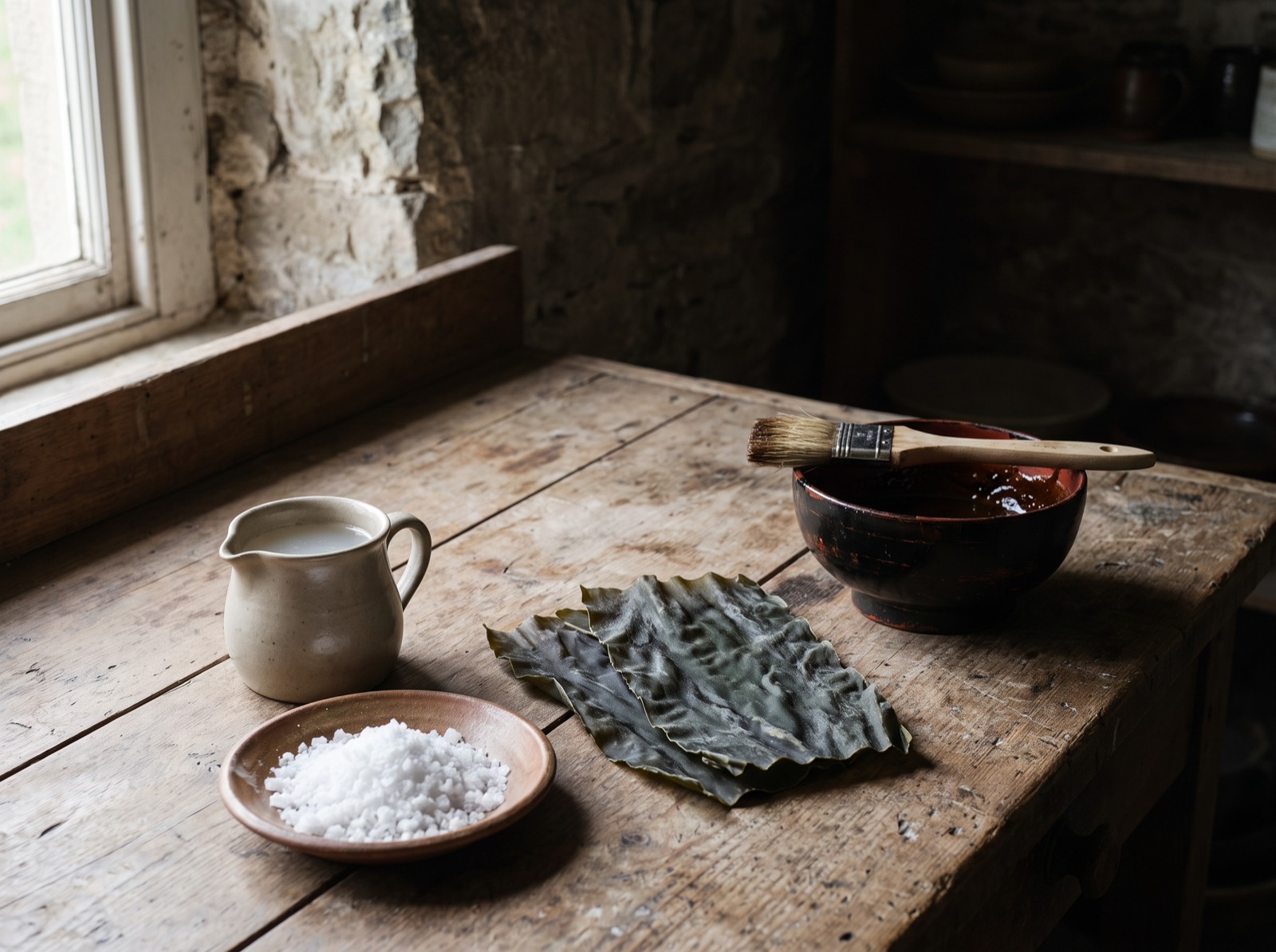
Akazu is vinegar made by fermenting sake kasu (酒粕), the solid lees left over after sake is pressed, rather than rice itself. Ordinary rice vinegar, kome-zu (米酢), ferments rice directly. The two start from different materials by two different processes, and the difference shows before either one is tasted: akazu runs reddish-brown, sometimes closer to amber than red, while rice vinegar stays close to clear.
In the sushi literature the same vinegar is often written the other way round, as kasu-zu (粕酢), lees vinegar — a name taken from the raw material rather than the colour. Akazu and kasu-zu name the same thing from two different angles, and both turn up on menus and in chefs’ own descriptions of their rice.
The colour is not added. It comes from the same chemistry that darkens well-aged black vinegar, kurozu: an amino-carbonyl reaction between amino acids and sugars, built up slowly over a long fermentation. The longer and more thorough the ageing, the deeper the colour and the stronger the aroma — which is also why akazu smells and tastes more assertive than rice vinegar before either one ever touches rice.
When it is used
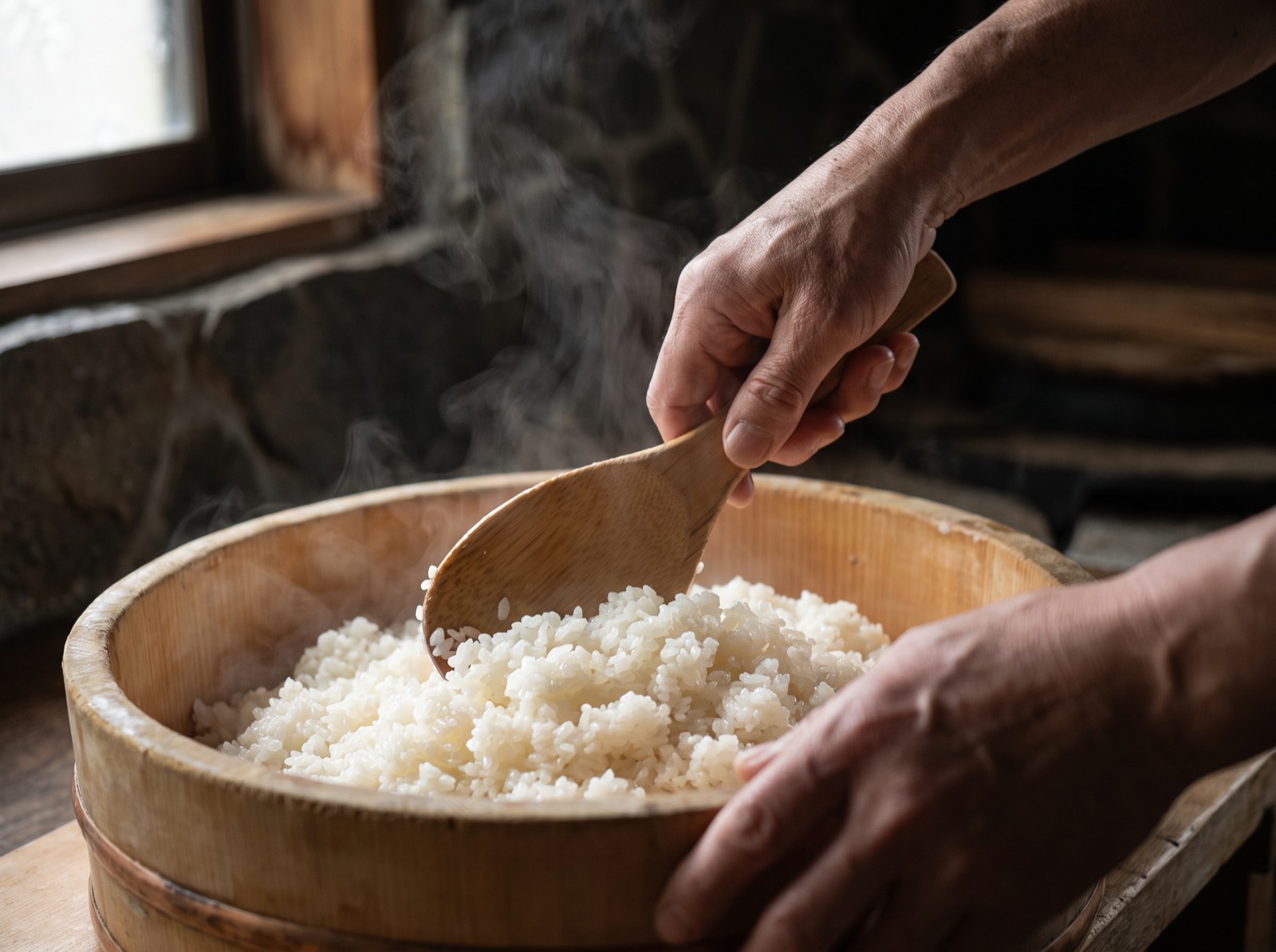
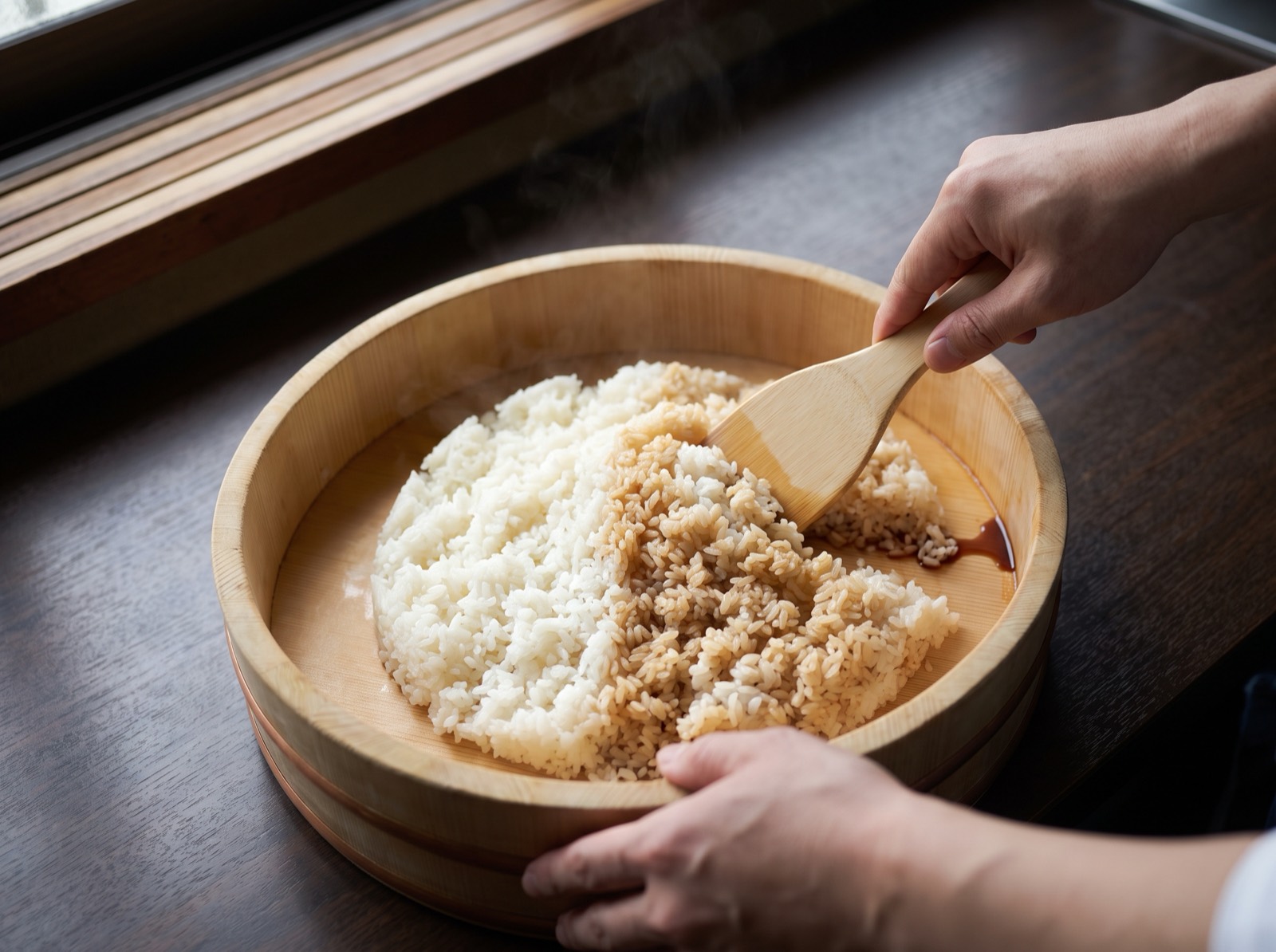
Akazu goes into the awase-zu, the seasoned vinegar mixed into the rice before it becomes shari; where in that process it is added, and the other decisions that make shari what it is, belong to our entry on shari. It can also turn up, separately, in the vinegar bath some counters use to cure a fish before it ever reaches the rice — a different job, covered in our entry on su-jime.
What the chef actually does
The basic decision is simple to state and genuinely different from shop to shop: akazu on its own, rice vinegar on its own, or a blend of the two in a ratio the house sets for itself. None of the published recipes we found for the awase-zu agree on a fixed proportion — one runs mostly rice vinegar with a trace of akazu, another runs mostly akazu with a little rice vinegar, and the examples in between cover most of the range. There is no standard ratio to report here, because there does not appear to be one.
Chefs who blend describe doing it for two reasons that pull in different directions. Akazu carries most of its aroma and colour up front, and that character can fade over a long service, so some reduce it over heat first, concentrating the flavour, and add rice vinegar closer to service for an acidity that holds through the night. Others skip sugar entirely when akazu is the base, relying on the vinegar’s own sweetness and body instead of adding it, where a rice-vinegar-only shari more often takes sugar to reach a comparable roundness.
The choice also tracks what sits on top. A shari seasoned with a stronger, more savoury vinegar is more often set against bold, assertive toppings — roe, shellfish, something already carrying plenty of flavour of its own — while a delicate, pale white fish is more often paired with a cleaner rice-vinegar rice that will not compete with it. Neither pairing is a rule any shop is bound to follow. It is a reason chefs give for a choice they have already made.
One counter puts the choice in writing. Ryu Sushi (龍寿司), a Toyosu counter open since 1959, lists red-vinegar rice as one of three things it says about its own food, alongside a conger eel simmered for hours and prawns boiled to order — see our guide to Toyosu’s morning counters. Naming the vinegar at all, in a self-description that short, is itself a small piece of information: it is one of the details a shop chooses to lead with.
Why it is done
The case chefs make for akazu is about flavour before it is about anything else: a rounder, deeper, more savoury rice than clear rice vinegar gives, with an aroma that carries through the fish rather than sitting under it. That case does not depend on history to work. It is a claim about taste that stands or falls on the piece in front of you.
History supplies the other half of the reason. Akazu was the vinegar in use when nigirizushi first took its modern shape in Edo; rice vinegar, fermented from rice rather than a sake by-product, spread more widely afterwards and is what most shops use today, for a plainer reason than romance — it stays close to clear, so it does not tint the rice or compete with a pale, delicate topping. Reaching for akazu now, when rice vinegar is the easier and more common choice, reads as a decision about lineage as much as a decision about flavour: a kitchen saying, in effect, that it wants the older version of the answer.
Akazu is not rice vinegar with something added to it. It is a different raw material entirely — fermented sake lees, not rice.
How it differs from what it is confused with
Four mix-ups are common enough to name directly.
- Akazu and kome-zu (rice vinegar) are not two names for the same seasoning. They come from different raw materials — sake lees against rice — and a shop chooses one, the other, or a blend of both; nothing in either name tells you which.
- Akazu and kurozu (black vinegar) darken through the same chemistry, but kurozu is brewed and aged, far longer, from rice or barley rather than sake lees, and belongs to its own, separate tradition. It is not what a sushi counter means when it says akazu.
- The vinegar in the rice and the vinegar that cures a fish are two different jobs that happen to share an ingredient. Akazu can appear in either one, but that does not make them the same technique — see su-jime for the fish-curing side.
- “Sushi vinegar” as a general term usually means the whole seasoned mixture stirred into the rice — vinegar, salt, and often sugar. Akazu is one possible base vinegar within that mixture, not another name for the mixture itself.
How to say it
Aka-zu breaks into three even beats, a-ka-zu, with no stress on any one of them, and a z pronounced as in “zoo” — the same reading given in this site’s own entry on shari. Aka means red; zu means vinegar.
Where you will see it
Most often at a counter already leaning into an older, pre-war idea of Edomae work, and more often than not the shop will say so itself, on the menu or across the counter, rather than leave a guest to notice the colour and ask. A number of Tokyo kitchens that had moved away from it have picked it back up in recent years, without settling on any one reason for doing so beyond the flavour case set out above.
The colour is the tell, but the colour is not the point. What akazu actually changes is what the rice tastes like before any fish ever sits on it — and that is a decision a kitchen makes long before you sit down.
Frequently asked questions
What is akazu?
Red vinegar made by fermenting sake lees (sake kasu) rather than rice. It runs reddish-brown to amber rather than clear, carries a stronger aroma than rice vinegar, and is also called kasu-zu, lees vinegar, in the same literature.
Is akazu just rice vinegar with red colouring added?
No. It is a different raw material, not a dyed version of the same one. Rice vinegar ferments rice directly; akazu ferments sake lees, and its colour comes from an amino-carbonyl reaction between amino acids and sugars that builds up over a long fermentation, the same chemistry that darkens black vinegar, kurozu.
How is akazu used in sushi?
Mixed into the awase-zu, the seasoned vinegar stirred into the rice, either on its own or blended with rice vinegar in a ratio each shop sets for itself. It can also appear separately in the vinegar bath some counters use to cure fish before it reaches the rice, which is a different technique. See su-jime.
Why do some sushi counters use akazu instead of rice vinegar?
Chefs who use it describe a rounder, deeper, more savoury rice than clear rice vinegar gives. Akazu was also the vinegar in use when nigirizushi first took shape in Edo, so choosing it today reads as a nod to that older version of the technique as much as a decision about flavour.
How do you pronounce aka-zu?
Three even beats, a-ka-zu, with no stress on any one of them, and a z pronounced as in 'zoo'. Aka means red; zu means vinegar.
Where can I find sushi made with akazu?
At counters already leaning into an older, pre-war idea of Edomae work, which usually say so themselves rather than leave a guest to notice the colour and ask. Ryu Sushi, a Toyosu counter open since 1959, is one example that lists red-vinegar rice among the few things it publishes about its own food.