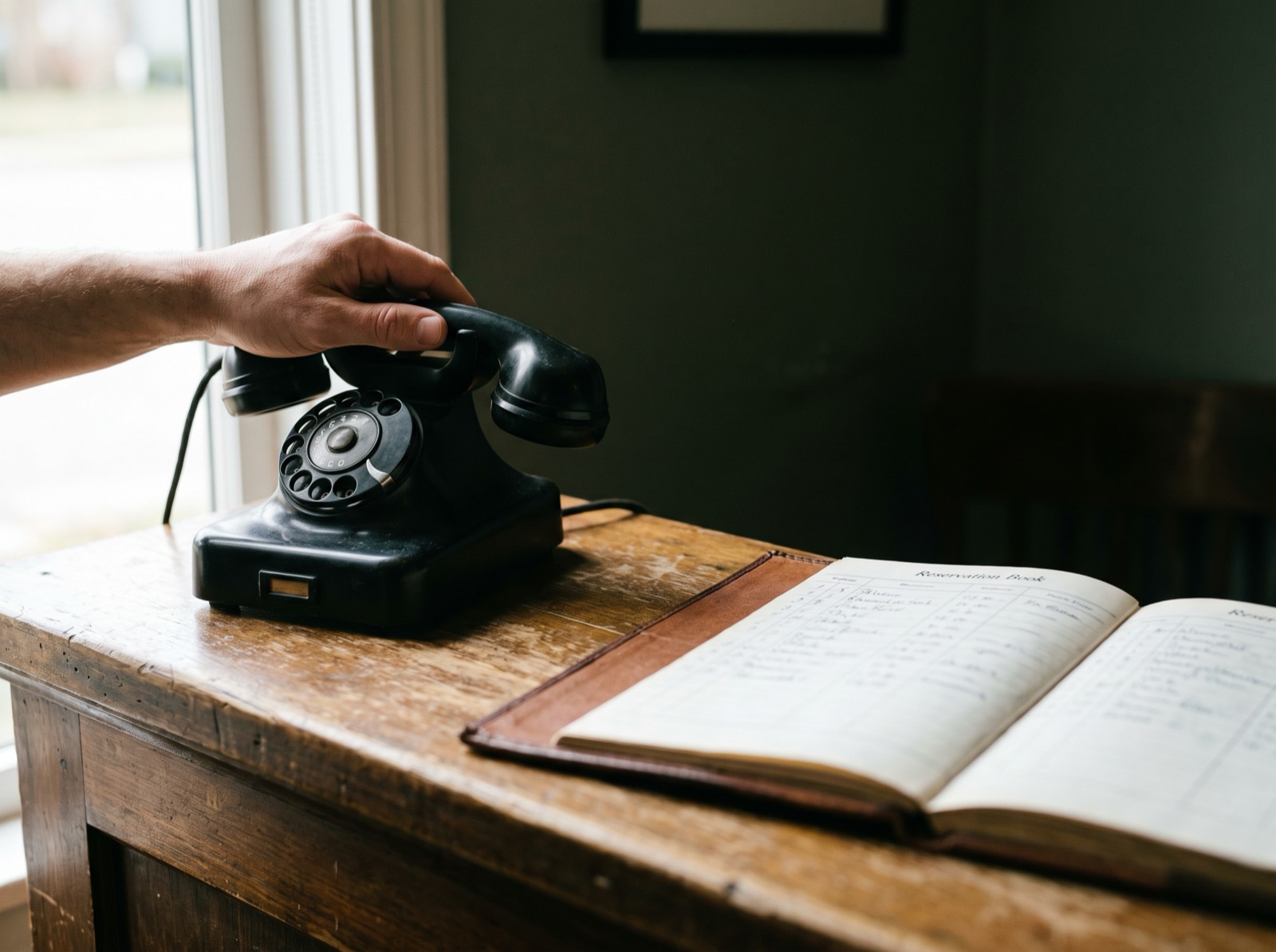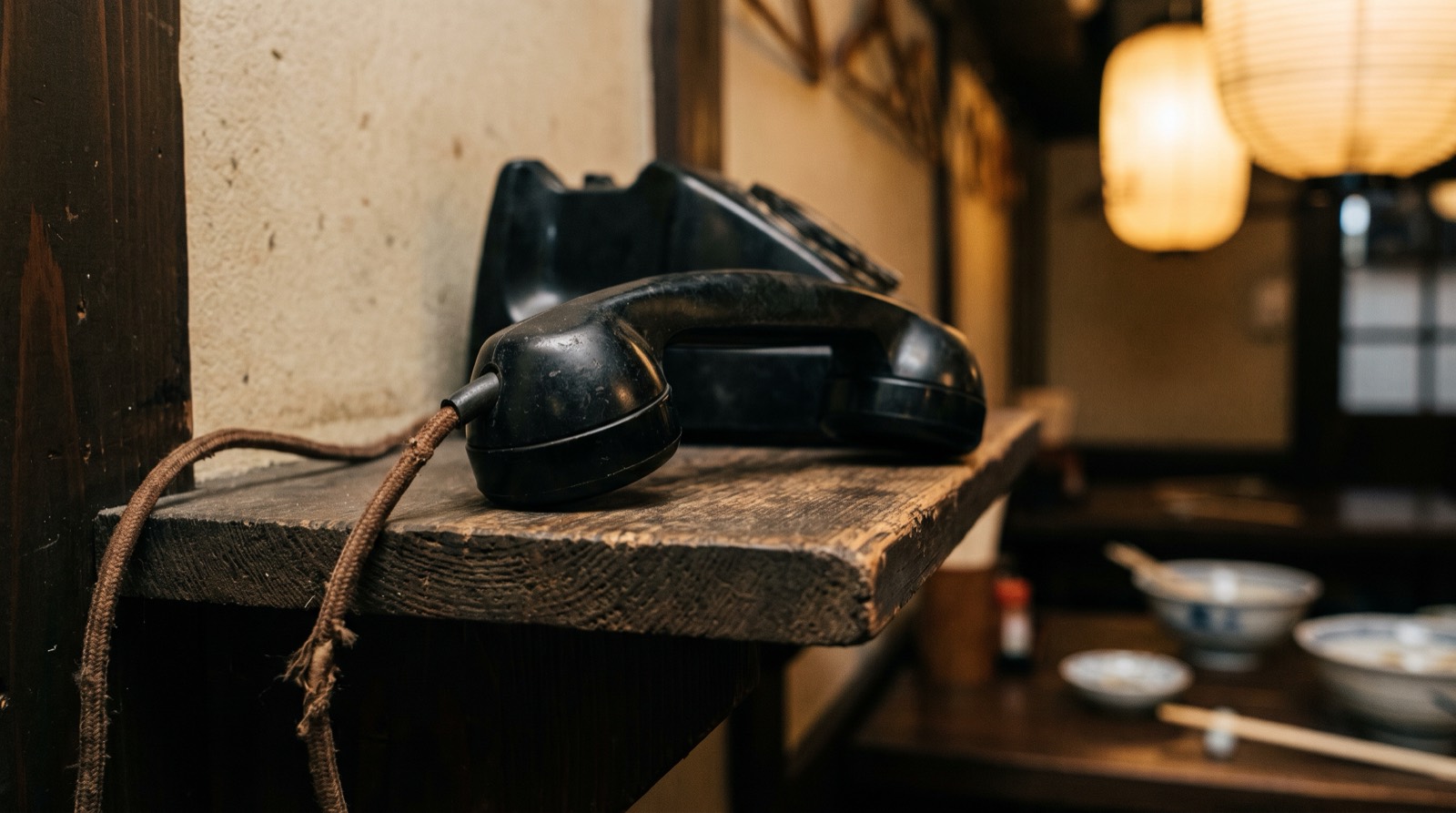
The sentence appears in almost every thread on the subject, and it is stated as though it were a law of the country: to book a good sushi counter in Tokyo you need a Japanese phone number. Some versions add that you need a Japanese address, or a Japanese credit card, or a concierge at a hotel willing to make the call for you.
We went and looked. Not at the threads — at the booking pages themselves, on the systems that Tokyo sushi restaurants actually use, opened in a browser and read field by field. What we found is that the claim is wrong in the one sense that can be checked, and that the things which really do stop people are elsewhere, published in plain sight, and almost never discussed.
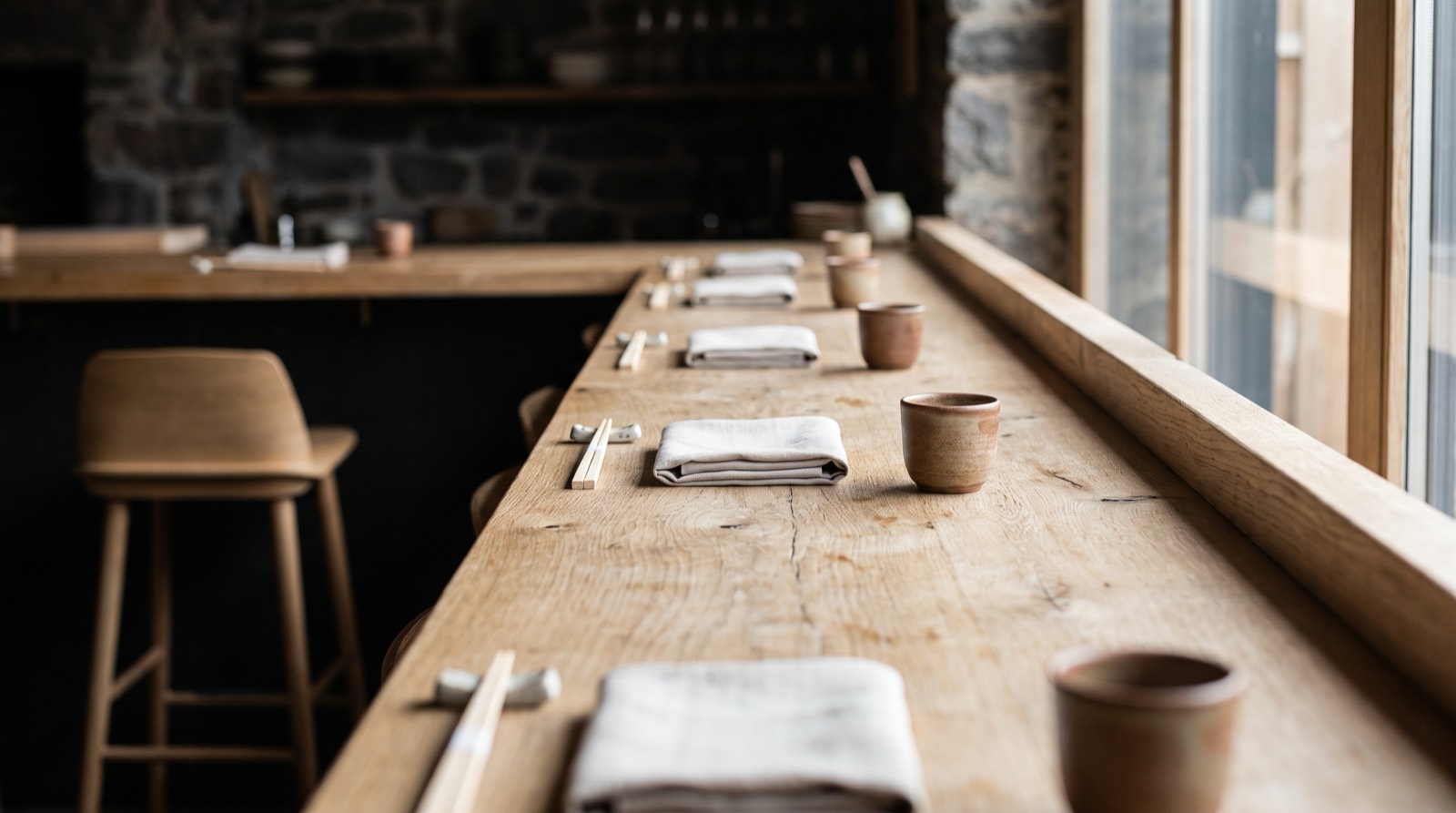
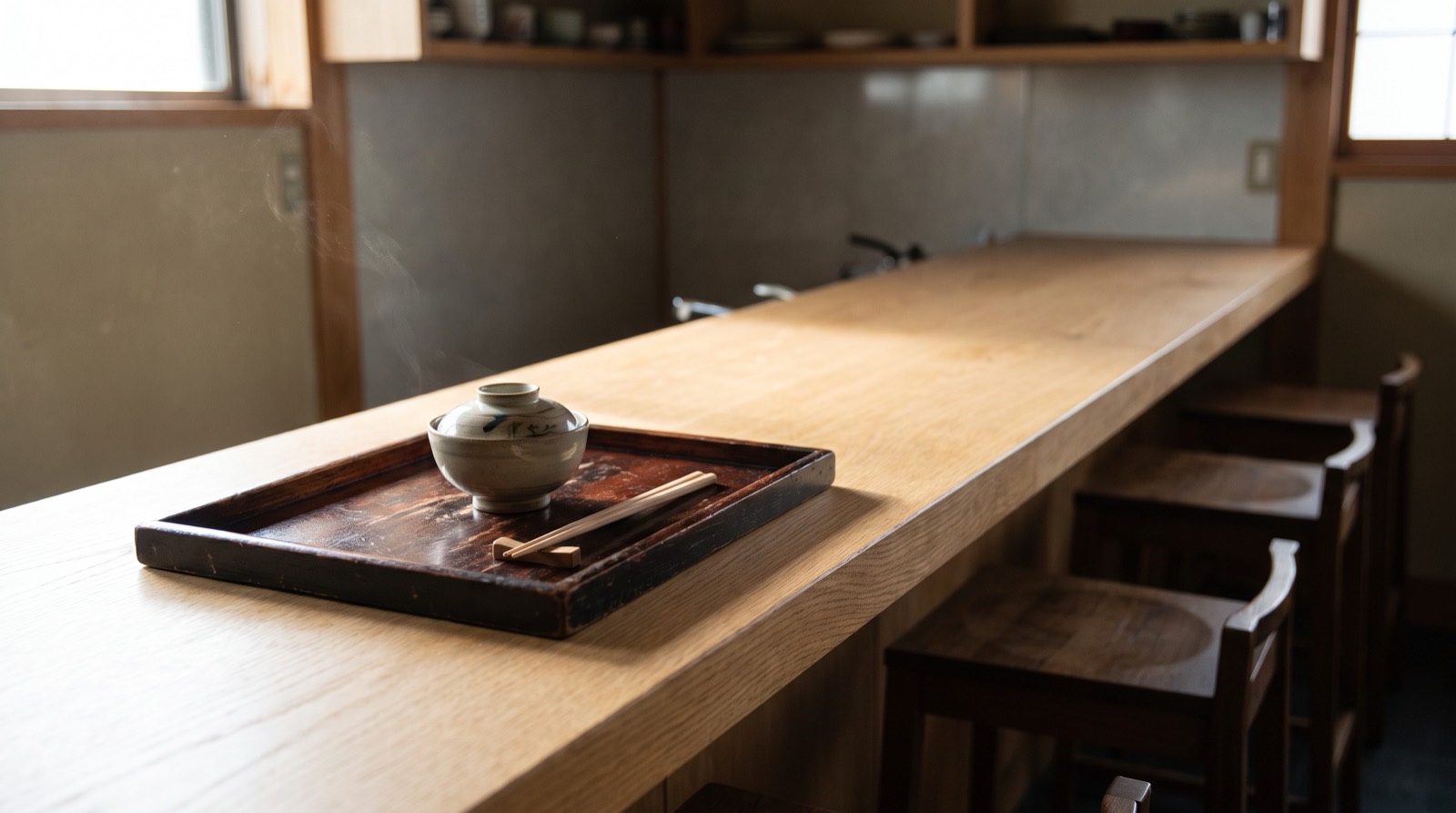
Below are five Tokyo counters that take a booking through a screen, in English, from outside Japan. They are not ranked and they are not in order of merit. They are arranged by the kind of obstacle each one puts in the way, from the mildest to the one most likely to catch a visitor out. Every fact here was read off the restaurant’s own site or the booking system it links to, on the date given, and we say where each one disagrees with the others.
The telephone field is not the wall
Two systems carry a large share of Tokyo’s sushi bookings, and on both of them the telephone box is a required field. That is the fact the advice is built on, and it is true. What the advice leaves out is what the box does.
On TableCheck, the telephone input is an international widget with a country selector attached. We counted the entries in that selector on two unrelated venues, booked by two unrelated restaurant groups: 244 both times. It is not a Japan-only field with a Japanese format enforced on it. It is a global field whose default happens to be Japan, because the platform is Japanese and most of the people using it are in Japan. The placeholder shows a Japanese mobile number for the same reason. Change the country, and the field takes your own.
The same platform publishes its booking pages in twenty-three languages plus a default, declared in the page’s own alternate-language tags: English, Japanese, Korean, both written forms of Chinese, German, Spanish, French, Dutch, Italian, Portuguese, Turkish, Russian, Indonesian, Malay, Filipino, Thai, Lao, Khmer, Vietnamese, Arabic, Hebrew and Hindi. A system that has gone to the trouble of Khmer and Lao has not overlooked the possibility of a foreign telephone number.
The requirement is a telephone number, not a Japanese telephone number. That distinction is the whole of the myth, and it collapses the moment you open the country selector instead of reading about it.
An email address is required alongside it, and on the pages we read the confirmation goes to the email, not the phone. The number is there so the restaurant can reach you on the day — which is exactly why giving a real one, in whatever country you actually are, matters more than giving a Japanese-looking one.
Manten Sushi, where the English page was there the whole time
Manten Sushi runs three counters in central Tokyo: Marunouchi, in the basement of Marunouchi Brick Square; Nihonbashi, in Coredo Muromachi 2; and Hibiya, in the Hibiya Okuroji arches under the railway. The house serves omakase only, at lunch and at dinner, and the current price on its own menu page is ¥8,000 before tax, ¥8,800 with it.
The official site is in Japanese. There is no language switch, and no English version of the site exists — the only English on it is a single paragraph explaining what the word omakase means. Each branch has a button reading, in Japanese, ‘online booking’. Marunouchi’s goes to one system; Nihonbashi’s and Hibiya’s go to a different one. A visitor who reads no Japanese arrives at a Japanese-language booking form and concludes, reasonably, that this is a restaurant for people who read Japanese.
It is not. Both of those links carry a two-letter language code in the path, and both systems serve the identical page in English if you change it. We opened Nihonbashi’s booking page in English and got the full form: three courses with prices, the venue notice, the seating categories, the required fields. We did the same with Marunouchi’s, on the other system, and got an English interface there too. Neither restaurant did anything to make that happen. It is how the platforms are built. The official site simply never links to it.
What the English page then tells you is worth the trip. The courses are Omakase at ¥8,800, a tuna tasting at ¥13,200, and a full omakase at ¥12,100 with all drinks included. Every course carries the line ‘Credit card required to reserve’. Bookings open one month ahead and no further. Parties of nine or more are not accepted at all, and parties of five are put in a private room. And the notice states plainly that a cancellation on the day, or a reduction in the number of guests on the day, is charged at the full course price per person.
- Three counters: Marunouchi, Nihonbashi, Hibiya. Omakase only, lunch and dinner.
- Official site: Japanese only, no language switch, no English version.
- Booking: two different systems across the three branches; both serve an English page at the same address with the language code changed.
- Card: registered at booking as a guarantee. The notice says the meal itself is paid at the restaurant on the day.
- Cancellation: same-day cancellation, or cutting the party size on the day, costs the full course price per head.
One more line on that English page deserves attention, because it is a refusal rather than a fee. The house states that it cannot accept bookings from anyone with a severe crustacean allergy, anyone with a gluten allergy, or anyone who does not eat raw fish or seafood. Soy sauce is on nearly everything. This is not a preference to be negotiated at the counter; it is written into the booking page as a condition of the reservation.
SUSHI TOKYO TEN Shibuya, where the room takes no cash
SUSHI TOKYO TEN has five Tokyo-area counters — Shinjuku, Shibuya, Roppongi, Yokohama and Takanawa — and it is the clearest illustration we found of how confusing a restaurant’s own links can be. From the official site, Shinjuku goes to one booking system and the other four go to another. Of those four, three links carry a Japanese language code and one carries none at all. Three different link shapes, one restaurant group, one page.
Open any of them in English and the same booking system offers all five branches from a single dropdown, including the Shinjuku one the official site sends elsewhere. If you have been bounced between two systems trying to work out which branch you are booking, that dropdown is the answer.
The Shibuya page lists four courses: a lunch omakase at ¥5,500, available only at 11:00 and 13:30; an omakase at ¥9,900; a full omakase at ¥13,200 with drinks; and a tuna course, also ¥13,200. Every one of them says a credit card is required to reserve. A notice records that the lunch course rose from ¥4,950 to ¥5,500, and gives the reason: the price of fish and a changed buying environment. Restaurants rarely explain a price rise in writing. This one does.
The line that matters most for a visitor is further down, and it is not about booking at all. The room is entirely cashless. Card or phone payment only; cash cannot be accepted. Whatever you decide about registering a card to hold the seat, you will need a working card to leave.
- Five branches; the English booking page reaches all of them from one dropdown.
- Courses at Shibuya: ¥5,500 lunch omakase (11:00 and 13:30 only), ¥9,900 omakase, ¥13,200 full omakase with drinks, ¥13,200 tuna course.
- Completely cashless. Credit card or smartphone payment; cash is not accepted.
- Seat type cannot be chosen through the web form. Counter or table is assigned by the house.
- Groups and same-day bookings are directed to the telephone, in Japanese. Everything else goes through the form.
- Same-day cancellation is charged in full, because the fish has already been bought.
A warning about the English itself, since we would rather you heard it from us. The venue notice on that page has been run through machine translation and not corrected. One course appears as ‘Leave it to me’ and another as ‘Everything is up to you’ — both are renderings of omakase, not different dishes. The tuna course is labelled ‘all-you-can-eat’, which it is not; the Japanese means a course made up entirely of tuna, cut several ways. Read those pages for their numbers, dates and conditions, which are reliable. Do not read them for their adjectives.
Harutaka, where the booking is instant and the menu is not in English
Harutaka is a twelve-seat L-shaped counter on the sixth floor of a building in Ginza 8-chome, five minutes on foot from Shimbashi, with a private room that seats two to five at no extra charge. Dinner is a single omakase course at ¥55,000 a head. The house opened in Ginza in 2006 and moved to its present address in 2016.
It is bookable through a platform that marks it ‘Book Instantly’ — meaning the seat is confirmed by the system rather than passed to the restaurant as a request — and puts an ‘English Speaking Staff’ badge on the listing. For a counter at this level that is unusual enough to be the reason it is in this article.
The same listing is unusually candid about the limits of that. Under its own questions and answers, asked whether menus are available in other languages, the answer is that the menu is offered in Japanese only. Asked about children, the answer is that the house cannot accommodate them. And the platform prints a standing disclaimer on every page of this kind: the existence of an English page does not guarantee the restaurant can provide service in English, and even where it is stated, there may be days when English-speaking staff are not there.
We note one oddity in the listing text, because we would rather flag it than repeat it. The restaurant is described as having been awarded three stars by a ‘world gourmet guide’, and the guide is not named. We do not award or repeat ratings, and we are not going to fill in a blank that the source deliberately left. The published cancellation terms, by contrast, are exact: from three business days before the date, half the total; from one business day before, all of it.
- Twelve counter seats, plus a private room for two to five with no room charge. Sixth floor, Ginza 8-chome.
- Dinner only, 17:00 to midnight. Closed Sundays and public holidays.
- One course, ¥55,000 a head. Instant confirmation through the booking platform.
- English-speaking staff are stated, and the platform explicitly declines to guarantee it.
- Menu is in Japanese only, by the restaurant’s own answer.
- Cancellation: 50 per cent from three business days out, 100 per cent from one business day out.
When we looked, the next available date showed no seats at all, with an invitation to bookmark the page and try again. That is worth saying because it is the ordinary condition of a counter like this, and no amount of booking literacy changes it. What English access buys you here is a place in the queue on equal terms — not a seat.
Sushi Oya, where the fee is inside the price
Sushi Oya is a seven-seat counter on the third floor of a building on a back street in Kagurazaka, cut from a single slab of cypress said to be a hundred and fifty years old, with a second six-seat counter for small parties. The chef was born in Chicago and grew up across several countries, and the listing states that he receives guests in fluent English. Dinner runs at 18:00 and 20:30. Closed Sundays and public holidays. Children are taken from ten years old.
It appears on a booking service aimed squarely at overseas guests, and that service does two things worth knowing about before you use it. The first is stated on the page and easy to miss: the price shown, ¥48,000, includes the service’s own booking fee of ¥8,000. The meal is ¥40,000 and the introduction is ¥8,000, and the page tells you so in one short line under the course name.
The second is in the legal notice at the foot of the site. The operator is a company registered in Singapore, the service is described as a restaurant booking agency, payment is by credit card, and payment is taken in full at the moment the booking is confirmed. This is not a card held against a no-show. It is the whole amount, charged up front, to a company that is not the restaurant. The button is labelled ‘Reservation Request’ and each date carries the note that availability will be checked for you, so confirmation is not instant either.
The service also withholds something. On the restaurant’s page, the fields for the restaurant’s own telephone number and website both read ‘NA’. That is a choice, not a gap in the data, and it is the sharpest illustration in this article of what an intermediary is actually selling. It is not translation. It is access, on terms where you cannot easily go around it.
- Seven-seat counter in Kagurazaka, plus a six-seat private counter.
- ¥48,000 a head, of which ¥8,000 is the booking service’s fee.
- Charged in full to a credit card when the booking is confirmed, by a company registered in Singapore.
- Not instant: the request goes out and availability is checked.
- Minimum party size of one — the service publishes this for every restaurant it lists.
- The restaurant’s own telephone number and website are shown as unavailable.
We are not telling you to avoid it. For a seven-seat counter with no English booking route of its own, ¥8,000 to be introduced in your own language is a defensible price, and the service is open about charging it. We are telling you to know which ¥8,000 you are paying, because the page does not put it in the headline number and most write-ups of this restaurant repeat the ¥48,000 without the split.
HISASHI SUSHI, which publishes no telephone number at all
HISASHI SUSHI opened in Kita-Aoyama in 2026, in the lineage of Udatsu Sushi, serving sushi ordered piece by piece rather than as a fixed course. Twenty-two seats, a main counter of lava stone from Aso and a U-shaped counter of Kiso cypress. Five minutes from Omotesando station, ten from Meiji-Jingumae. Lunch 11:00 to 15:00, dinner 17:00 to 21:00, closed Mondays and over the New Year and Obon holidays.
Its site is published in Japanese, English, Korean and Chinese. And on every one of those versions, there is no telephone number anywhere in the visible text of the page. No number in the shop information block, no number in the footer, nothing to tap on a phone. We checked for the linked kind as well as the printed kind and found neither. A number does exist in the page’s machine-readable data, where search engines read it and human visitors do not, alongside a flag saying the restaurant accepts reservations. Whether that is deliberate or an oversight we cannot say. What we can say is that a reader looking for a number will not find one.
Every route the site offers instead points at a single external booking service, through three identical buttons. There is one detail in those links worth knowing: on the Japanese page the address carries a Japanese language code, and on the English page the code is simply absent rather than replaced with an English one. That is the opposite of the pattern at Manten Sushi, and it means the trick that works there does not necessarily work here.
The restaurant is also listed on a second booking platform, which carries an ‘English Menu’ badge, an ‘English Speaking Staff’ badge, and a price of ¥12,100. Its cancellation terms start early: from two business days before the date, the full amount. And its published hours do not match the restaurant’s own. The platform gives last orders at 14:00 and 20:00; the restaurant’s own site gives 14:30 and 20:30. Half an hour is not much until it is the half hour you were counting on.
- Kita-Aoyama, twenty-two seats, ordered piece by piece rather than as a set course.
- Site in Japanese, English, Korean and Chinese — with no telephone number visible on any of them.
- One booking route only, to an external service, from three identical buttons.
- A second platform lists it at ¥12,100 with English menu and English-speaking staff stated.
- That platform charges the full amount for a cancellation from two business days out.
- Published last orders differ between the restaurant and the platform by thirty minutes at both services.
The four things that actually stop people
Set the telephone question aside and the real obstacles are consistent across all five, and none of them are about language.
- A card, always. Every one of these routes wants a credit card number, and they want it for different reasons: as a guarantee against a no-show, as the means of paying on the day in a room that takes no cash, or as an immediate charge for the whole meal plus a fee. A traveller with only a debit or prepaid card will hit this, and at least one of these pages says outright that it does not recommend them.
- A cancellation clock that starts before you arrive. Same day at two of the five. Two business days at another. Three business days for half the money at a fourth. If your trip has any chance of moving, the booking you make six weeks out is a financial commitment from a defined point onward, and that point is published.
- A fee you may not have noticed. One of these bookings carries ¥8,000 inside the headline price, paid to an intermediary rather than the restaurant. Others carry none. Nothing on a listing page distinguishes the two except a single line of small text.
- A route the restaurant never shows you. Two of the five link only to the Japanese version of a page that also exists in English at the same address. This is an easy problem to solve and one that turns visitors away, because it looks like a closed door rather than an unlabelled one.
What none of the five publish
None of these restaurants states a policy on foreign guests. Not one says visitors are welcome, and not one says they are not. The badges that suggest otherwise belong to the booking platforms, not to the houses, and at least one platform is careful to tell you its own badge is not a promise.
None of them publishes what happens if you turn up unable to read the menu. Harutaka’s listing tells you the menu is Japanese only and stops there. The others do not raise the question at all. The counters where the chef speaks English are the ones where a third party has said so, and even then hedged it.
And none of them publishes the thing a visitor most wants to know, which is what a no-show actually costs in practice, as opposed to on paper. We have quoted the written terms exactly because they are the only part of this that can be verified. What a restaurant does when a stranger’s flight is cancelled is not on any page we read.
Reading a booking page in about a minute
The same five checks work on every Japanese booking system we opened, in whatever language the page happens to load in.
- Look at the address bar for a two-letter language code. If it says ja, try en in its place before you conclude the restaurant does not want you.
- Open the country selector on the telephone field before you assume the number has to be Japanese. If it has a flag you can change, it takes your number.
- Read the venue’s own notice at the top, not the course names. Prices, dates, refusals and cancellation terms live there, and they are reliable even when the translation around them is not.
- Find the words for the card. Held, registered, guaranteed and charged mean four different things, and the page will use one of them.
- Find the cancellation clock and count backwards from your date. If the answer lands before your flight is confirmed, book something else.
None of that requires Japanese. It requires reading the part of the page that everyone skips, which is where the restaurant has quietly put every condition it intends to hold you to.
What the card number is actually doing
It is worth being clear about the distinction, because the pages are, and most advice is not. At two of the five, the card is registered and nothing is taken; the notice states you pay at the restaurant on the day. At one, the card is registered and it is also how you will settle the bill, because there is no other way to pay in the room. At one, the card is charged in full at the moment of confirmation, by an agency in another country, before anyone has cooked anything.
Those are three different financial relationships wearing the same interface. The form looks identical in each case — name, telephone, email, card — and the difference sits in a sentence of body text that no system requires you to read. It is the single most consequential thing on the page and the least prominently placed.
Which brings the matter back to where it started. The obstacle to booking a Tokyo sushi counter from abroad was never the telephone field. It is that these pages are written for people who already know what the words mean, and translated for people who do not, and nobody has reconciled the two. The information is all there. It is simply not arranged for you, and it is not going to be. Read the notice, change the language code, count the days, and the door turns out to have been open.
If you want to book one of these
Several of the counters described above answer the telephone only in Japanese, and a few of them take bookings by no other route. AutoReserve is a Japanese reservation service with an English interface, and it states that it will place the call on a diner’s behalf where a restaurant takes reservations by telephone alone. We have not tested it against every restaurant on this page, and a listing there is not a guarantee of a seat — the doors described above are the doors either way.
Frequently asked questions
Do you need a Japanese phone number to book sushi in Tokyo?
No. On the two booking systems most Tokyo sushi counters use, the telephone field is required but international: we counted 244 countries in the selector attached to it, on two unrelated venues. The field defaults to Japan and shows a Japanese mobile number as its placeholder, which is where the belief comes from. Change the country and it takes your own number. An email address is required alongside it, and the confirmation goes to the email.
Can you book a Tokyo sushi counter in English?
Yes, on all five counters in this article. The catch is that two of the five link only to the Japanese version of their booking page, even though the identical page exists in English at the same address with the two-letter language code changed from ja to en. If a restaurant’s booking link opens in Japanese, try that substitution before concluding the door is closed.
Do you need a Japanese credit card?
None of the five pages we read asks for a Japanese-issued card. All of them ask for a card. What differs is what the card is for: registered as a guarantee with the meal paid at the restaurant, registered and then used to pay because the room accepts no cash, or charged in full at the moment of confirmation by a booking agency. At least one page states that debit and prepaid cards are not recommended.
What is the cancellation policy at these restaurants?
It varies more than anything else on the page, and it is always published. Two of the five charge the full course price for a cancellation on the day, one from two business days before, and one charges half from three business days before and everything from one. Count backwards from your booking date before you commit, particularly if your travel dates could still move.
Are booking services with a fee worth using?
Sometimes, but you should know when you are paying one. One counter in this article is listed at ¥48,000, of which ¥8,000 is the booking service’s own fee, disclosed in a single line under the course name. That service is registered overseas, charges the full amount when the booking is confirmed rather than on the day, and shows the restaurant’s own telephone number and website as unavailable. For a seven-seat counter with no English route of its own, that may be a fair price for access. It is not a translation fee, and it is not the restaurant’s money.