The kanji for sawara (鰆) is built from two pieces: 魚, fish, and 春, spring. It is one of the few characters on a Japanese sushi menu that names a season rather than a colour, a shape or a place. What the character claims, and what actually happens to the fish once it reaches a counter, turn out to be two different stories.
What it is
Sawara (Scomberomorus niphonius) is a long, silver-blue predator in the same family as saba — サバ科, the mackerel family — though it grows considerably larger and hunts alone rather than in schools. Where saba is a small, oily fish built for speed in numbers, sawara is a solitary hunter, large enough to take aji and saba themselves as prey.
It counts as aozakana (青魚), the blue-backed fish, rather than as hikarimono (光り物) in the strict sense — the small, silver-skinned fish such as kohada and aji that are served with the skin left on for show. Sawara is too large, and too often filleted, for that distinction to hold cleanly, and in practice the two words have largely merged; you will hear sawara described both ways.
What the name claims
The standard account of the name, as it is given in Japanese sushi writing, ties both halves of it together. The reading, sawara, is traced to sahara, a “narrow belly” (狭腹), a description of the fish’s long, thin build. The character is explained separately as marking it a fish of spring. Both are given here as the standard account rather than as documented etymology, the way this publication already treats the Portuguese origin claimed for battera.
That spring attribution is worth pausing on, because it is not obviously consistent even within the reference literature that repeats it. The same kind of Japanese sushi reference that explains the character this way gives the fish its own separate encyclopedia entry a few pages off, and assigns it a different season there. We are not going to adjudicate between a character and a caption written by the same source. What the mismatch shows plainly enough is that a name can make a claim more confident than the practice behind it.
When it is bought
There is no single month or season for sawara. Japan runs a long way north to south, the same species can spawn at different times in different waters, and culture and personal preference sit on top of that, so a single national answer to “when is it in season” does not really exist for a great many Japanese fish. A predator ranging anywhere from the Sea of Japan down through the Seto Inland Sea is a reasonable candidate for exactly that problem.
Other fish in this family carry separate names for a fattier cold-season catch and a leaner warm-season one — saba’s aki-saba and kan-saba are the pair already on this site. We are not going to manufacture a sawara equivalent here. Without a dated public source pinning a specific season to this fish, doing so would be exactly the kind of confident-sounding claim this piece is arguing the name already overreaches on.
What the chef does
Edomae sushi settled on four standard jobs, or shigoto (仕事), for keeping raw fish presentable before refrigeration existed: curing, marinating, simmering and glazing, and ageing. Our guide to what Edomae actually means covers all four in general. Sawara does not sit neatly inside that framework. It draws on one of the four, ignores the other three, and adds something the classical framework does not really cover: fire applied directly to the surface.
Compare that with saba, which is almost always salted and then vinegared — curing, the first of the four jobs, applied consistently enough to be close to a default for the whole species. Sawara, its larger relative in the same family, has no equivalent default. More than one of the treatments below can show up on the same menu, depending on the day and the shop.
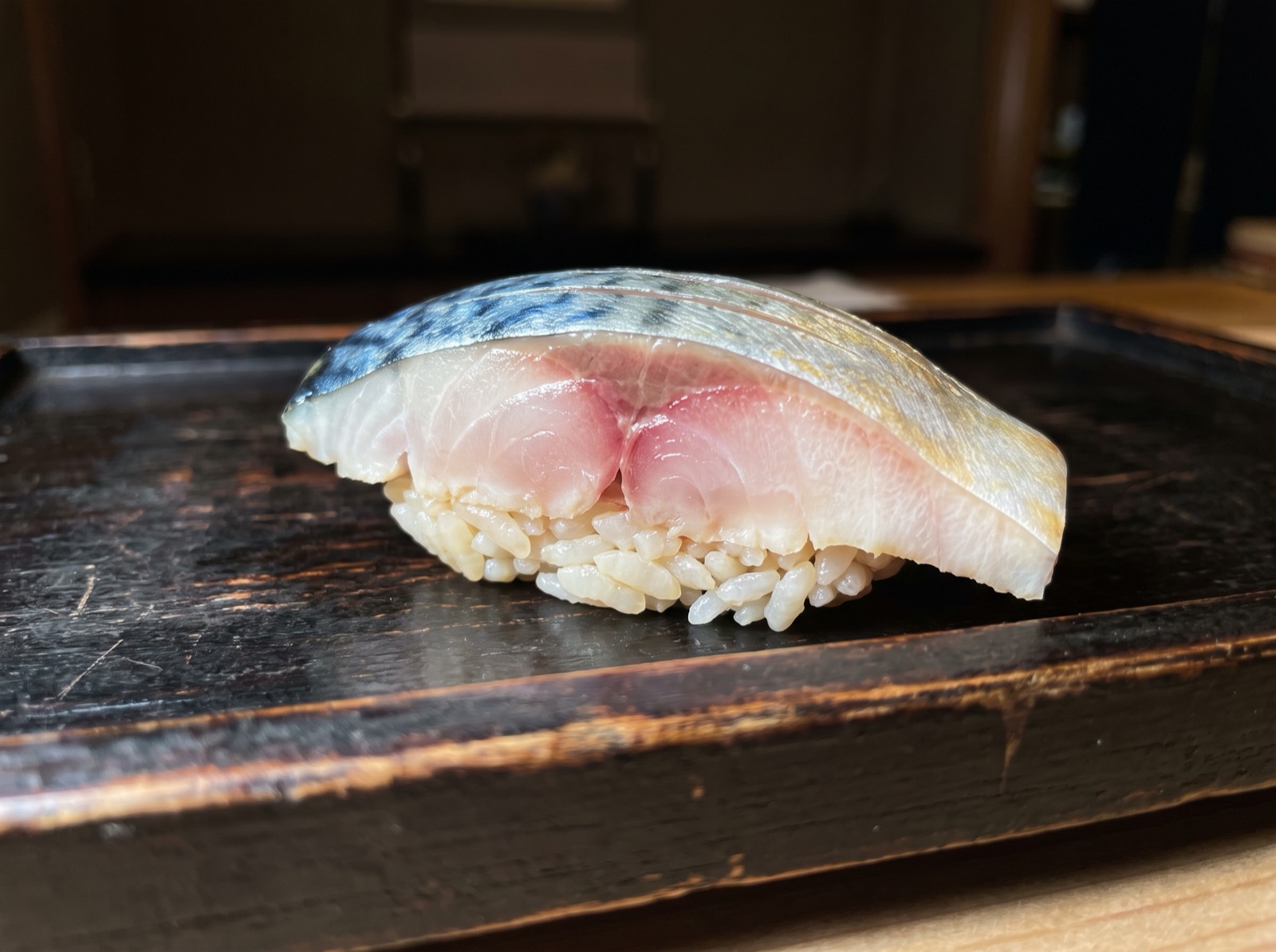
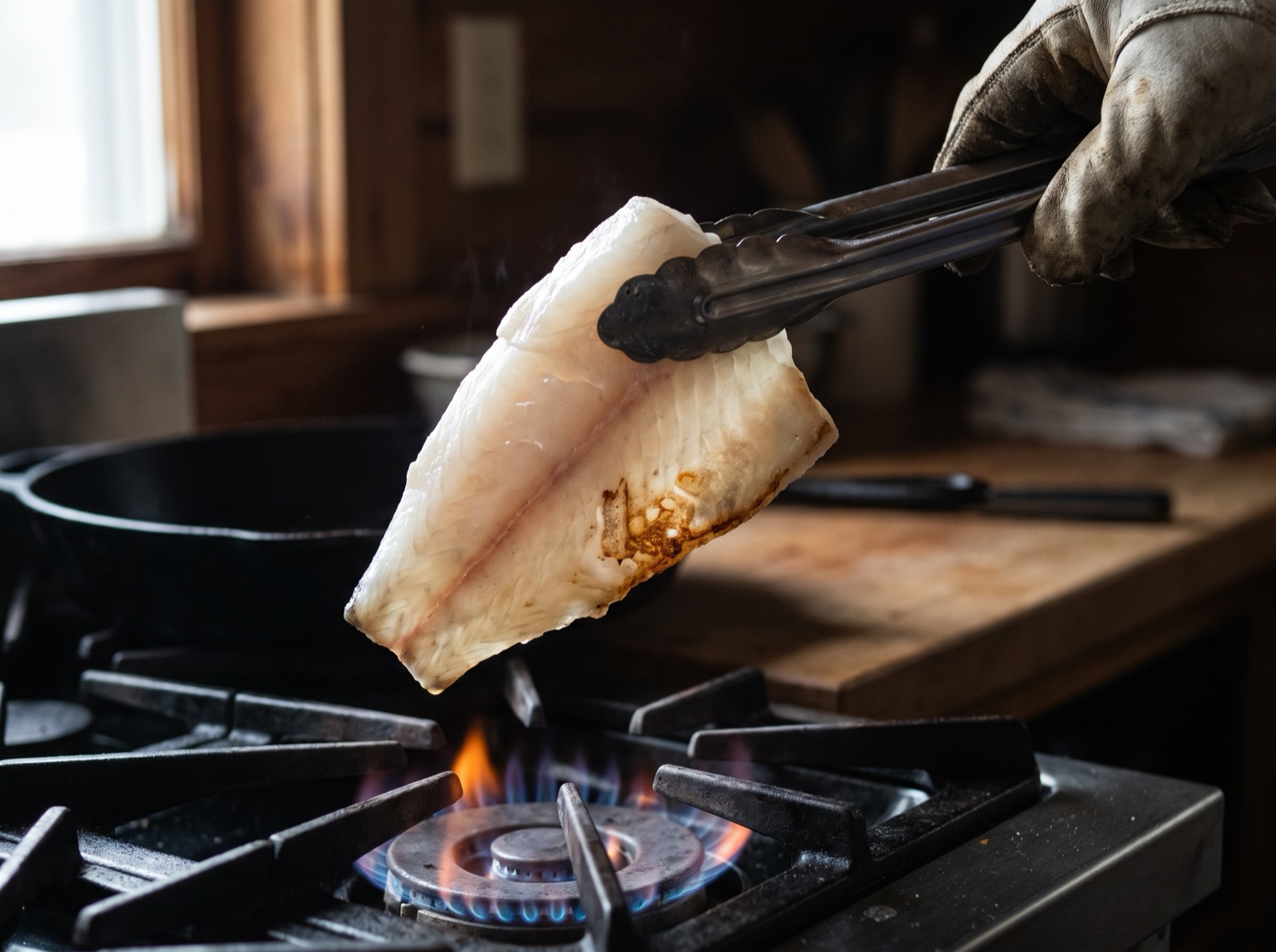
The most common single answer is aburi (あぶり), searing the surface with a direct flame over a fillet left otherwise raw. Sawara’s skin carries flavour the way saba’s and katsuo’s do, and a hard, fast sear on that surface — leaving the centre translucent and barely warmed — is the version most likely to turn up as nigiri.
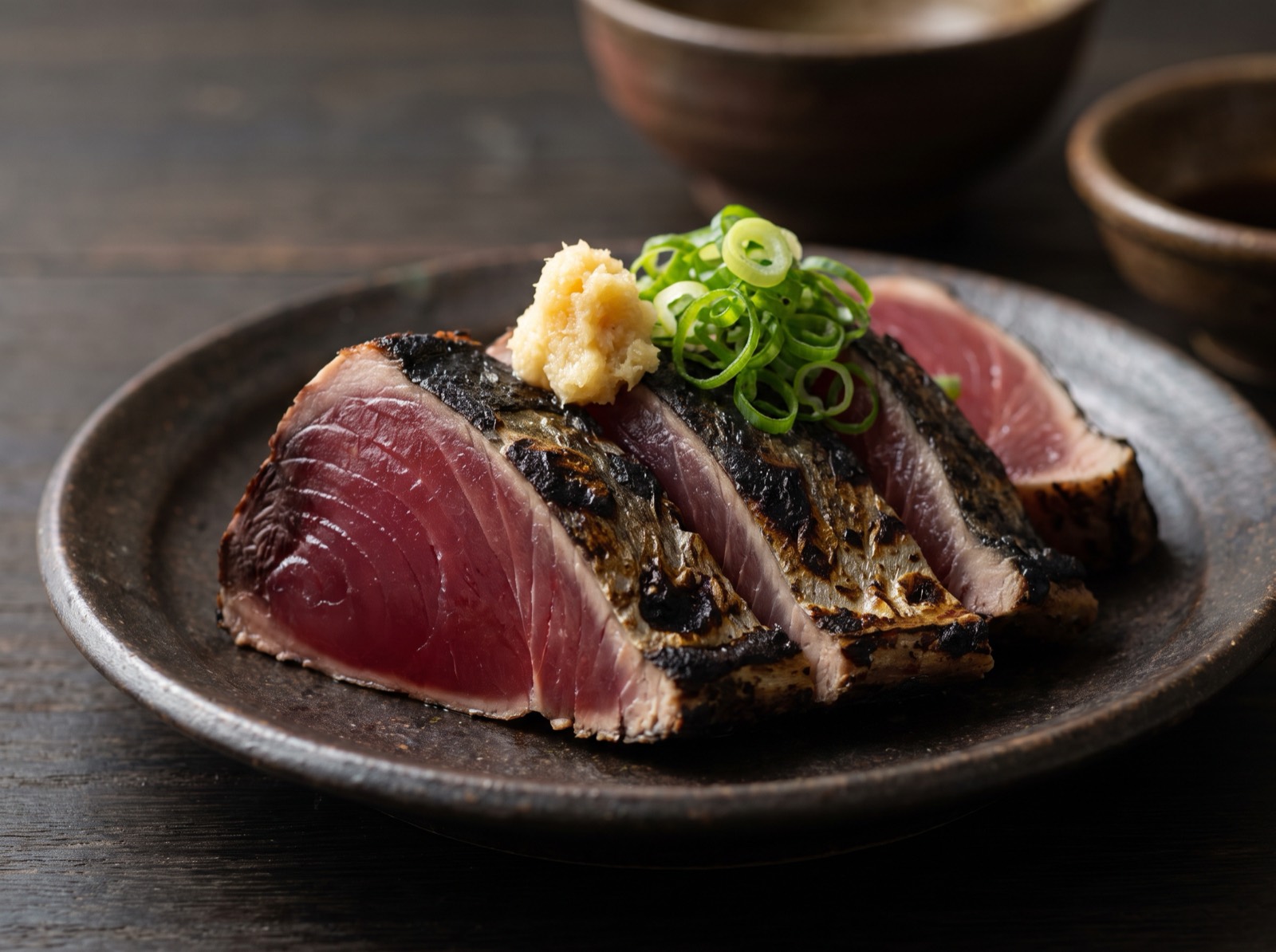
A second version pushes further in the same direction. The fillet is salted first, to firm it and pull moisture, rested, then skewered and seared over an open flame — in its traditional form over burning straw rather than gas, which burns fast and hot and leaves a smoke note the surface would not otherwise carry. It sits closer to katsuo’s straw-fired searing than to anything done to saba, and it asks for more attention: taken too far, the sear cooks past the thin margin the technique depends on, so the fillet is chilled quickly once it comes off the fire to stop it there.
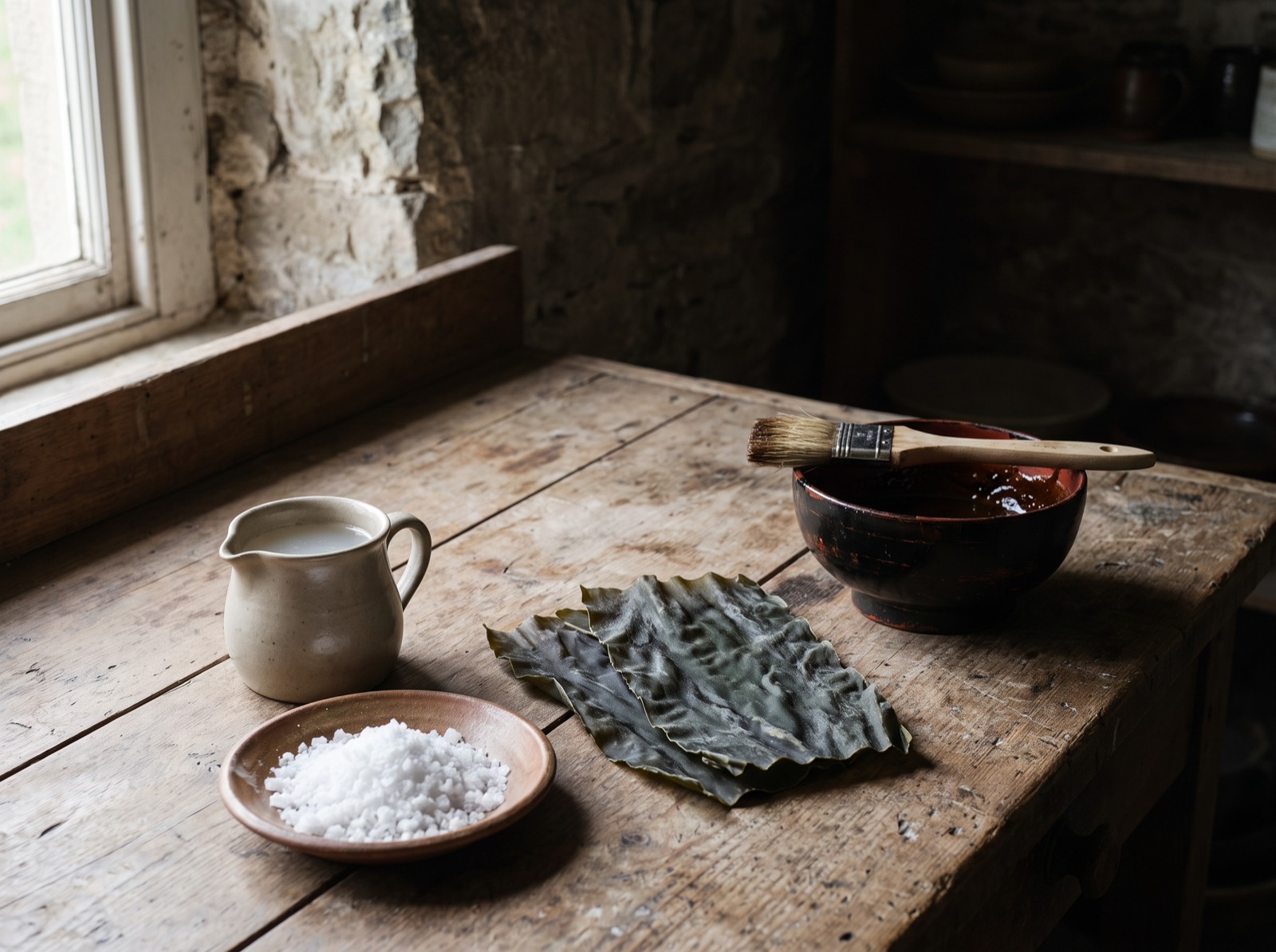
A third treatment borrows from an entirely different part of the menu. Zuke (ヅケ) is marinating fish in a soy-based mixture, and it is most associated with lean tuna — it was originally how tuna itself was kept before refrigeration. Applied to sawara, usually after a light salting and searing of its own, it is a second and independent way of building flavour into a fish that aburi treats with nothing but fire and salt.
A fourth version leaves more of the fish raw than any of the above. The fillet is salted briefly, seared only enough to firm the surface while the inside stays essentially raw, then served with grated onion and soy rather than a fixed sauce. It is the lightest-touch version in regular use, and reads more like a compromise between searing the fish and leaving it alone than like a finished technique in its own right.
- Aburi. A direct flame on the surface only; the centre stays raw and barely warmed.
- Straw or fire-seared. Salted, then hard-seared on a skewer, chilled quickly afterward to stop the cooking where it is.
- Zuke-style. Salted and lightly seared, then finished in a soy-based marinade rather than left plain.
- Salt and a bare sear. The lightest version, dressed with grated onion and soy instead of being cooked further.
Why the choice is not fixed
None of this is arbitrary, and none of it is about correcting a difficult fish the way the salt-and-vinegar cure partly is on saba and kohada. Sawara’s flesh is softer and milder than either of those, without the sharp, oily edge a vinegar cure is built to answer, which gives a kitchen more room to choose: a counter is not hunting for the correct method for sawara the way it more or less is with saba, it is choosing which of several legitimate answers to that day’s fish it wants to serve.
A name can make a claim more confident than the practice behind it.
How it differs from what it is confused with
- Sawara and saba. Same family, same blue-backed category, but saba is smaller and oilier and has something close to a default cure; sawara is larger and milder and does not.
- Sawara and katsuo. Both get a hard surface sear over fire in their more traditional forms, but katsuo’s is tied closely to one region and one name, tataki; sawara’s fire-seared version is one option among several rather than the defining one.
- Sawara and sagoshi. Not different species. Sawara is a shusseuo, a fish renamed as it grows, and sagoshi is the name for it while still young and comparatively lean — a different eating experience from the mature fish it will become, on the same body.
How to say it
sa-wa-ra, three even beats, no stressed syllable — the same rhythm as saba, one syllable longer. Sagoshi is sa-go-shi, also three beats. Aburi is a-bu-ri, three beats again, with the emphasis falling nowhere in particular, which is generally true of Japanese and worth remembering for every word on this page.
Edomae and Kansai
The literature associates sawara most strongly with western Japan — historically the Seto Inland Sea and the waters around it — where it has long been treated as an everyday sushi fish rather than an occasional one. That regional weight is part of why sawara carries less of a single fixed Edomae identity than saba or kohada, both of which Japanese sushi writing treats as core to the Tokyo tradition specifically.
Tokyo counters serve it too, most often as aburi, and it turns up in omakase courses as a lighter, milder counterpoint to heavier reds and shellfish. It is not a defining Edomae fish the way kohada is, and no shop is judged by its sawara the way one might be judged by its kohada or its egg. It is a good piece rather than a test.
Where you will see it, and roughly what it costs
On menus and tasting counters through most of the year, though a shop that runs sawara only for part of it is making its own quiet statement about when it considers the fish worth buying — which is a more honest answer than a fixed calendar date would be. It appears under its own name far more often than under sagoshi, which tends to surface only when a kitchen wants to flag that the fish on hand is smaller and leaner than usual.
No per-piece figure from us. Sawara is not treated as a premium fish the way tuna or uni are, but searing and marinating add labour that a plain raw slice would not require, and that labour is part of what is being charged for. Our omakase price tiers guide sets out the ranges by format rather than by fish.
Frequently asked questions
What is sawara?
A large, silver-blue predator fish in the mackerel family, related to but much bigger than saba. Its kanji pairs the character for fish with the character for spring, and it appears on sushi counters seared, marinated, or occasionally left almost raw, rather than through one fixed treatment.
Why does the character for sawara include the character for spring?
The standard account given in Japanese sushi writing is that the character was chosen to mark the fish as a fish of spring, alongside a separate explanation that the reading itself comes from a phrase meaning ‘narrow belly’, describing its long, thin build. Both are recorded here as the standard account rather than as documented etymology.
When is sawara in season?
This site does not give a specific month for it. Japan runs a long way north to south, and a single national season does not really exist for a great many Japanese fish that range this widely; we found no dated public source specific to sawara that would let us go further than that.
How is sawara prepared at a sushi counter?
There is no single default. Shops sear the surface lightly as aburi, sear it harder on a skewer over fire (traditionally over burning straw), marinate it in a soy-based zuke-style mixture more usually applied to tuna, or salt it and sear it only enough to firm the surface before dressing it with grated onion and soy. More than one can appear on the same menu.
What is the difference between sawara and saba?
Both are blue-backed fish in the same family, but saba is smaller and oilier and is almost always cured with the salt-then-vinegar treatment that comes close to a default for the species. Sawara is larger and milder, and no single treatment plays the same role for it.
How do you pronounce sawara?
sa-wa-ra, three even beats with no stressed syllable — the same rhythm as saba, one syllable longer.