A piece of nigiri that looks identical to the one beside it can be several days apart in age, and the older one is very often the better order. That runs against almost every instinct a diner brings to raw fish, where fresher reads as better by default. Jukusei is the deliberate exception: a decision, made in the kitchen and never on the plate, to let a fish sit before it is served.
What it is
Jukusei (熟成) means ageing, in the plain dictionary sense of the two characters: 熟, to ripen, and 成, to become. Applied to a fish at a sushi counter, it means holding the flesh under refrigeration for a period after it has been caught and dressed, rather than serving it as soon as it is fit to eat. Nothing is added to the fish while that happens. No vinegar, no salt cure worked into the flesh, no soy. The rest itself is the entire technique.
That plainness is what makes jukusei easy to underrate next to the other work done to a fish before it reaches the rice. Su-jime changes a fish’s chemistry with an acid. Kobujime trades the fish’s water for a sheet of kelp’s flavour. Jukusei does neither. It does not change the fish directly — it gives the fish’s own chemistry time to keep working after death, in a kitchen’s refrigerator rather than in the sea.
When it is used
Not every fish gets it, and no kitchen ages everything it serves for the same length of time. The decision is made fish by fish, sometimes cut by cut, based on what that particular piece is doing under refrigeration rather than on a schedule fixed in advance. Our guide to what Edomae sushi actually means already calls jukusei the most modern of the four jobs done to a fish before it reaches the counter, and the most contested within the trade — chefs genuinely disagree, in print and at the counter, about how far to take it. This entry is about what that disagreement is actually over.
What the chef actually does
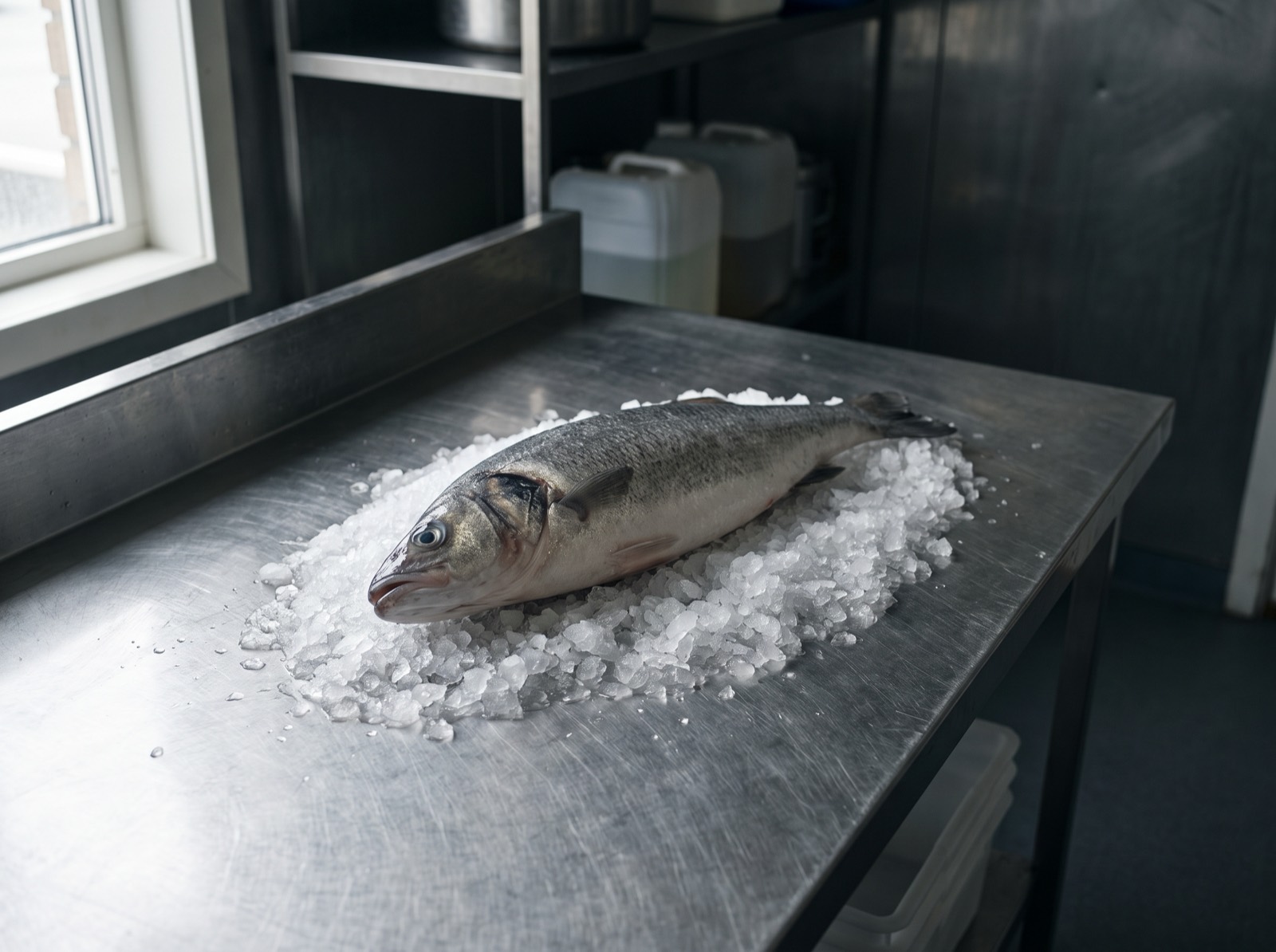
The fish has to survive to be aged at all, and that starts earlier than the ageing itself. Ikejime, the instant kill performed at the point of catch, is what makes a long rest possible in the first place. Done badly, or skipped, it leaves a fish spoiling rather than maturing, and there is nothing a kitchen can do afterward to recover the difference. Jukusei is not part of the ikejime process; it is what a kitchen can attempt only once ikejime has already been done correctly.
From there the fish is filleted and held cold and undisturbed, usually wrapped — the sources describe different paper against the flesh side than against the skin side, and insulated packaging to keep the temperature steady. Some kitchens re-salt a piece lightly partway through the rest, not to season it but to keep drawing surface moisture out, the same job the wrapping paper is already doing. What is being managed, throughout, is the surface of the fish: kept dry, kept cold, left alone.
The clock a kitchen actually watches is not on the wall. The sources behind this piece are consistent that readiness is judged by looking and by touch — the colour of the flesh, and how much it gives under a finger — rather than by counting days from the catch. Two fish landed on the same boat on the same day can be ready at different times, and a chef working this way is reading the fish in front of them, not a chart.
- Texture. Flesh that is taut and springy in the hours after the catch gradually yields. A cut that would have sprung back under a knife on day one lets the blade through more easily by the end of the rest.
- Colour. The surface shifts gradually over the rest, and it is one of the few outward signs a chef can read without cutting into the fish.
- Savour. Fish that tasted of very little when it was landed develops a depth of flavour it did not have at the start — the effect the whole technique exists to produce.
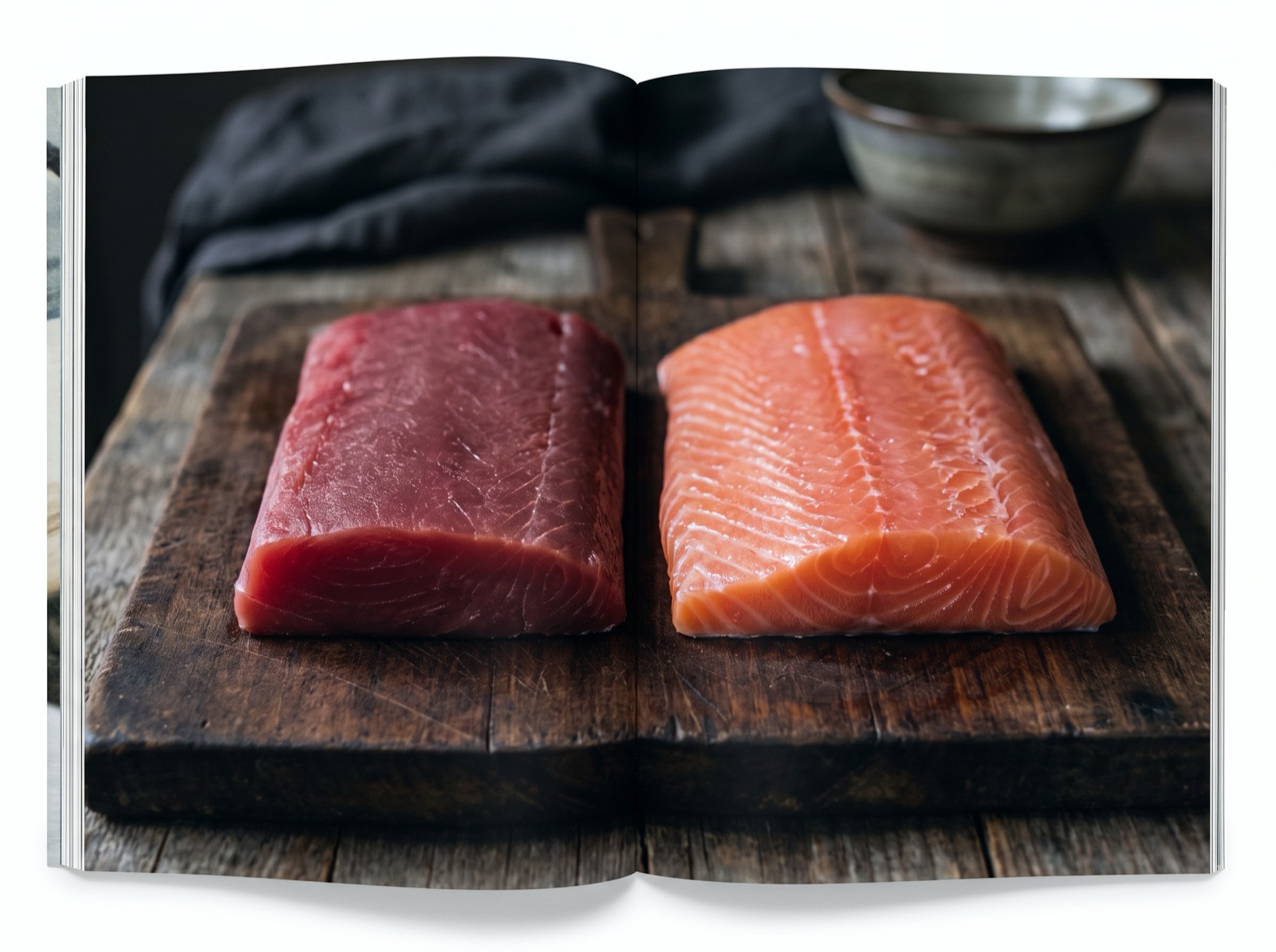
Ageing does not suit every fish the same way, and the reason is not mysterious: a structurally loose, high-fat fish and a lean, dense one are not starting from the same place, so they do not need the same amount of time to get where they are going. Kanpachi, firm and lean, is aged “selectively, and usually briefly” by that entry’s own account, where tuna is the fish most associated with a long rest. Firm jacks do not demand what tuna demands, and a chef who serves one fish fresh and ages another for days can be applying the same judgement twice, not contradicting it.
Why it is done
Jukusei shares its origin with the rest of the Edomae repertoire: a set of jobs invented to let fish be held before refrigeration existed, for the plainest possible reason, so that it could still be eaten. What refrigeration removed was the necessity. What it left behind, once a kitchen no longer had to hold fish this way just to keep it, was a flavour effect worth keeping on purpose — which is the version of jukusei practised now, and part of why it looks so different from the other jobs the same guide describes.
The judgement a chef is actually making has a cost on both sides. Too short a rest, and the fish still tastes of little beyond its own bite. Too long, and the same process that built the savour starts working against the texture that made the fish worth ordering in the first place.
That is the disagreement the trade genuinely has, and it is also why no single correct number of days exists to give you: the answer depends on the fish in front of the chef, not on a rule that would hold for the next one.
Jukusei changes nothing about a fish directly. It only gives the fish’s own chemistry time to keep working, in a refrigerator rather than in the sea.
How it differs from what it is confused with
- Jukusei and ikejime are not the same step, and one is not a description of the other. Ikejime is the kill; it happens at the point of catch, before a kitchen ever sees the fish. Jukusei is what a kitchen can choose to do afterward, and only because ikejime was done correctly to begin with.
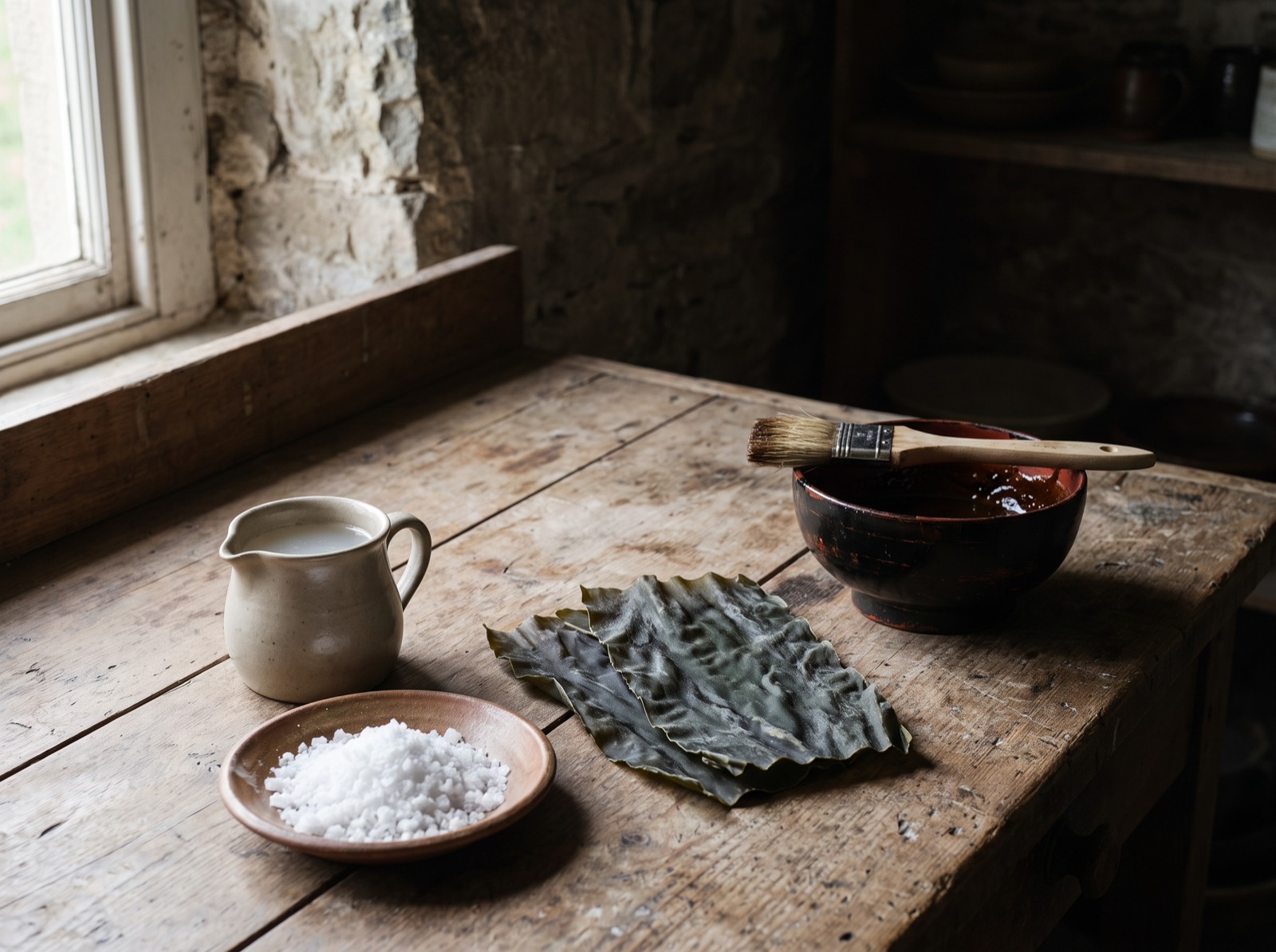
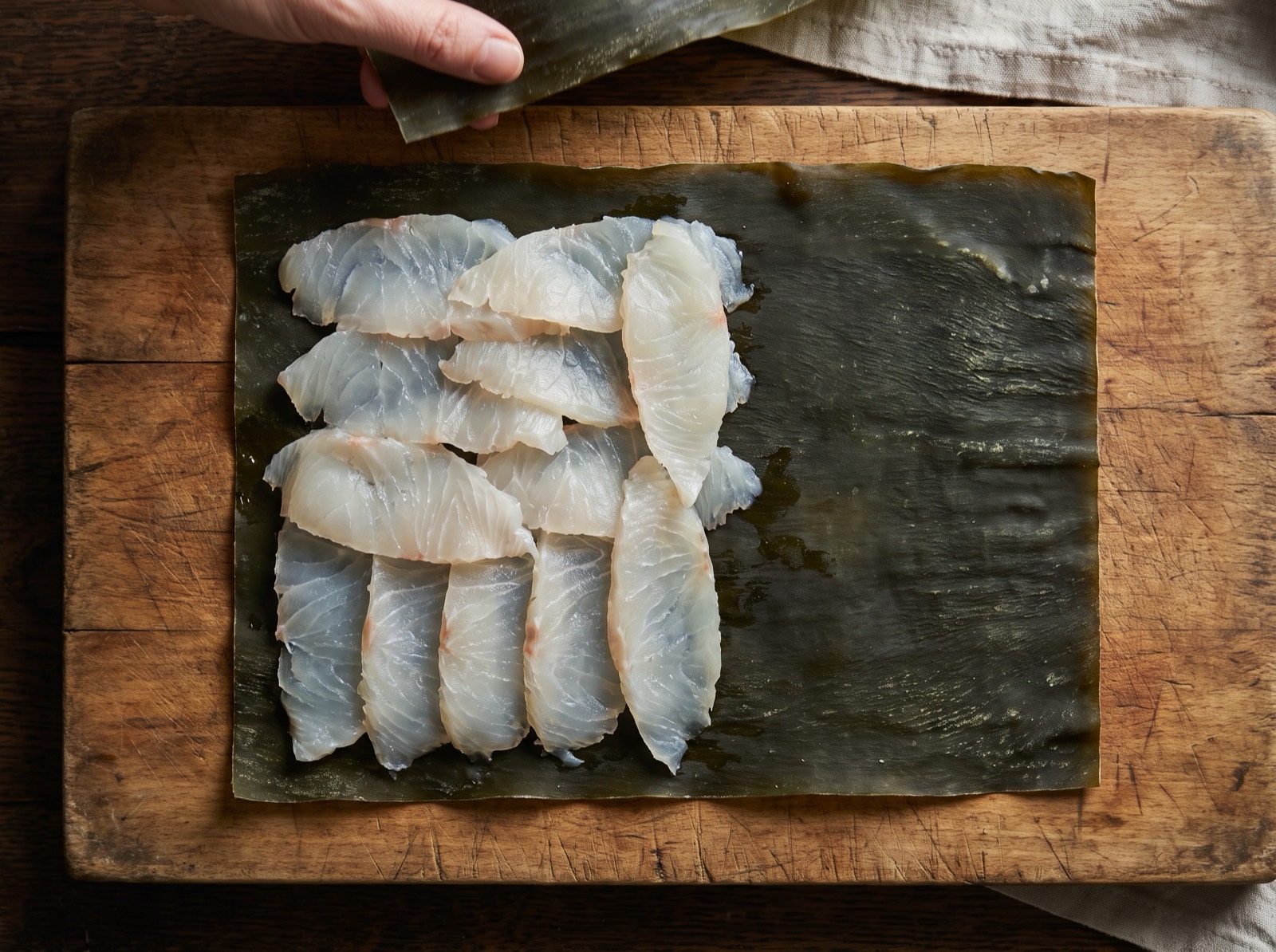
- Jukusei and kobujime are cousins rather than the same technique. Both let a fish sit and change over time, but jukusei happens with the fish exposed, while kobujime happens with the fish held against a sheet of kelp that is doing chemical work of its own. Jukusei is ageing in the open; kobujime is ageing by contact.
- Jukusei is not a cure. Su-jime changes a fish with an acid, salt then vinegar, worked into the flesh directly. Jukusei adds nothing to the fish at any point. The only ingredient involved is time.
How to say it
ju-ku-sei, four even beats, no stress on any one of them — the same flat delivery every Japanese word on this site asks for. You are unlikely to hear it announced with a number attached. A chef who tells you a fish has been aged is describing a decision, not reciting a duration.
Where you will see it
Almost never printed as such. A menu will name the fish; it will not usually say how long that fish has rested, because the answer was a judgement made in the kitchen rather than a figure worth publishing. Where jukusei reaches a diner at all, it is more often spoken than written — a chef mentioning, as a piece is served, that this particular one has had some time.
That is consistent with the rest of what happens on this side of the counter. Ikejime leaves no evidence a diner can see. Kobujime looks identical to plain sashimi once the kelp comes off. Jukusei is no different: what you are eating is the result of a rest you were never shown, and the only way to know it happened is to be told.
Frequently asked questions
What is jukusei?
Deliberate ageing: holding a dressed fish cold and undisturbed for a period after it is caught, without adding anything to it. Unlike curing or marinating, jukusei changes the fish only by letting time pass.
How long is fish aged before it is served?
There is no fixed number. Readiness is judged by the colour and feel of the flesh rather than by counting days, and the sources behind this piece are explicit that the correct length depends on the individual fish, not on a rule that would hold for the next one.
Is ageing a food-safety measure?
No. Jukusei is a flavour and texture technique, not a way of making raw fish safer to eat. The measures that make raw fish safe in Japan are covered separately in our guide to sushi safety.
What is the difference between jukusei and kobujime?
Both let a fish change over time, but jukusei happens with the fish exposed to nothing but cold air, while kobujime happens with the fish pressed against sheets of kelp that are doing chemical work of their own. Jukusei is ageing in the open; kobujime is ageing by contact.
What is the difference between jukusei and ikejime?
Ikejime is the instant kill performed at the point of catch. Jukusei is the rest a kitchen may choose to give the fish afterward, and it only works because ikejime was done correctly first. One is not a version of the other.
Does every fish get aged the same way?
No. Firm, lean fish are generally aged more briefly than fattier, structurally looser fish, because they are not starting from the same texture or the same flavour. Which treatment a given fish gets is a judgement made about that fish, not a uniform rule.