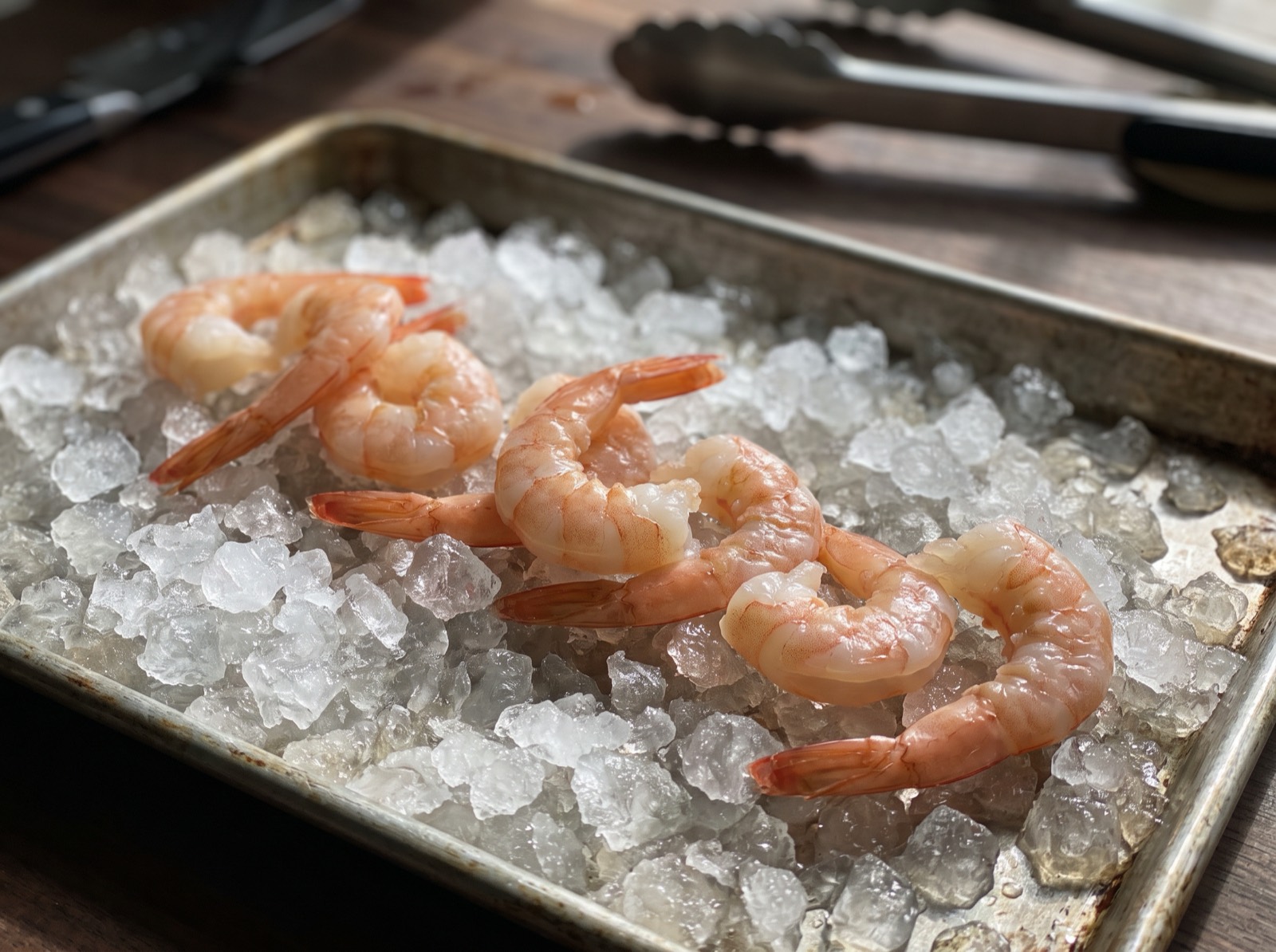
Ama-ebi (甘エビ) is one of the three prawns this site already separates out in our ebi entry — the small, raw one, eaten without cooking. This is not that comparison again, and it is not a description of what the animal looks like on the rice. It is about one narrower question: what happens to this particular shrimp in the hours between being caught and being served, and why a kitchen that skips that gap is not actually doing you a favour.
What it is
Ama-ebi lives in genuinely deep, cold water, well below where most of what lands on a sushi counter is caught. Because it is fished far offshore, and because the animal itself is small, a single piece of nigiri often uses more than one.
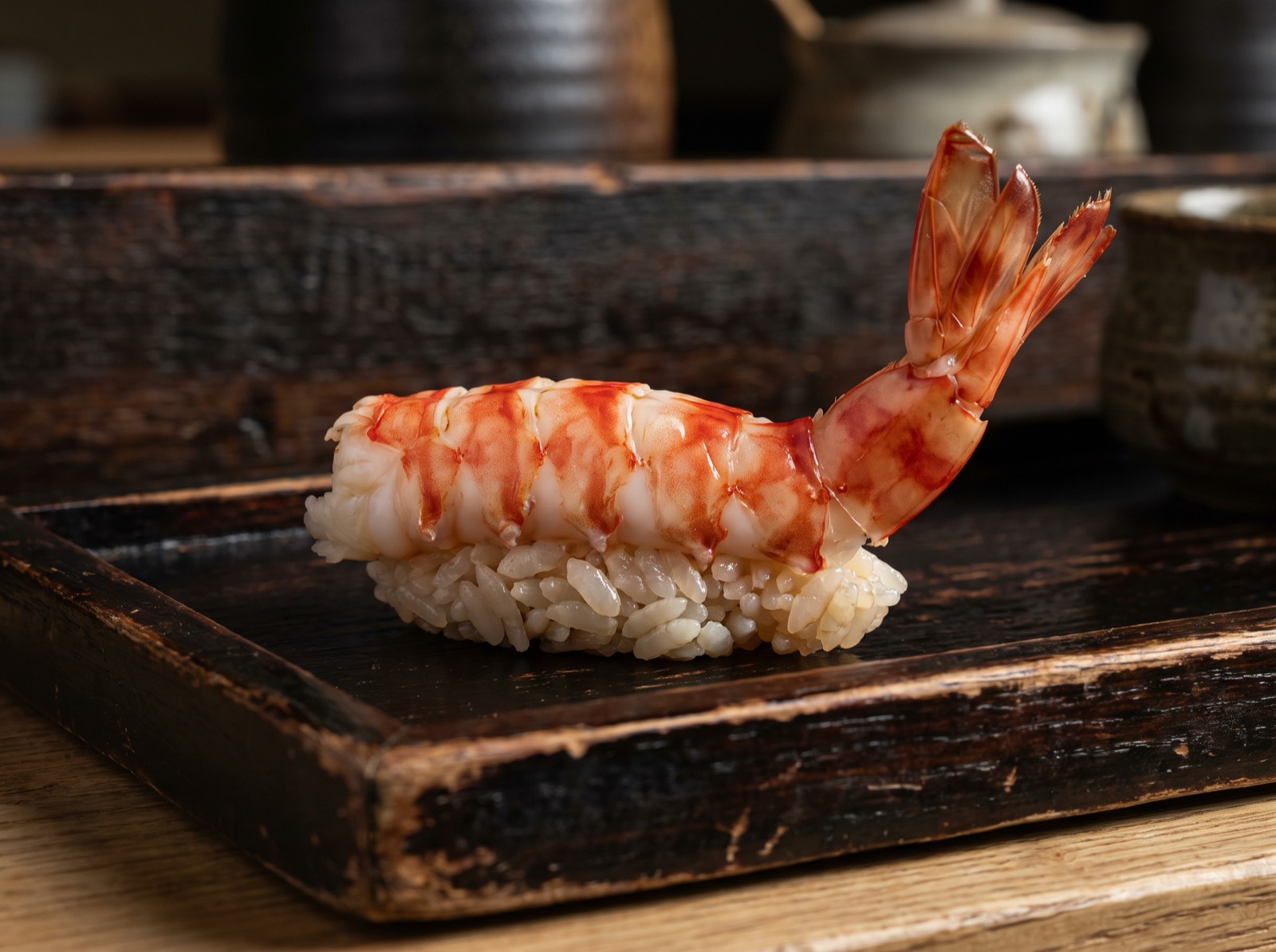
What reaches the counter is the whole animal and nothing else: no marinade, no glaze, nothing brushed on. That plainness is exactly what makes the rest of this entry interesting.
It is also slightly surprising, because ama-ebi is, by every account in the sources behind this piece, a fast-spoiling ingredient — the same description this site uses elsewhere for the oily, short-lived fish that get cured in salt and vinegar for exactly that reason. Ama-ebi is not cured. It is not su-jime, it is not zuke, and nothing about its treatment changes its chemistry the way a cure does. What actually happens to it is simpler than that, and less visible.
The gap between the catch and the counter
With most raw seafood, the instinct is straightforward: the less time between the water and the rice, the better. It is close enough to a rule that a shop will say so itself. Ama-ebi does not fully follow it. On the evidence of the Japanese-language sources behind this piece, a shrimp peeled and served within the hour of being caught is not showing its best self. It is showing an earlier one.
More than one Japanese-language reference makes the same point, independently and in similar terms: a live or very recently killed ama-ebi is firm and plump, but pale by comparison, and without the fuller sweetness the animal is named for. What changes that is not cooking, and it is not a cure. It is simply time.
- The catch. Ama-ebi comes from cold, deep water and has typically already been handled once, at sea or at the dock, before it ever reaches a kitchen.
- The peel. Head and shell are removed by hand, one animal at a time.
- The rest. The peeled shrimp goes into the chiller rather than straight onto the rice. This is the step the sources are specific about: both the colour and the sweetness the animal is named for are described as needing this gap to arrive, not the moment of the catch itself.
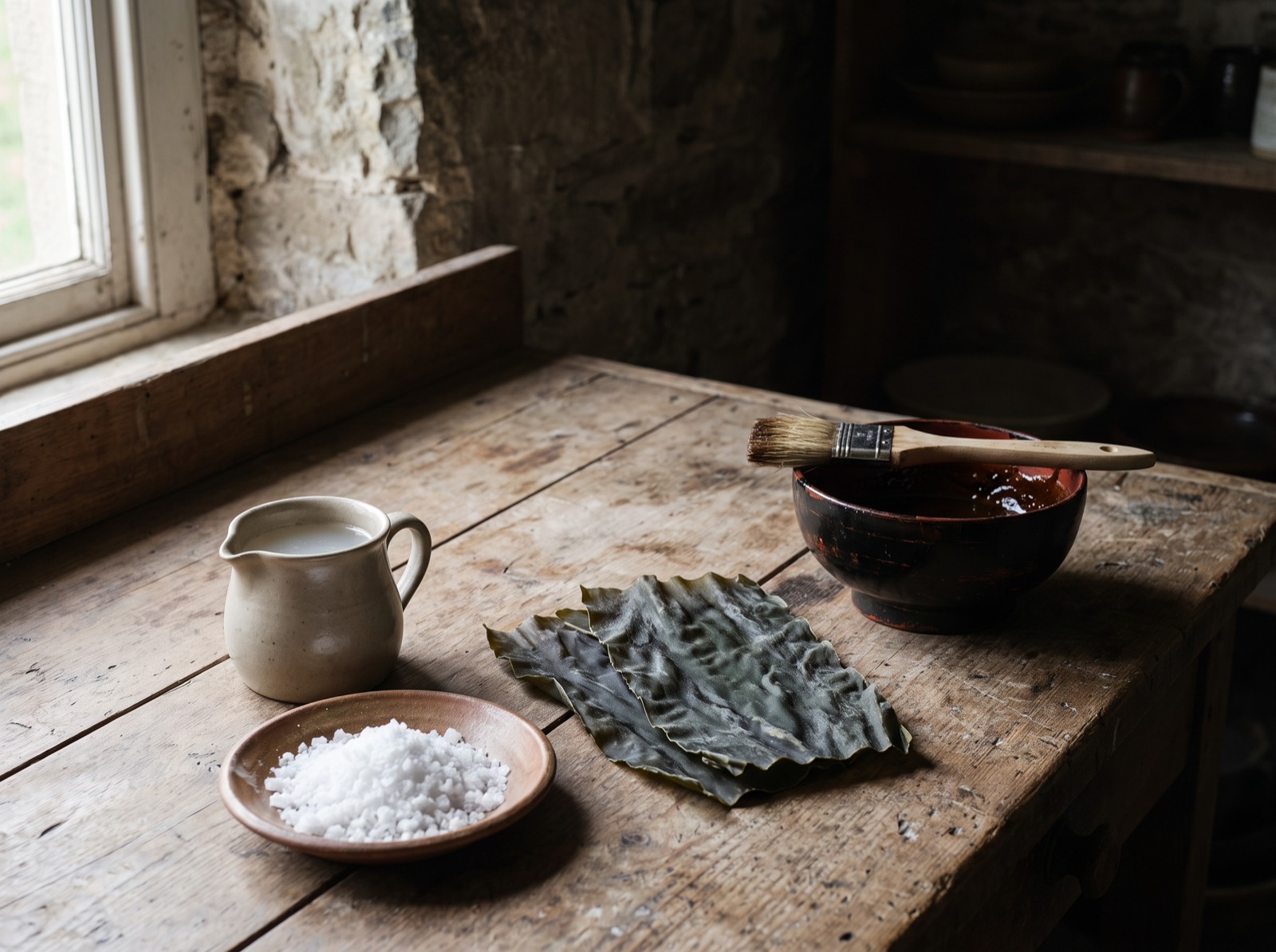
- The press, sometimes. Some kitchens take it a step further and press the shrimp briefly between sheets of kelp — kobujime, the technique our guide to Edomae sushi describes being used on fish, applied here to a shrimp instead. If the animal is carrying roe, a little of it is often set back on top once the kelp comes off.
None of this is a cure and none of it is a marinade. Nothing is added to the shrimp at any point. It is simply held, cold, for a period the sources do not reduce to a fixed number — and we are not going to invent one where our own material does not give us a citable figure. What is consistent across the sources is the direction, not the duration: later is described as better than sooner.
Why it is handled this way
We are deliberately not attempting to explain what is changing in the flesh, and we are not attaching a duration to the effect, because the trade literature behind this piece was written for a kitchen rather than for footnoting, and we do not have a public, citable source precise enough to publish either. What is documented consistently, across more than one Japanese-language reference, is the direction of the change itself: colour and sweetness both develop with time after death, not before it.
One of the sources we consulted for this piece uses the same word this site uses elsewhere for a much longer process: jukusei, ageing, described in our guide to Edomae sushi as fish sometimes held for a week or more. Ama-ebi is not aged on anything like that scale, and we are not claiming it is. But the underlying idea is the same one: what the animal needs from the kitchen is not more freshness. It is permission to sit for a while first.
That also separates it from the other Edomae treatments described on this site. Curing changes the flesh outright; marinating adds soy; simmering and glazing add a whole reduction. Nothing here is doing anything to ama-ebi except holding it still and cold. The work, such as it is, is restraint.
It also does not sit inside the four jobs our guide to Edomae sushi sets out. Ama-ebi’s handling is not su-jime, not zuke, not nitsume, and not the week-scale jukusei that guide describes for fish. But it borrows the same premise those four jobs share: a shop, not the boat and not the fish market, decides when a piece is actually ready.
Ama-ebi is named for a sweetness that is not fully present the moment it is caught. It has to be given time to show up.
How it differs from what it is confused with
- Ama-ebi is not botan-ebi. Both are raw, soft, cold-water prawns served in similar fashion, but they are different animals with a different bite; our ebi entry sets out how the two compare.
- “Sweet prawn” is not a grade. Our ebi entry already makes that point; this entry is not about whether the sweetness is real, but about when it actually arrives.
- The sweetness is not seasoning. Nothing is brushed on or added; what reaches the plate is the animal itself, given time rather than flavoured.
- The wait is not spoilage. A rested ama-ebi has been held cold and deliberately, not left out; the sources behind this piece treat the two as opposites, not variations on the same risk.
How to say it
ah-mah-EH-bee, four flat beats, with no stress on any one of them. On a menu it is almost always written in katakana, 甘エビ, where the reference books behind this piece tend to use the kanji form, 甘海老; both are read exactly the same way.
Where you will see it
Ama-ebi is one of the most widely available raw items in the country, as common on a conveyor belt as it is in an Edomae case, which makes it, for a great many visitors, the first genuinely raw thing they ever order. Ordering it tells you almost nothing about a shop’s prices.
What it can tell you, if you know to look, is something closer to what is actually on the plate than usual for this site. Most of what separates careful handling from careless handling at a sushi counter leaves no trace a diner can see; the fact behind our ikejime entry is a good example of one that leaves none at all. Colour, here, is the partial exception. A dull, underdeveloped shrimp is not proof of anything on its own — but it is at least a visible hint pointing at the same gap in time this entire entry has been about.
Sweet, in other words, is not the word for how the animal tasted the moment it came out of the water. It is the word for what it becomes if nobody rushes it.
Frequently asked questions
Is ama-ebi better the moment it is caught?
No, according to the Japanese-language sources behind this piece. A shrimp peeled and served within the hour is described as a paler, less sweet version of the same piece. Both the colour and the sweetness it is named for are described as developing over time after death, not at the moment of the catch.
What does a kitchen actually do to ama-ebi before it is served?
It is peeled by hand, one animal at a time, then rested cold rather than served immediately. Some kitchens go further and press it briefly between sheets of kelp, a technique called kobujime, before it goes back into the chiller.
Is ama-ebi cured, the way kohada is?
No. Curing, marinating and simmering all actively change the flesh; ama-ebi is not treated with any of them. It is simply held cold for a period, with nothing added and nothing brushed on.
How is ama-ebi different from botan-ebi?
They are different animals, both raw, soft, cold-water prawns served in a similar way but with a different bite. See our ebi entry for how the two compare.
How do you pronounce ama-ebi, and how is it written?
ah-mah-EH-bee, four flat beats with no stress on any one of them. Menus almost always use the katakana form, 甘エビ; reference books tend to use the kanji form, 甘海老. Both are read the same way.
Where will I actually see ama-ebi, and can I tell if it was rested properly?
It is one of the most widely available raw items in Japan, found on conveyor belts as often as at Edomae counters. There is no certain way to tell from your seat, but colour is a partial hint: a dull, underdeveloped shrimp points at the same gap in time this entry describes.