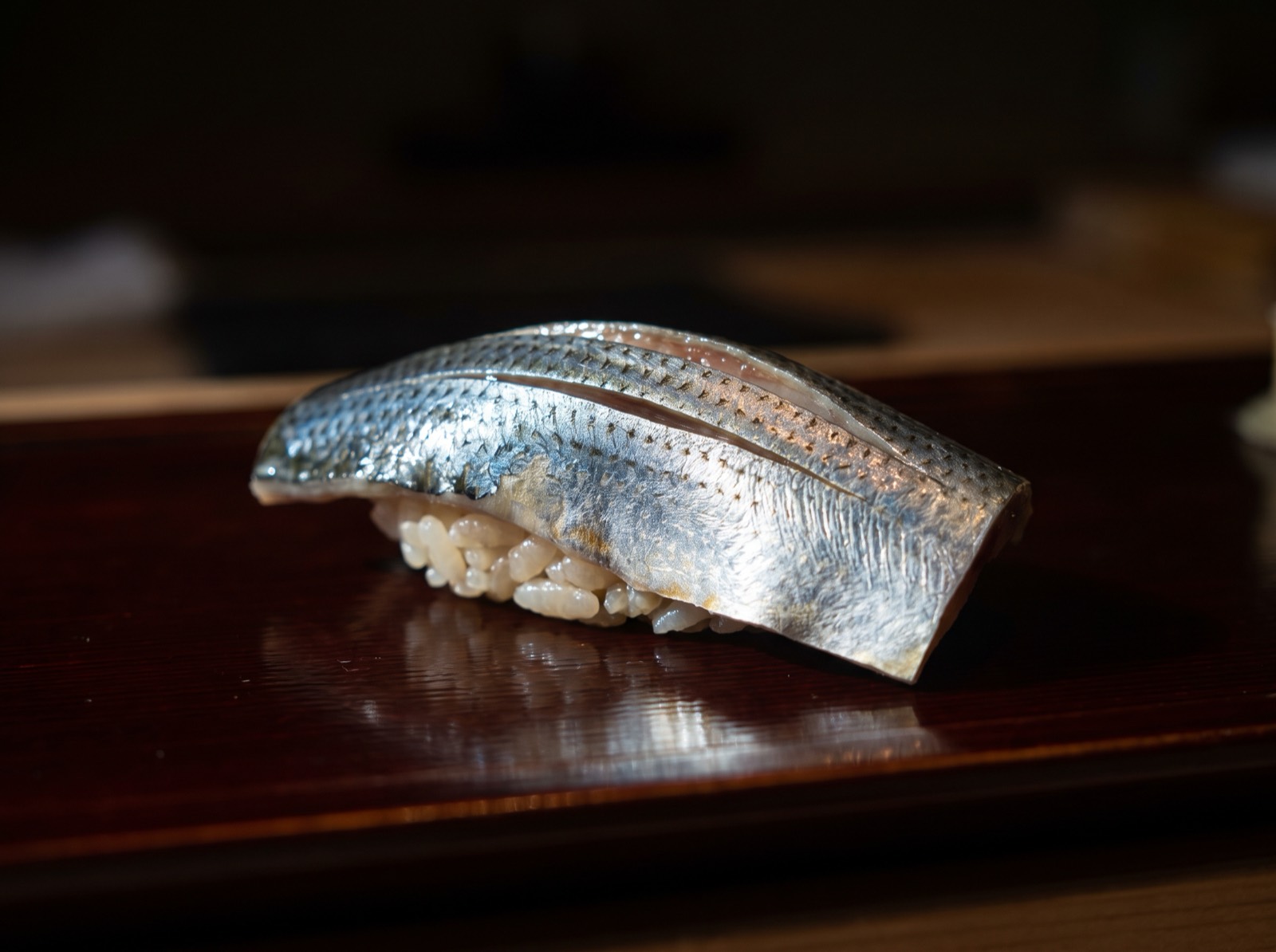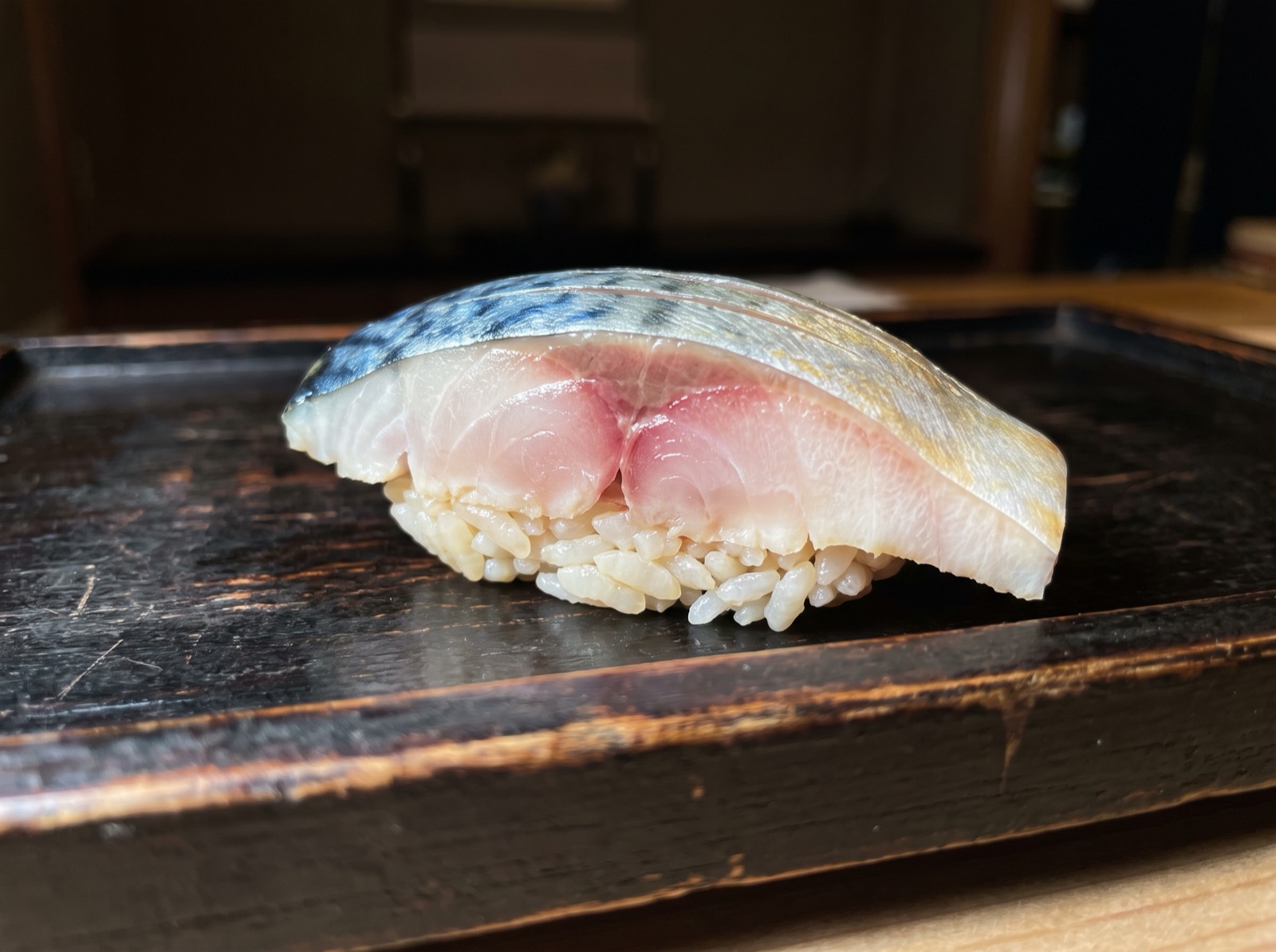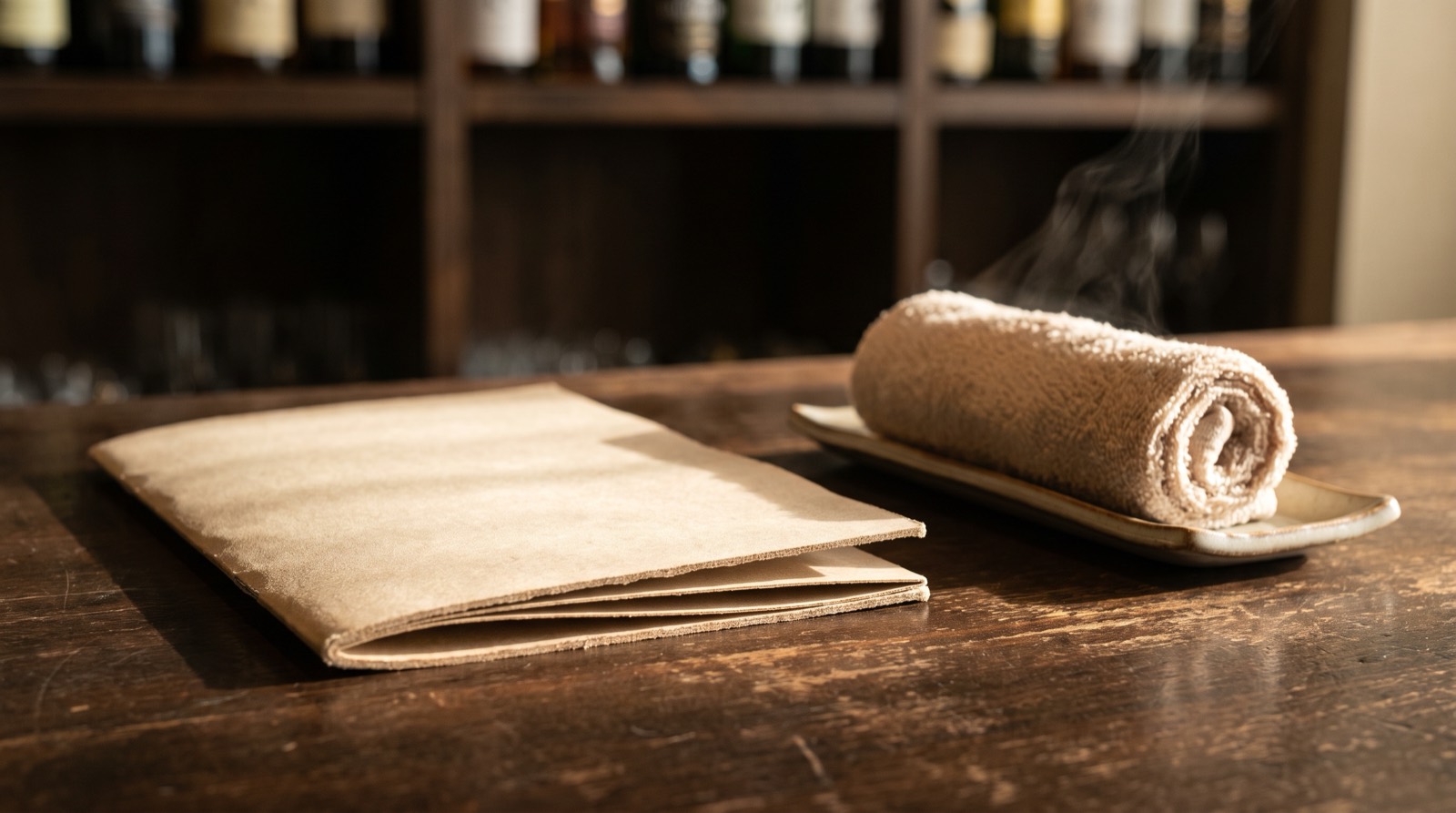
Open the English menu at a serious Tokyo sushi counter and the third item in nearly every course reads something like silver skinned fish. Open the Japanese page underneath and the word is hikarimono. Neither version names the fish. On at least one counter’s own menu, the fish that can turn up behind that word includes sanma — and sanma is not one of the fish this site’s own glossary of hikarimono has researched and stood behind.
What it is
Sanma (サンマ), Pacific saury, Cololabis saira, is a long, blade-thin fish with a blue-black back and a belly that runs bright silver. Its own name, written 秋刀魚, reads literally as autumn and sword — the two kanji describe the season and the shape at once. It is an oily, strongly flavoured fish, and in Japan it is at least as familiar salted and grilled whole as it is in any form served over rice.
It belongs, in general terms, with the fish the trade calls aozakana (青魚) — blue-backed fish — a category our own entry on hikarimono describes as historically separate from hikarimono but now largely merged with it in ordinary use. Sanma sits inside that merged sense as comfortably as any fish on this site.
Where it sits in hikarimono
This site’s own glossary of hikarimono defines the word as two clauses joined by and: fish whose skin catches the light in silver, and fish that are cured in vinegar before they reach the rice. That entry names the fish it has researched and published itself, and stops there rather than adding a name it has not stood behind. Sanma is not on that list. That is a statement about what this site has and has not researched, not a verdict on the fish.
By the first clause alone, sanma clears the bar easily: the same blue-black back and silver flank that put kohada and saba on that list. Whether it clears the second is not something a single sentence can settle, because — unlike kohada, which is always cured, or saba, which almost always is — what happens to sanma before it reaches the rice depends on which counter you are sitting at.
What the chef does to it
The Japanese-language literature we consulted for this fish describes three live options rather than one settled convention, which puts sanma in a different position from most of the fish already covered on this site.
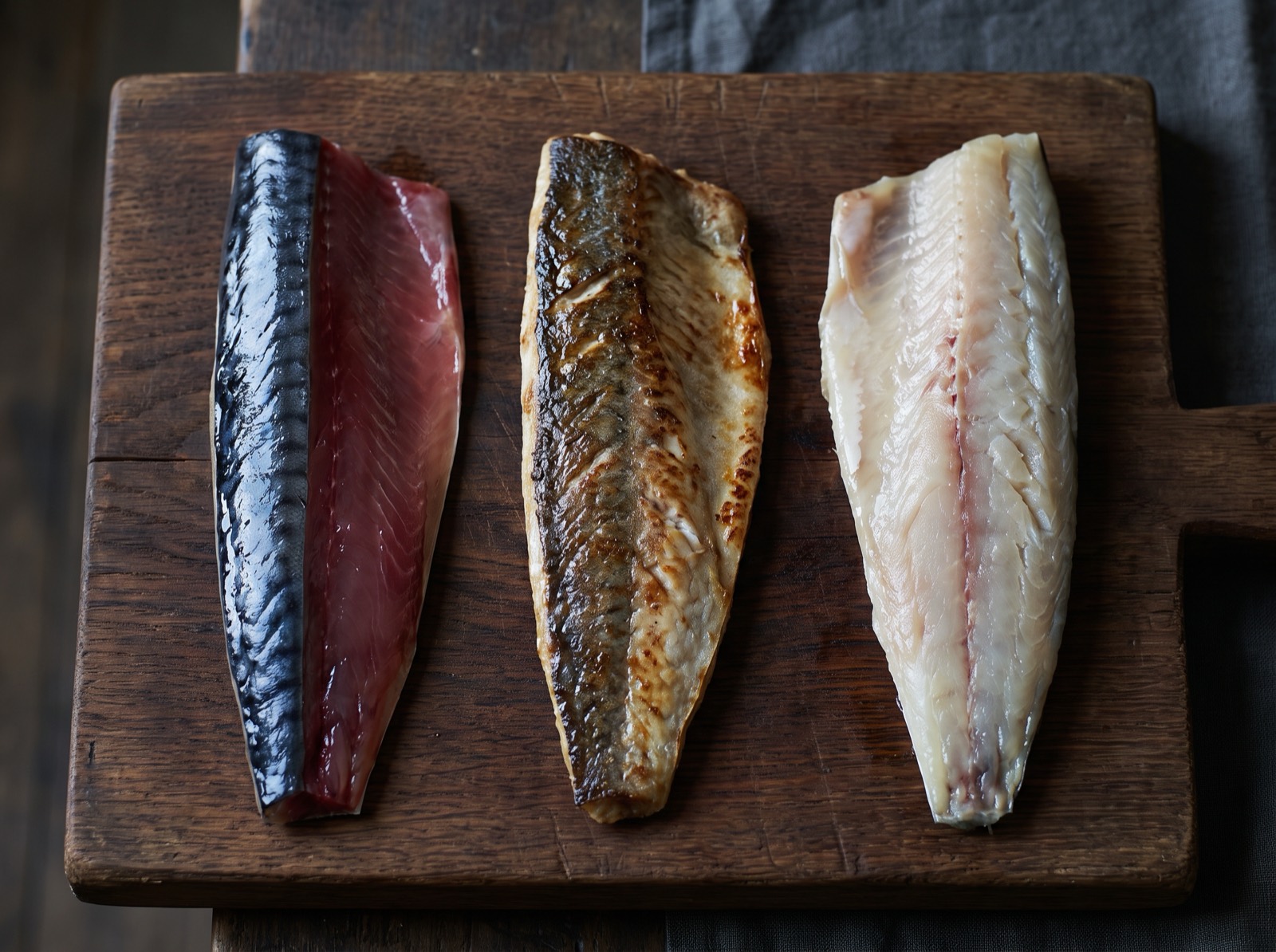
- Raw, with ginger and scallion. The fillet is served as it is, topped with grated ginger or chopped spring onion — the same seasoning aji wears, doing the same job of cutting an oily fish’s aroma.
- Seared, aburi (炙り). A flame is run across the skin side. The fat just beneath it renders and chars slightly, and the piece comes out more fragrant than the raw one beside it.
- Cured, su-jime (酢締め). Salted, rinsed, then set in vinegar — the same two-step cure described in our entries on kohada and saba, used here to cut a fattier fish’s richness and let it keep a little longer.
None of the three is the house style the way su-jime is for kohada, or the way raw with ginger is for aji — a fish our own entry describes as having, for the most part, stopped being cured at all. Sanma has not settled into either camp. Which of the three a shop reaches for is reported to turn on how fatty that particular catch is running, not on a fixed rule.
Sanma has not settled into either camp.
Why it is done
The reason behind all three answers is the same fish, handled around the same problem. It is an oily fish, and that oil is a fast route to a flavour that reads as heavy or fishy by the time it reaches the counter. Curing cuts it with acid and firms flesh that would otherwise eat slack. Searing cuts it with heat and char. Ginger and scallion cut it with their own sharpness. None of the three is solving a different problem; they are three tools aimed at the same fat.
What none of them is doing is making the fish safer to eat raw. Japan’s Ministry of Health, Labour and Welfare names saury among the species in which Anisakis larvae are found, alongside mackerel, horse mackerel, bonito, sardine and squid, and it states plainly that vinegar, salting, soy sauce and wasabi do not kill the larvae.
What the same ministry lists as effective is freezing at −20°C for 24 hours or more, or heating to 70°C (60°C for one minute), together with removing larvae by eye during preparation. A cured or seared piece of sanma may well be safe, but if it is, the reason is freezing or inspection somewhere upstream of the counter, not the cure or the sear itself. See our guide to sushi safety in Japan.
How it differs from what it is confused with
- Sanma and sayori. Long, silver and thin enough to be confused at a glance, which is exactly the pairing our own entry on sayori makes — and calls opposites in almost every other respect. Sayori is lean, nearly fat-free and beaked; sanma is oily, strongly flavoured and beakless. The silhouette is the only thing the two share.
- Sanma and saba. Both oily, both blue-backed, both candidates for the same salt-then-vinegar cure. The difference is how settled the choice is: saba, by our own account, is almost never served raw at all; sanma still turns up raw, seared and cured at different counters in the same season.
- Sanma and aji. Both blue-silver hikarimono, both worn with ginger and scallion when served raw. But aji, on this site’s own account, has for the most part stopped being cured; sanma has not settled into any one answer.
- Sanma is not only a sushi fish. Whole and grilled with salt, it is at least as familiar on a Japanese table as it is at a counter, which is a fact about the fish rather than about any kitchen’s technique.
How to say it
sa-n-ma, three beats. The n is held as its own beat, not slurred into the syllable before or after it, the way it is throughout Japanese.
Where you will see it
One Tokyo hotel counter’s course menu names 光り物 as the third item in every course, in Japanese and in English alike. Our own reporting on that menu, done for an unrelated story about restaurant English, found kohada, aji, sayori, iwashi and sanma all listed as fish that can live inside that single line. The category is printed. The fish is not — it is said once, aloud, as the piece is set down. See English at a Tokyo sushi counter for the rest of what that reporting found.
No per-piece figure from us. Sanma is not a fish whose price holds still across a season, and wherever it appears — sushi counter, izakaya grill or conveyor belt — it sits well below the fish it is sometimes filed beside on a course menu. See our omakase price tiers for the wider picture.
What to ask at the counter
Our own entry on hikarimono ends with a practical suggestion for a word that carries two meanings at once: ask whether the piece in front of you is shime or nama, cured or raw. Sanma is the sharper version of that same question, because a third answer — seared — is also on the table, and none of the three is a mistake.
A menu that will not commit to naming a category is not going to volunteer which of the three sanma is on a given night. The counter will. That is the same answer this site’s hikarimono entry arrives at, from the other direction.
Frequently asked questions
What is sanma?
Pacific saury, Cololabis saira, a long, oily, blue-backed fish with a bright silver flank. In Japan it is at least as familiar salted and grilled whole as it is served as sushi.
Is sanma hikarimono?
By sight, yes: it has the same silver skin as the fish this site groups under hikarimono. It is not one of the fish our own glossary of hikarimono has researched and published, and whether it satisfies that word's second clause, being vinegar-cured, depends on the counter rather than on a fixed rule.
Is sanma served raw or cooked at a sushi counter?
Both, and also cured. The literature we consulted for this fish describes three live options: raw with ginger and scallion, seared on the skin side (aburi), or salted and vinegar-cured (su-jime). Which one a shop reaches for is reported to depend on how fatty that catch is running.
Does curing or searing sanma make it safe to eat raw?
No. Japan's Ministry of Health, Labour and Welfare names saury among the species carrying Anisakis larvae and states that vinegar, salting, soy sauce and wasabi do not kill them. What the same ministry lists as effective is freezing at −20°C for 24 hours or more, or heating to 70°C, together with removing larvae by eye.
How do you pronounce sanma?
sa-n-ma, three even beats, with the n held as its own beat rather than slurred into the syllables beside it.
What is the difference between sanma and sayori?
Both are long, silver and easy to mistake for one another at a glance. Sayori is lean, nearly fat-free and has a red-tipped beak; sanma is oily, strongly flavoured and beakless. The silhouette is the only thing the two share.