Fewer fish reach their peak in autumn than people say. That is the opening claim of the autumn page in one Japanese sushi reference, and it is a useful correction before any list of October fish. What autumn has, and October with it, is movement: fish travelling south and gaining fat, young squid reaching a usable size, salmon roe in the middle of its run, a filefish liver filling out, and two shellfish whose seasons reach into the month.
A month is a window, not a switch
Japan runs a long way north to south, so the same fish spawns at different times in different places, and a single national answer to “when is it in season” does not really exist. The windows on this page come from published Japanese books, and where two books give different windows, both are printed.
The framework underneath is on the season calendar. As a rule the season falls before spawning, not during it, and it has three stages: hashiri, the first of the season; sakari, the peak, when the fish feeds hard and builds fat; and nagori, the stage just before spawning, when catches rise but the peak has often passed.
Fish on the move: bonito and saury
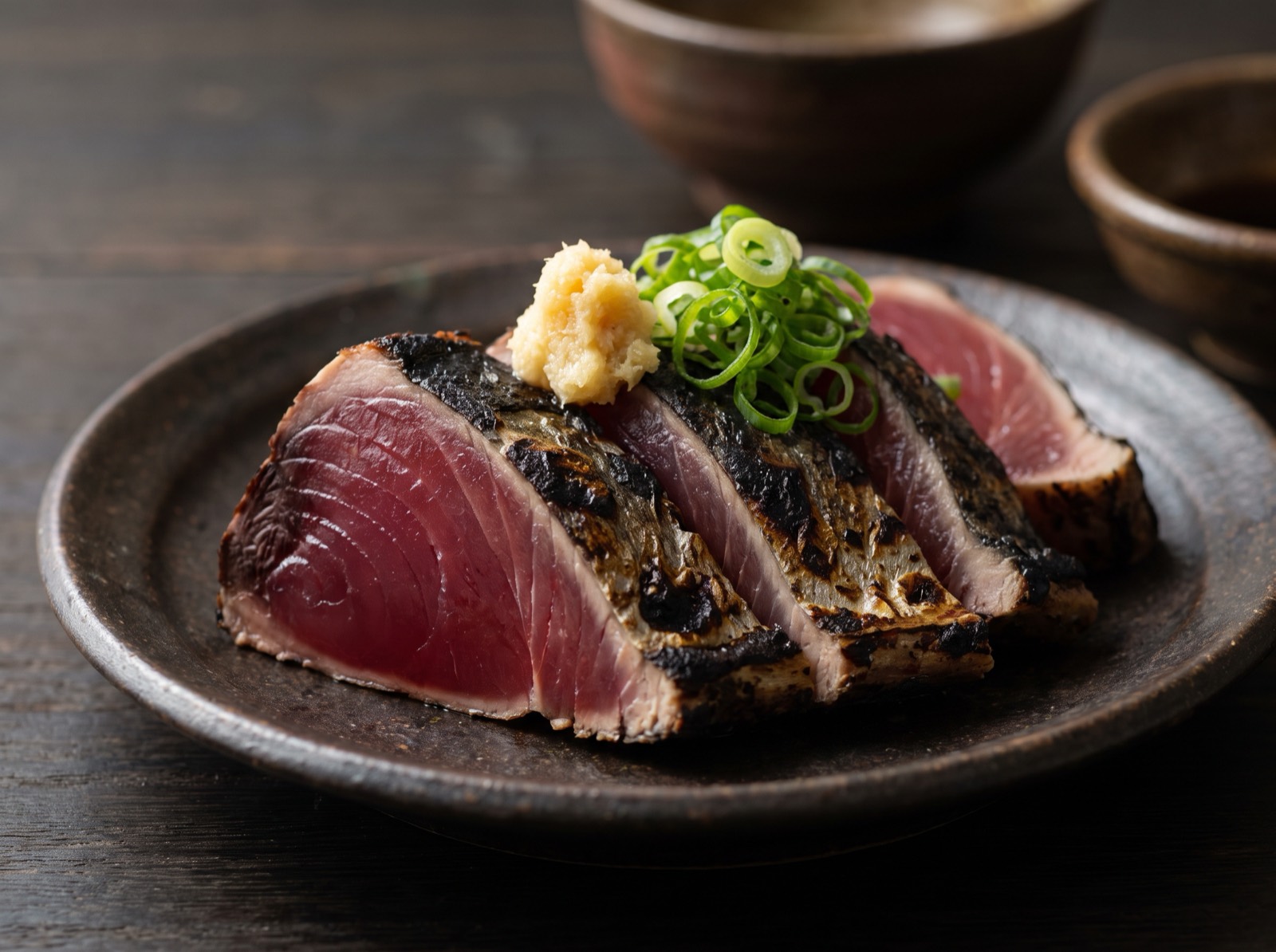
The autumn page describes bonito heavy with fat starting its run south from the waters off Hokkaido, gaining more fat and flavour the further south it goes. That is the autumn run our katsuo entry calls modori-gatsuo, the returning bonito. The page does not name a month for it.
Pacific saury, sanma, travels the other way first. It heads north toward the Sea of Okhotsk from spring to summer and turns south off the Sanriku coast in autumn. Moving south from Hokkaido it puts on fat as the bonito does, and the book describes it as a newer addition to the Edomae repertoire, the Tokyo style of sushi. Large catches keep it inexpensive. The text on these pages names no month for saury, so this page names none. What a counter does to it is a separate question, taken up in the entry on sanma.
One caution covers both fish. Japan’s Ministry of Health, Labour and Welfare lists mackerel, horse mackerel, saury, bonito, sardine and squid among the fish in which Anisakis larvae are found. It says vinegar, salting, soy sauce and wasabi do not kill them, and names freezing at −20°C for 24 hours or more, or heating to 70°C (60°C for one minute), together with removing larvae by eye, as the measures that work. The wider picture is in sushi safety in Japan.
The book’s own autumn page says fewer fish peak in autumn than people say. October is mostly things on their way.
Roe: ikura, and two books that count differently
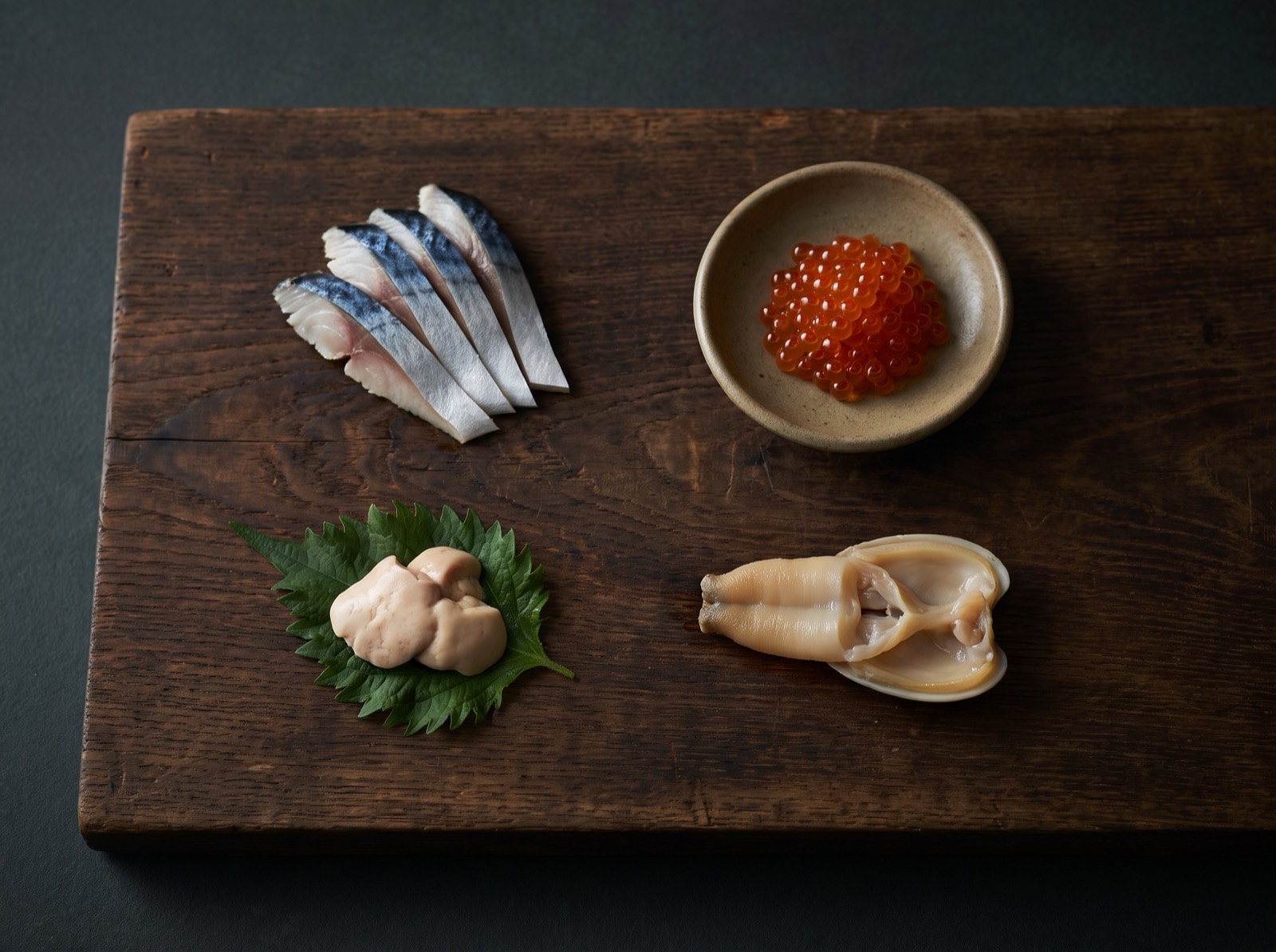
Salmon roe has a window that sits squarely in October. One book puts roe made into soy-cured ikura at its peak from about October to November, and its own entry on ikura narrows that to about mid-October to mid-November. A second book speaks of roe taken earlier, in September to October, which has a thin membrane and a noticeably smoother texture, and describes it being separated egg by egg and steeped in a mixture of soy sauce and sake.
The two windows overlap in October without being the same window: one calls the later stretch the peak, the other singles out the earlier stretch for its texture. Processed ikura is frozen and used all year round, so these windows describe the raw material rather than when ikura is on the menu. The soy cure and the salt cure are set out in the ikura entry.
The liver fish: kawahagi
Kawahagi, filefish, has been treated as a late-autumn-to-winter fish. The autumn page says its season has moved a little earlier and that from around October it begins to carry a full liver. The book’s entry on the fish gives October and November as the period when the liver swells and the fish enters its season, and a second book also names October and November for the liver gaining flavour.
Our kawahagi entry prints the other sources we hold, which place the liver’s peak in deep winter or across autumn into spring, and one says its quality holds up through the year. It states the disagreement rather than resolving it, and so does this page.
Shellfish, squid and mackerel
The same book gives mirugai, the geoduck, two flavour seasons a year, centred on spawning in March and in October. This book frames mirugai’s seasons around spawning, unlike the general rule above that the season falls before it. Around October the roe grows large again and the siphon has its full sweetness. The book adds that these qualities turn quickly as the clam loses freshness. Our mirugai entry prints other sources whose windows run from autumn or winter into spring.
Ark shell, akagai, has a season that a different book dates from October to about March of the following year; after the spring equinox week it carries roe and grows thin. October is the start of that window, not the middle of it.
Shin-ika, the young of the sumi-ika cuttlefish, is a seasonal event of its own. The autumn page says it has grown by the start of October to its ideal eating size. The book’s separate entry says that by early winter it is larger than a hand and firmer in texture. That entry dates the first arrivals to early August while the autumn page says the end of August, so this page gives no start date.
Mackerel, saba, is on the way to its peak rather than at it. The autumn page says it keeps adding fat toward a late-autumn peak, which fits our saba entry’s account of autumn into winter.
October and autumn at a glance
- Bonito. The fatty fish begins its run south from the waters off Hokkaido and gains fat as it goes. No month given.
- Saury. Turns south off the Sanriku coast in autumn and puts on fat. No month given.
- Ikura. About October to November in one book, mid-October to mid-November in its entry; September to October, with a thin membrane, in another.
- Kawahagi. The liver fills out from around October; October to November in two books.
- Mirugai. The second of two yearly seasons, centred on spawning in October.
- Akagai. A season that runs from October to about March.
- Shin-ika. At its ideal eating size by the start of October.
- Mackerel. Adding fat toward a late-autumn peak.
What to ask at the counter in October
A counter will not necessarily have all of these, and a window in a book is not a promise about a particular night. Questions that fit the month: which run the bonito is; whether the ikura is soy-cured or salt-cured; whether the kawahagi comes with its liver. Asking where a fish is in its season, rather than whether it is in season, is the habit the three stages teach.
October does not have a single peak. It has several things at different points on their way, and the useful question is which point each has reached.
Frequently asked questions
What sushi is in season in October?
Japanese sushi books place salmon roe (ikura), the liver of kawahagi filefish, mirugai, akagai and young cuttlefish (shin-ika) in October, with mackerel adding fat toward a late-autumn peak. Separately, they describe bonito and saury running south in autumn and gaining fat, with no month given. The windows differ between books.
Is bonito in season in October?
A Japanese sushi reference describes bonito heavy with fat starting its run south from the waters off Hokkaido in autumn and gaining more fat and flavour as it goes. The page does not name a month for it.
When is ikura in season?
One book puts roe made into soy-cured ikura at its peak from about October to November, and mid-October to mid-November in its own entry. Another speaks of earlier roe, September to October, with a thin membrane and a smoother texture. Processed ikura is frozen and used all year round.
When does the kawahagi liver fill out?
Two books name October and November as the period when the liver swells and gains flavour, and one says the season has moved a little earlier than the traditional late autumn to winter. Our kawahagi entry prints other sources that give different windows.
Is there one list of fish in season each month in Japan?
Not a national one. Japan runs a long way north to south, so the same fish spawns at different times in different places, and a single answer to when a fish is in season does not really exist.