In Ginza the question was where to look, and the answer was the shop’s own page. In Shinjuku it was which of the shop’s pages to look at, because two of them disagreed. In Shibuya it was who had written the page at all. In Roppongi it was when it had been written. In Nihonbashi it was who else was publishing about the same shop. In Asakusa it was what language the answer was in, and what shape it took. In Ueno it was what the name on the page actually pointed to. Between Ebisu and Nakameguro the question changes again, and this one decides whether the evening happens at all. All five of these shops publish the word reservation. It does not mean the same thing at any two of them.
That word is very nearly the only thing they share. At one of these five, a page headed About reservations holds two telephone numbers and not one condition. At another, the door you come in by decides which courses you are allowed to order. At a third there are four ways in, two of them shortened links that do not show where they lead. At a fourth there are three buttons marked reserve, and two of them land on the front page of a booking service rather than on the shop. At the fifth, pressing reserve does not open a form at all — it opens a list of the guests the shop cannot take. They are set out below in that order: by how much the word is asking of you.
How this was put together
Everything below was read on 5 August 2026, from pages the shops publish themselves. No listing site, no review service and no booking platform is quoted for a fact, even where one of them carries a figure a shop leaves out; a number borrowed from a booking service is a fact about the booking service. Two of these five sites are assembled by the browser after it arrives rather than sent complete, so for those we rendered the pages and read what a visitor sees. Two of the booking links are shortened, and we followed them to the end to be able to say where they go.
Where a shop publishes no price, no cancellation term or no closing day, the line is left empty rather than filled in from somewhere else. Where a shop’s own pages disagree with each other — two of these do — both versions are printed as we found them. There is no ranking here.
Iroha Sushi, Nakameguro main shop — a reservations page with nothing on it
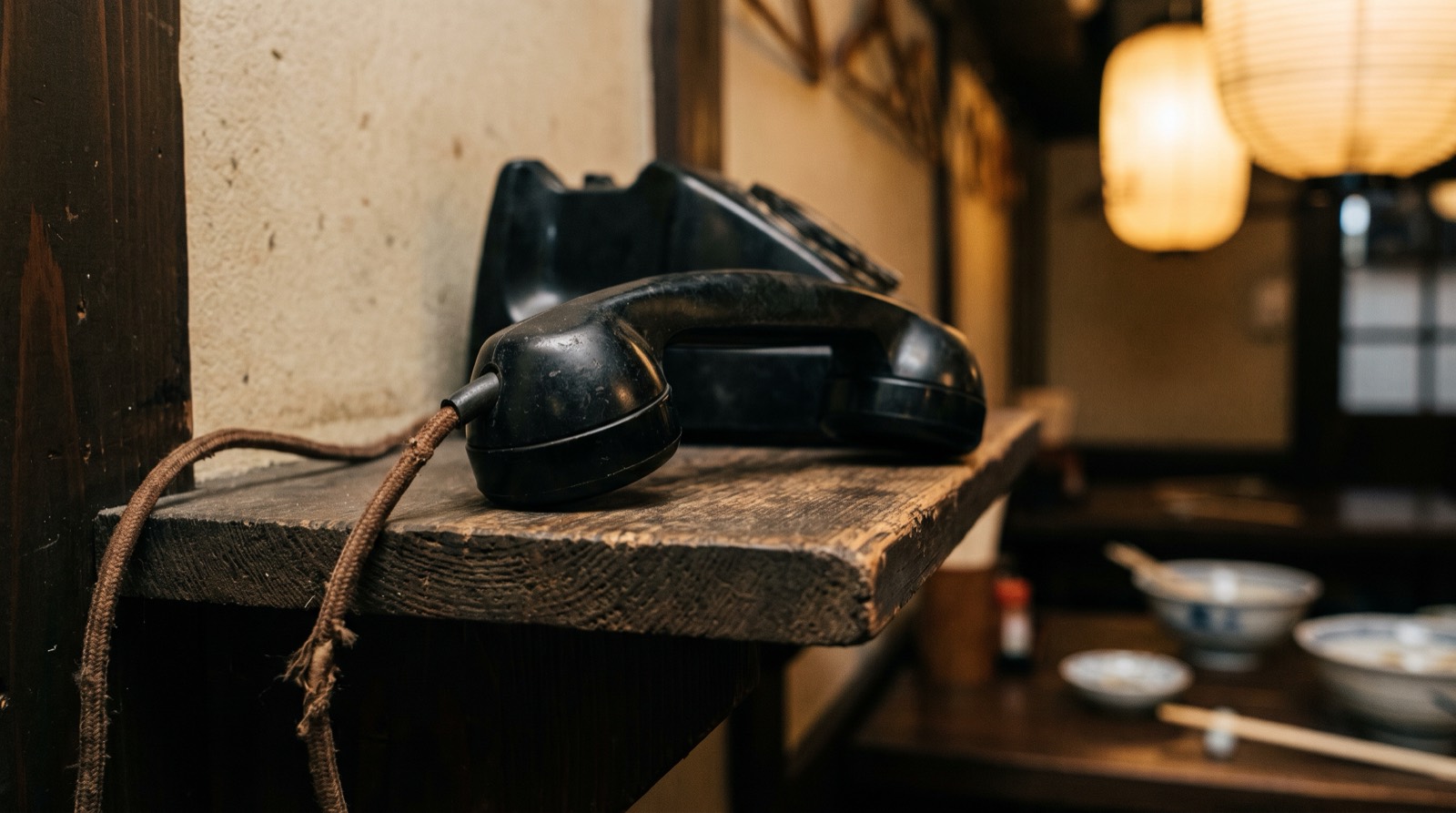
Five items run across the top of the site, and one of them is headed About reservations. Open it and the page holds a single sentence and two telephone numbers: enquiries and reservations by telephone, please, followed by the number for this shop on Yamate-dori and the number for its sister shop down by the river. That is the entire page.
What is not on it is worth listing, because every other shop in this article has some of it. No cancellation terms. No deposit. No minimum party size. No limit on how long the table is yours. Nothing about arriving late, and nothing about how far ahead the book is open. The shop asks nothing of you in advance, and there is no form anywhere on the site with which to ask it — the whole thing is served over plain http, and https does not connect at all.
The conditions do exist. They are simply somewhere else: inside the menu, where you meet them after you have decided what to eat. Parties are taken from four people up. Two hours of unlimited drinks at ¥2,145 applies to parties of eight or more who have booked a course. There is a ¥400 cover charge in the evening. And lunch is not served here at all — the lunch menu belongs to the sister shop by the river, on Saturdays and Sundays only. The seat count is written the way a person says it out loud: about ninety.
- Where. Second floor, 1-30-10 Aobadai, Meguro-ku, on Yamate-dori. The shop publishes no walking time from any station.
- Booking. By telephone, 03-3794-6879, which the shop gives as its telephone and fax number together. The page headed About reservations carries that number, the sister shop’s number, and nothing else.
- Hours. 17:00 until 04:00 the following morning, last orders at 03:30.
- Closed. Wednesdays. The shop adds that this changes at new year and in cherry-blossom season, and asks you to telephone or look at its Instagram.
- Price. Party courses at ¥4,070, ¥4,510 and ¥5,170 a head, from four people; ¥400 cover in the evening. The menu index says tax is added at the register on top of the prices shown, while the course and lunch pages say every price already includes it. Both sentences are the shop’s own.
- Seats. About ninety.
Matsue, Ebisu main shop — the door decides the menu
Two minutes from the west exit at Ebisu. The shop dates itself to 1966 and says that in 1992 it took down its signboard and the written list of fish on the wall and started again. Fifty seats over two floors, three private rooms, open every day. There are two ways in: a button that goes to a booking system, and a telephone number with a standing note beside it on every page — same-day reservations are taken by telephone.
Then look at the dinner menu. There is one regular evening course, Kagayaki at ¥13,800. Beneath it comes a heading, courses for online booking only, and the sentence that follows it: the courses below may be reserved only through the official website, and cannot be reserved by telephone. There are three of them. Rin at ¥8,900, arriving between 17:00 and 19:30, two or three people. Ume at ¥6,200, arriving between 17:00 and 18:00 or at 20:30, two or three people, an hour and a half at the table, ¥500 more for steamed egg custard. Aya at ¥12,000, arriving between 17:00 and 19:30, three to eight people, two hours with thirteen drinks included, upstairs — and the shop notes that there is no lift.
Set the two sentences side by side and the arithmetic is plain. Someone who decides at four o’clock to go tonight has to telephone, and the telephone reaches exactly one of the four dinner courses. The website reaches all four. What the booking commits you to is published as well: a reservation may be cancelled automatically if you are more than fifteen minutes late, parties of more than five are taken by telephone, and children should be discussed in advance. All three of those sentences are on the English page. We searched the three Japanese pages for each of them and found none. The cancellation fee itself — how much, and from when — appears in neither language, on a site that lists thirty-three ways to pay.
- Where. 1-2-4 Ebisu-minami, Shibuya-ku. Two minutes from the west exit of JR Ebisu; one minute from exit 5 of the Hibiya line.
- Booking. Through a booking system linked from the shop’s own page, with same-day reservations by telephone only on 03-3711-4364. Three of the four dinner courses are marked bookable through the website alone.
- Hours. 11:30–14:15 every day, last entry 13:15. 17:30–22:30 Monday to Friday and 17:00–22:30 at weekends and on public holidays, last entry 21:15.
- Closed. Open every day apart from occasional closures.
- Price. Lunch ¥4,600 on weekdays, ¥5,700, ¥8,900 and ¥13,800. Dinner: Kagayaki ¥13,800, plus Rin ¥8,900, Ume ¥6,200 and Aya ¥12,000 online only. Tax included.
- Seats. 50 — 18 at the ground-floor counter, 8 at ground-floor tables, 8 at the first-floor table counter, and three private rooms holding two to twelve. No smoking anywhere.
Sushi Tsukiuda — four doors, two of them unmarked
One page, with the English set directly beneath the Japanese paragraph by paragraph: not a separate English site but the same page said twice. Eight seats at the counter and one private room for five, on the ground floor of a building in Higashiyama. No closing day at all, which nobody else here can say. Dinner in two sittings.
Four separate booking routes sit on that single page. One goes to a booking system. One is labelled with the name of a Japanese reservation service and one is its English counterpart, and both of those are shortened links, over http, that do not show where they are going. Followed to the end they arrive at the same restaurant on the same service, one page in Japanese and one in English. The fourth sells the shop’s meals as gift vouchers. All four work. The point is only that two of the doors are painted over: you have to press before you can read.
Against that, this is the plainest of the five about what a booking costs to break. Fifty per cent from two days before; a hundred per cent on the day before and on the day itself. It is printed twice on the same page, in Japanese and English both times, along with the ¥4,000 corkage if you bring your own sake. One small thing has drifted. Beside the Sunday hours, which the Japanese gives as sittings from 17:00 and 19:30, the English note still reads two sittings from 18:00 to 20:30 — the line from the Monday-to-Saturday block above it, where it is correct.
- Where. Nakameguro ARK II, ground floor, 1-11-15 Higashiyama, Meguro-ku. The shop publishes no walking time.
- Booking. Four routes, all from its own page: a booking system, a reservation service in Japanese and the same service in English (both behind shortened links), and a gift-voucher service. Telephone 03-6303-1733. Cancellation 50 per cent from two days before, 100 per cent from the day before and on the day.
- Hours. Monday to Saturday, lunch from 12:00 and dinner in two sittings from 18:00 and 20:30. Sunday, lunch from 12:00 and dinner from 17:00 and 19:30.
- Closed. Never.
- Price. Lunch ¥16,500, with the ¥28,380 dinner course also served at lunch. Dinner ¥28,380; on Mondays the second chef works the counter and the same course is ¥24,200. Corkage ¥4,000.
- Seats. 8 at the counter, plus one private room for five.
Ebisu Sushi Hatsume — three buttons marked reserve
The newest-looking site of the five and the widest: Japanese, English, simplified and traditional Chinese, Korean. Ten seats, five minutes from Ebisu, 17:00 to 23:00, closed Sundays. The menu page sets out an omakase of twenty-two dishes in some detail — twelve pieces and ten small plates — and a paired version of the same. Then, at the foot of it, one line: please check the price of each course on the booking site. Of the five shops here it is the only one that does not publish what dinner costs. The single figure anywhere on the site is the ¥2,000 before tax to upgrade one dish of the omakase.
So the prices are on the booking site, and the site sends you to it. There are three buttons for that. One carries the shop’s own restaurant number on a reservation service and lands on its page there. The other two are labelled the same way — reserve, and Reservation — and they go to tabelog.com and to omakase.in: the front doors of the two services, not this shop’s page on either. Type the name into the search box that meets you and you will find it. But the button did not take you.
The telephone is worth setting down exactly as it is published and no further. The Japanese pages carry a telephone link in three places. In all three the link points at tel:0120-00-0000 and the text printed on the screen beside it reads tel.03-0000-0000. The two do not match each other. The English page carries no telephone number at all, and the shop’s own reservations page — a single sentence saying that reservations are accepted online — carries none either. We loaded the page three times on 5 August 2026 and read the same values each time. We are not going to say why it is like that.
- Where. Ground floor, 1-25-11 Ebisu, Shibuya-ku. Five minutes on foot from Ebisu station.
- Booking. Online. Three buttons marked reserve: one to the shop’s own listing on a reservation service, and two to the front pages of tabelog.com and omakase.in.
- Hours. 17:00–23:00, last orders for food at 22:00 and for drinks at 22:30.
- Closed. Sundays, with the note that it may open or close at short notice.
- Price. Not published. The menu page ends: please check the price of each course on the booking site.
- Seats. 10. The same table says the shop can be taken privately by a party of twenty or fewer.
Three buttons on this shop’s pages say reserve. Two of them arrive at a booking service. Neither of those two arrives at the shop.
Udatsu Sushi — the conditions come first, then the door
Five minutes from Nakameguro, on a street the shop itself describes as too narrow to drive down; it asks you to leave the car in a pay-and-display near the station and walk. Eighteen seats, opened in 2019, five languages on the site. Every sitting starts at the same moment: lunch from 12:00 on weekdays, from 11:00 and 13:00 at weekends, dinner at 18:00 and 20:30.
Press the button marked reserve and no booking form appears. What opens is a panel headed notes before booking, and the first thing on it is a list of the guests the shop is telling you it cannot take: anyone who cannot eat soy sauce or miso, anyone whose diet requires that cooking utensils be kept separate, anyone who cannot take the alcohol used in cooking even after the heat has driven it off, and anyone who cannot eat raw fish — the last of whom is asked to book the vegetarian course instead. Below that sit the rules on children and on who may sit at the counter. The English version of the panel is the same list in the same order, with nothing left out.
Read past it and the button hands you on: to one reservation service if you are reading in Japanese, and to a different one if you are reading in English. The telephone number is published, and immediately beneath it the shop says that it does not take bookings by telephone or by email, and that people frequently misdial a number close to its own. Everything else is stated in both languages with the same figures — ¥14,520 at lunch, ¥36,300 at dinner and ¥30,250 on the days the junior chefs are being trained, thirty per cent from five days before and the whole amount from the day before, arrive five minutes early, the door opens ten minutes before, no perfume, smart casual, and the owner is not in the shop on Wednesdays, Sundays and public holidays. Of the five here this is the one that asks the most of you, and the one that tells you all of it before you book.
- Where. 2-48-10 Kamimeguro, Meguro-ku. Five minutes on foot from Nakameguro station.
- Booking. Online only, and the booking link opens behind a list of conditions. Japanese and English readers are handed to different services. The published telephone number and email address both carry a note that they do not take reservations.
- Hours. Lunch from 12:00 Monday to Friday and from 11:00 and 13:00 at weekends and on public holidays; dinner from 18:00 and 20:30. Every sitting starts at once.
- Closed. No fixed day, and the shop says it may open or close at short notice. The owner is not in on Wednesdays, Sundays and public holidays.
- Price. Lunch ¥14,520. Dinner ¥36,300, or ¥30,250 on training days; a vegetarian course at ¥30,250 with two days’ notice; pairings ¥11,000 to ¥22,000. Tax and service included.
- Seats. 18.
What the five have in common
All five publish the word, and none of them is concealing anything. The shop with two telephone numbers is not hiding its terms; it has none to hide. The shop with the list of refusals is not being difficult; it is being early. What varies is what the word is standing for. At one end it is an appointment you can break at no cost, because nothing was ever asked of you. At the other it is closer to an agreement: a percentage, an arrival window, a dress code and a list of the people it cannot include. Between them sit the shop where the door you use decides what you may order, and the shop where you cannot see which company you are about to be handed to.
The practical consequence is small, and it is the same everywhere. The thing to read is not the button; it is the sentence nearest to it. The button is one word long and every shop uses the same word. The sentence beside it is where a shop says what it will hold for you and what it will charge you if you do not come. Where nothing has been written there, that is not a promise that nothing will be charged. It means the terms were not published, and it is worth asking before you assume.
Reading a booking page in about a minute
- Find out where the button goes before you press it. Hover over it, or read the address that appears at the foot of the browser window. A link to a shop’s own page on a service is a different thing from a link to the front page of that service, and a shortened link is neither until you follow it.
- Look for a percentage and a date. Cancellation terms are the part of a reservation that costs money. Three of the five shops here publish them plainly; two publish none at all on their own sites.
- Check that the course you want is reachable from the door you are using. One of these shops sells three of its four dinner courses through its website only, and says so on the menu page rather than on the booking page.
- If the site has two languages, read the same page in both. At one shop here the conditions of the booking exist only in English; at another, a stray English line still gives the wrong Sunday hours. Neither is a trap, and both take a minute to catch.
- Note the date on which you read it. Every figure in this article is what the shops published on 5 August 2026. Hours and prices move, and a page rarely says when it last did.
Next in this series we cross to Akasaka, where the counters sit between government offices and hotel lobbies, and the question changes again.
If you want to book one of these
Several of the counters described above answer the telephone only in Japanese, and a few of them take bookings by no other route. AutoReserve is a Japanese reservation service with an English interface, and it states that it will place the call on a diner’s behalf where a restaurant takes reservations by telephone alone. We have not tested it against every restaurant on this page, and a listing there is not a guarantee of a seat — the doors described above are the doors either way.
Frequently asked questions
Can I book any of these five without Japanese?
Four of the five publish in English. Matsue has one English page per shop, with the menu, the hours and — uniquely — the conditions of the booking. Tsukiuda’s single page is bilingual throughout, cancellation terms included. Hatsume and Udatsu both publish in five languages, and both send English readers to an English-language reservation service. Iroha Sushi publishes in Japanese only and takes bookings by telephone, so it is the one of the five that assumes you can make a call in Japanese.
Which of them could I book for tonight?
Two of them say so on their own pages. Iroha Sushi takes reservations by telephone and publishes no cut-off. Matsue states that same-day reservations are taken by telephone — though a telephone reaches only one of its four dinner courses, the other three being marked for online booking only. The remaining three take reservations online, and whether tonight is available is a question for the service they hand you to rather than for the shop’s own page. None of the five publishes how far ahead its book opens.
What happens if I cancel?
It depends entirely on the shop, and two of the five do not say. Tsukiuda publishes fifty per cent from two days before and a hundred per cent from the day before, twice on the same page and in both languages. Udatsu publishes thirty per cent from five days before and the full amount from the day before, and repeats the figures on its English pages. Matsue publishes only the English-language note that a booking may be cancelled automatically if you are more than fifteen minutes late. Iroha Sushi and Hatsume publish no cancellation terms on their own sites at all. An absence is not the same as a guarantee that nothing will be charged; where the shop is silent, ask.
Why is one shop’s price missing from this article?
Because the shop does not publish it. Hatsume describes both of its courses in detail and then ends the menu page by asking readers to check the price on the booking site. The price is presumably visible there, but a figure taken from a booking service is a fact about that service on the day it was read, and this journal quotes shops for their own prices. So the line stays empty, and the sentence the shop actually wrote is quoted instead.
Is this a ranking of the best sushi in Ebisu and Nakameguro?
No. Nothing here is a judgement about the food, and the order is the article’s argument rather than a verdict: the shops run from the one that asks least of you when you book to the one that asks most. A shop that publishes no conditions is not careless and a shop that publishes a page of them is not unwelcoming; they are two different ways of running a counter, and both are on the internet in plain sight. No shop paid to appear here and none was consulted before publication.