Makizushi (巻き寿司) is rice and filling rolled inside a sheet of nori, formed with a bamboo mat and cut into rounds. It is one of the plainest ideas on a sushi menu and one of the hardest to execute cleanly, which is why chefs spend years practising a motion that a home cook can describe in a single sentence.
What it is
In the Kanto region the form is usually called norimaki, seaweed roll; in Kansai the word is makizushi itself, though there it commonly means the thick style specifically, with the thin style referred to separately. Rolls of either size split into two families by thickness: hosomaki, thin rolls built around a single filling, and futomaki, thick rolls that hold several fillings side by side and are usually cut into wider rounds. In the Edomae tradition hosomaki is considered the mainstream form, the roll that closes out a counter meal alongside the egg and the soup.
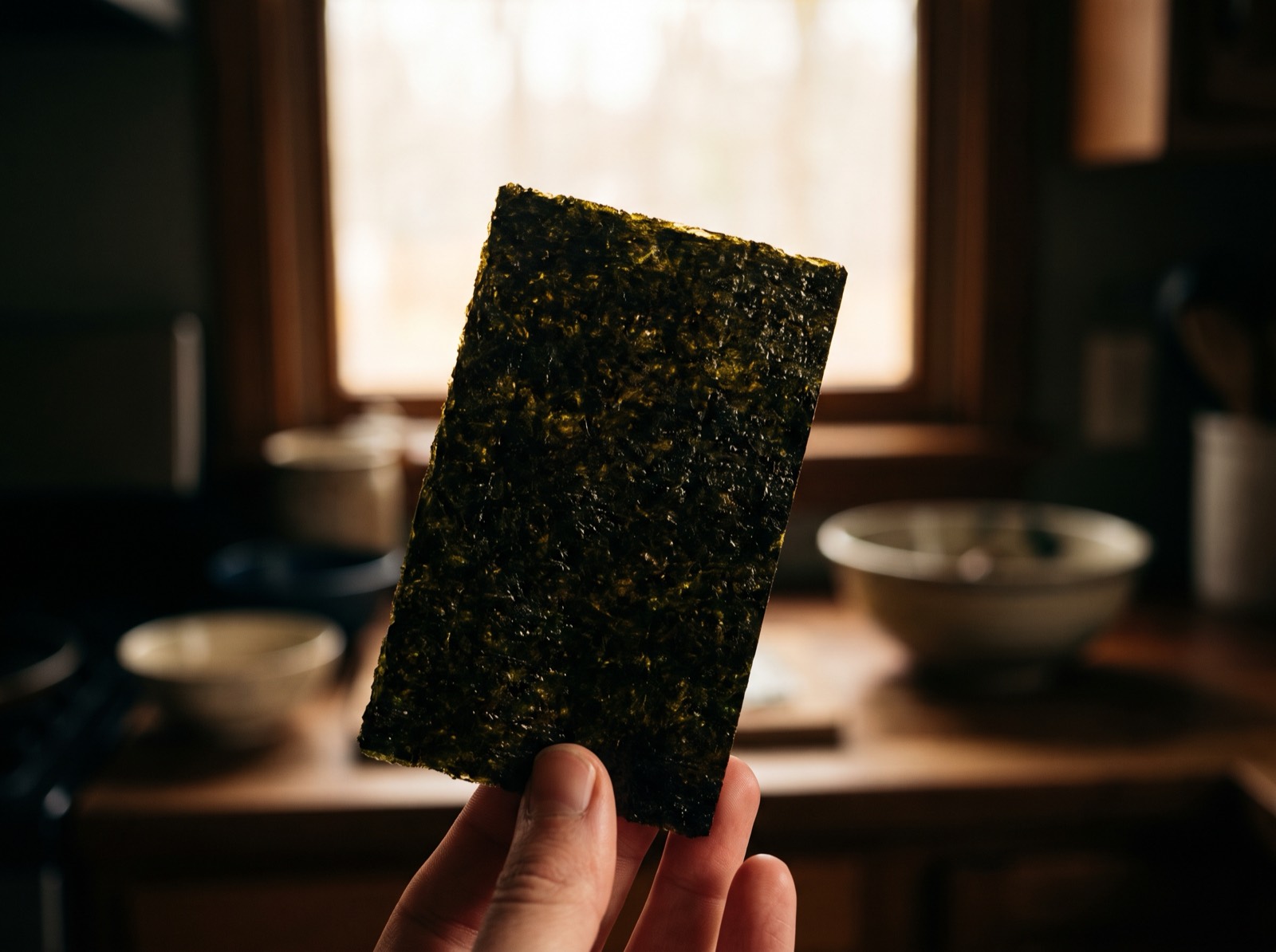
A roll needs only three things: a sheet of nori, seasoned rice, and whatever is going inside it. Tuna and pickled radish give hosomaki two of its most common fillings; a thick roll can carry several ingredients side by side, cut so that every round shows the same cross-section of colour.
When it is used
At a counter, rolls typically arrive near the end of a meal, after the run of nigiri, as a way of closing on something substantial and rice-forward. On a conveyor belt or at a takeaway counter a roll is ordered on its own with no such sequence implied.
What the chef actually does
The bamboo mat, makisu, has a correct side and a correct orientation: the smooth, flat face of the bamboo goes up, and the edge where the binding cord sits is placed away from the roller rather than toward them. Get either wrong and the mat grips unevenly as it is drawn tight, which shows up in the finished roll as a lopsided cylinder rather than a round one.
Nori goes down first, near edge of the sheet lined up with the near edge of the mat. Rice is spread over it with a light pressing motion rather than pushed hard, and it is not spread all the way to the far edge: a bare margin of nori is left uncovered so that when the roll closes, that strip becomes the seam and seals against itself rather than against a layer of rice. Pressing the rice too firmly at this stage is one of the most common mistakes, since dense rice will not compress further once the roll is drawn tight, and a roll built on rice that was already packed hard eats stiff all the way through.
The filling goes across the centre, and for a thick roll it is laid down in a deliberate order, ingredient by ingredient, so the finished cross-section reads cleanly rather than as a jumble. The near edge of the mat is then lifted with the fingers pressing the filling in place so it does not shift, folded over to meet the far edge of the rice in one motion, and the whole mat is rolled forward while being drawn snug against the body to close the seam. A loose first turn is very hard to correct afterward, which is why that first fold is the part a beginner is told to slow down for and an experienced hand does fastest of all.
Cutting is its own skill: a roll pressed rather than sliced squashes at the cut face, so a wetted blade is drawn through cleanly and wiped between cuts to keep every round the same shape as the last. How many pieces a given roll is cut into is one of the places the record genuinely disagrees rather than simply going unmentioned: different sources describe different conventions for different fillings, and at least one describes the convention for the same filling changing over time, with reasons offered for the change that are not consistent from source to source. We do not give a specific count here, because we cannot point to one that holds across the sources we have.
- Rice sticking to the hands as it is spread, rather than lifting cleanly onto the nori.
- Rice shifting or tearing the nori partway through the roll.
- Filling drifting off-centre by the time the roll closes.
- The finished roll coming out uneven along its length rather than a true cylinder.
Why it is done this way
Everything about the sequence, mat orientation, the bare margin left on the rice, the order fillings go down in, exists to solve the same problem: a roll only gets one attempt. Unlike nigiri, which can be re-pressed if the first shaping goes wrong, a roll that has been folded and drawn tight cannot be reopened and corrected without unravelling it entirely, so the preparation before the roll closes carries almost the whole risk of the piece.
This is also why rolling is taught as one continuous sequence rather than as separate steps done in turn. Hesitating partway through the fold, pausing to check the filling or adjust the rice, is exactly where a roll is most likely to slip out of shape, so the motion is practised until the whole close happens in one unbroken movement.
Thick rolls carry an additional layer of history. One account holds that futomaki's association with Kansai, and specifically with Osaka and Kyoto, grew alongside those cities' dense concentration of Buddhist temples and the vegetarian cooking culture that surrounded them: an older style of thick roll built primarily on freeze-dried tofu, dried gourd shavings and shiitake, ingredients suited to that kitchen, with egg added later and today's more elaborate versions carrying shrimp, fish flake or simmered conger as well. We present this as one account among the sources rather than as a settled history, since it is not corroborated closely enough elsewhere for us to state it more plainly.
A roll only gets one attempt. What happens before it closes carries almost the whole risk of the piece.
How it differs from what it is confused with
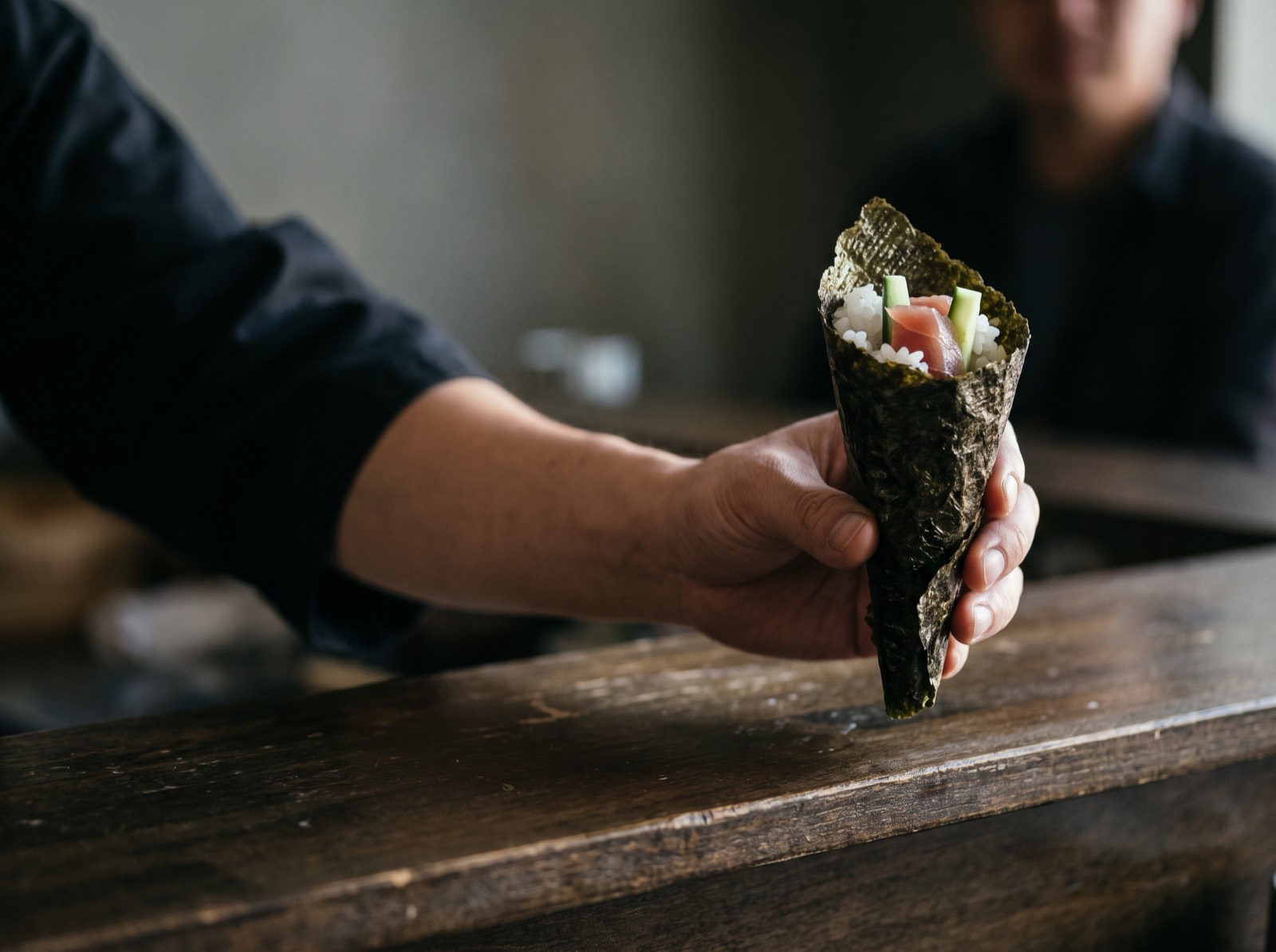
- Makizushi and temaki. A roll is formed on a mat and cut into rounds after it closes; a hand roll is shaped by hand into a cone and never cut. See temaki for that comparison in full.
- Hosomaki and futomaki. Thin, single-filling rolls against thick, multi-filling ones, cut to different widths and usually appearing at different points in a meal.
- Makizushi and gunkan. Both stand or wrap nori around rice, but a gunkan's nori is never rolled and never cut; it stands as a collar around a single portion.
- Makizushi and oshizushi. A roll is shaped on a mat and cut at once; pressed sushi is compacted in a mould and rested before it is cut, on a much longer timescale.
How to say it
mah-kee-ZOO-shee is close enough. Four beats, ma-ki-zu-shi, with sushi voicing to zushi when it follows another word — the same shift that turns nigiri-zushi into the form we simply call nigiri. Norimaki is no-ri-ma-ki.
Where you will see it
On every sushi menu in some form, from the tekka-maki and kappa-maki that close an Edomae counter meal to the party-sized futomaki sold whole at takeaway shops and department-store food halls. It is also the one form of sushi most home cooks in Japan make themselves, since the equipment is a single inexpensive mat rather than a chef's set of knives.
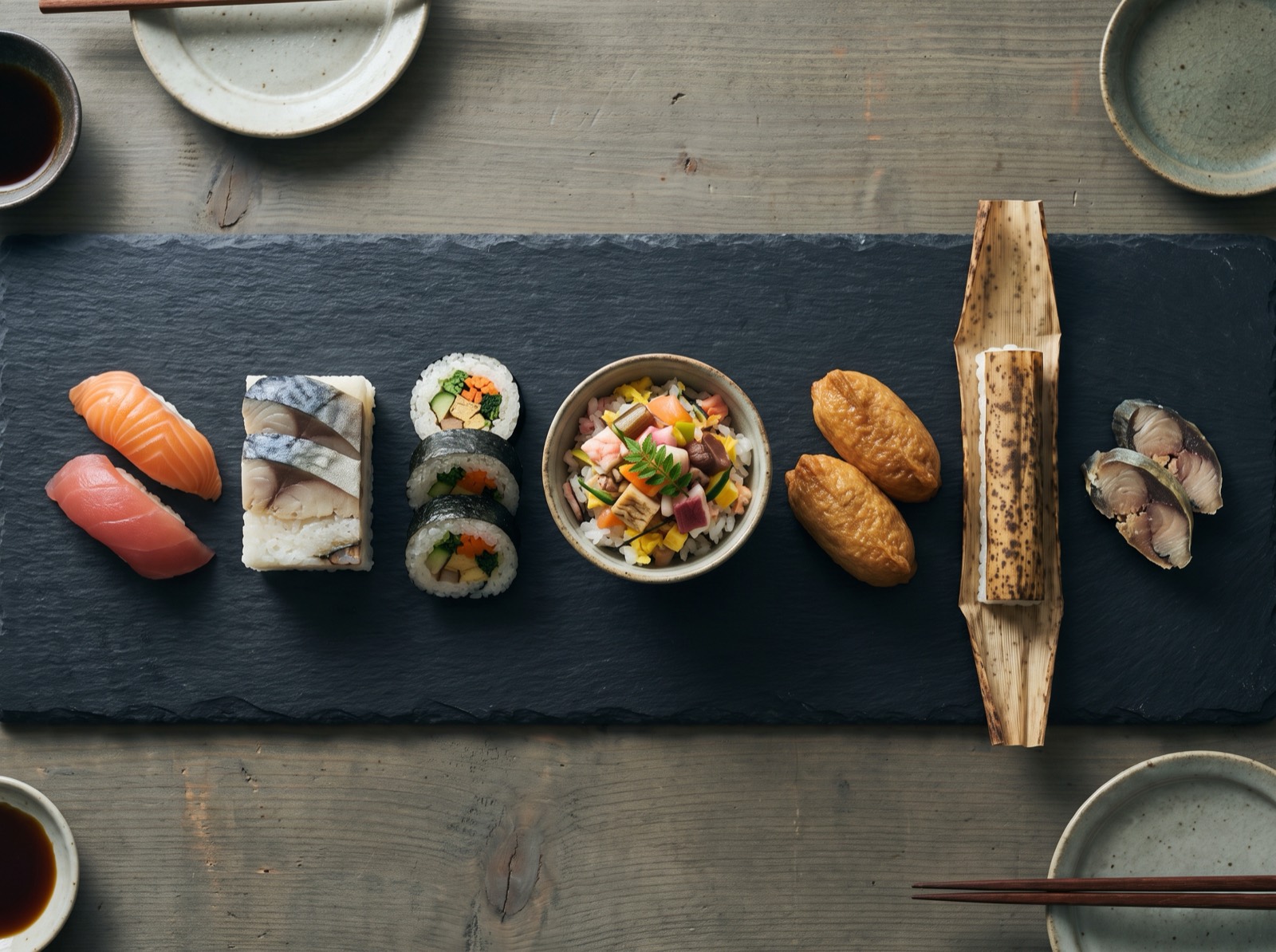
Where a roll sits in the order of a meal, and whether to eat it with fingers or chopsticks, is covered in how to eat sushi. For the full set of forms sushi takes, see types of sushi.
Frequently asked questions
What is makizushi?
Rice and a filling rolled inside a sheet of nori using a bamboo mat, then cut into rounds. It splits into two main sizes: hosomaki, thin single-filling rolls, and futomaki, thick rolls carrying several fillings at once.
What is the difference between hosomaki and futomaki?
Hosomaki are thin rolls built around one filling, typically cut narrow. Futomaki are thick rolls carrying several fillings side by side, cut into wider rounds, and are particularly associated with Kansai.
Why is Kanto called norimaki and Kansai called makizushi?
The two regions use different everyday names for the same rolled form. Kanto generally says norimaki; in Kansai the word makizushi is used, and there it commonly points specifically to the thick style.
What does a sushi chef actually do to roll makizushi?
Nori is laid on a bamboo mat oriented a specific way, rice is spread with a light hand and a bare margin left for the seam, the filling is placed across the centre, and the near edge is lifted and drawn tight in one motion to close the roll before it is sliced with a wetted blade.
How many pieces is a roll cut into?
We do not give a fixed number. The sources describe different conventions for different fillings, and at least one shows the convention for a single filling changing over time for reasons that are not consistent across accounts, so no single count holds across what we have read.
How do you say makizushi?
mah-kee-ZOO-shee is understood, though it is properly four even beats, ma-ki-zu-shi.