Few of the fish in the Japanese sushi books used here carry the word November. Most are dated by season instead: late autumn, early winter, with no month attached. This page keeps the two kinds of date apart, and prints a month only where a book prints one.
A month is a window, not a switch
Japan runs a long way north to south, so the same fish spawns at different times in different places, and a single national answer to “when is it in season” does not really exist. Where two books give different windows for the same fish, both are printed here. The books do not define late autumn by month, so this page does not either.
The framework is on the season calendar. As a rule the season falls before spawning, not during it, and it has three stages: hashiri, the first of the season; sakari, the peak; and nagori, the stage just before spawning. The month before this one is on the page for October, and several windows below begin there.
What the books date to November
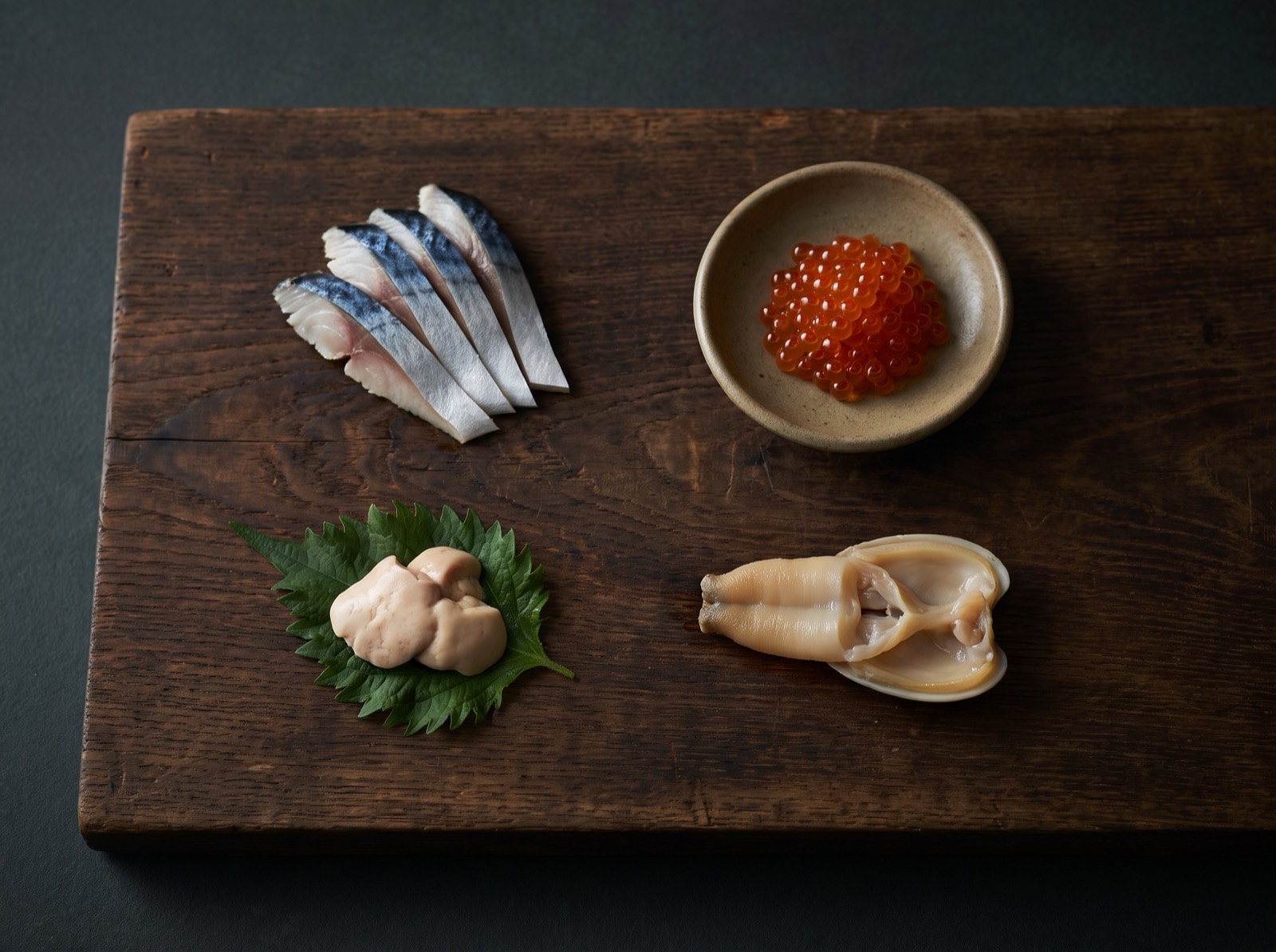
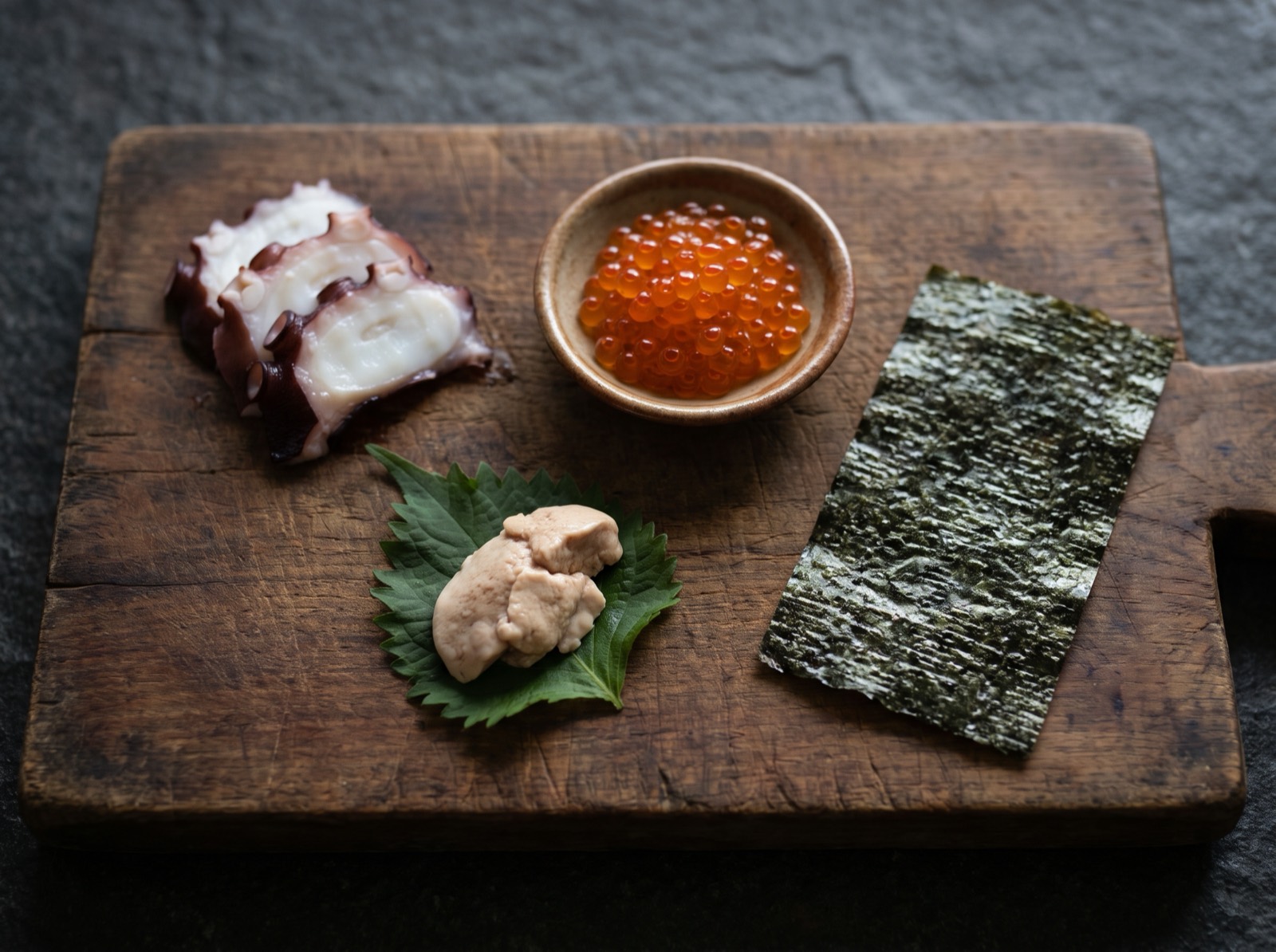
Salmon roe comes first, because its window runs straight through the month. One book puts roe made into soy-cured ikura at its peak from about October to November, and its own entry on ikura narrows that to about mid-October to mid-November. A second book speaks of roe taken earlier, in September to October, with a thin membrane and a smoother texture. Processed ikura is frozen and used all year round, so these windows describe the raw material rather than what is on a menu.
Kawahagi, the filefish, is the second. The book’s autumn page says its liver starts to fill out from around October, and its entry on the fish gives October and November as the period when the liver swells and the fish enters its season. A second book also names October and November for the liver gaining flavour. Our kawahagi entry prints other sources that give different windows, and we have not resolved them.
Octopus, tako, has two flavour seasons, set by spawning. Summer octopus is dated to about June and July. Autumn octopus is dated to about November and December, when it feeds heavily as the water cools and moves into deeper water to prepare to spawn. Two books give the same months. Our tako entry places the common octopus in summer in western Japan and again in winter, and does not mention the autumn fish.
Nori belongs here for a different reason: it is a harvest, not a catch. One book says the harvest of nori grown in inshore waters begins around mid-November and runs through the coldest weeks into early spring, with the fishermen processing it into dried sheets. A second book gives the nori season as winter, about November to February, and calls the nori picked then ichiban-tsumi or hatsu-tsumi, the first picking. Our nori entry describes the same first cut.
Buri, and the storm called buri-okoshi
Yellowtail, buri, travels north along the archipelago from spring to early summer and south offshore from autumn to winter. One book records that around the end of November the Hokuriku region of north-central Japan has days of hail, violent wind and thunder, called buri-okoshi, which it glosses as “waking up the amberjacks.” Fish landed there in the coldest weeks are called kan-buri, cold-season buri, and prized as the fish of the Japanese winter.
A second book calls late-autumn and winter buri kan-buri, and rates the schools travelling from Toyama Bay to Sado in December as in a class of their own. It says buri of 10 kg or more appear from December, but only briefly. So the storm is dated to the end of November and the named catch to December. Neither book says whether a November buri is kan-buri. The ladder of names the fish climbs is in the hamachi entry.
A book will date a storm to the end of November and a fish to “late autumn.” Those are different kinds of date, and this page does not pretend otherwise.
What the books place in late autumn, with no month
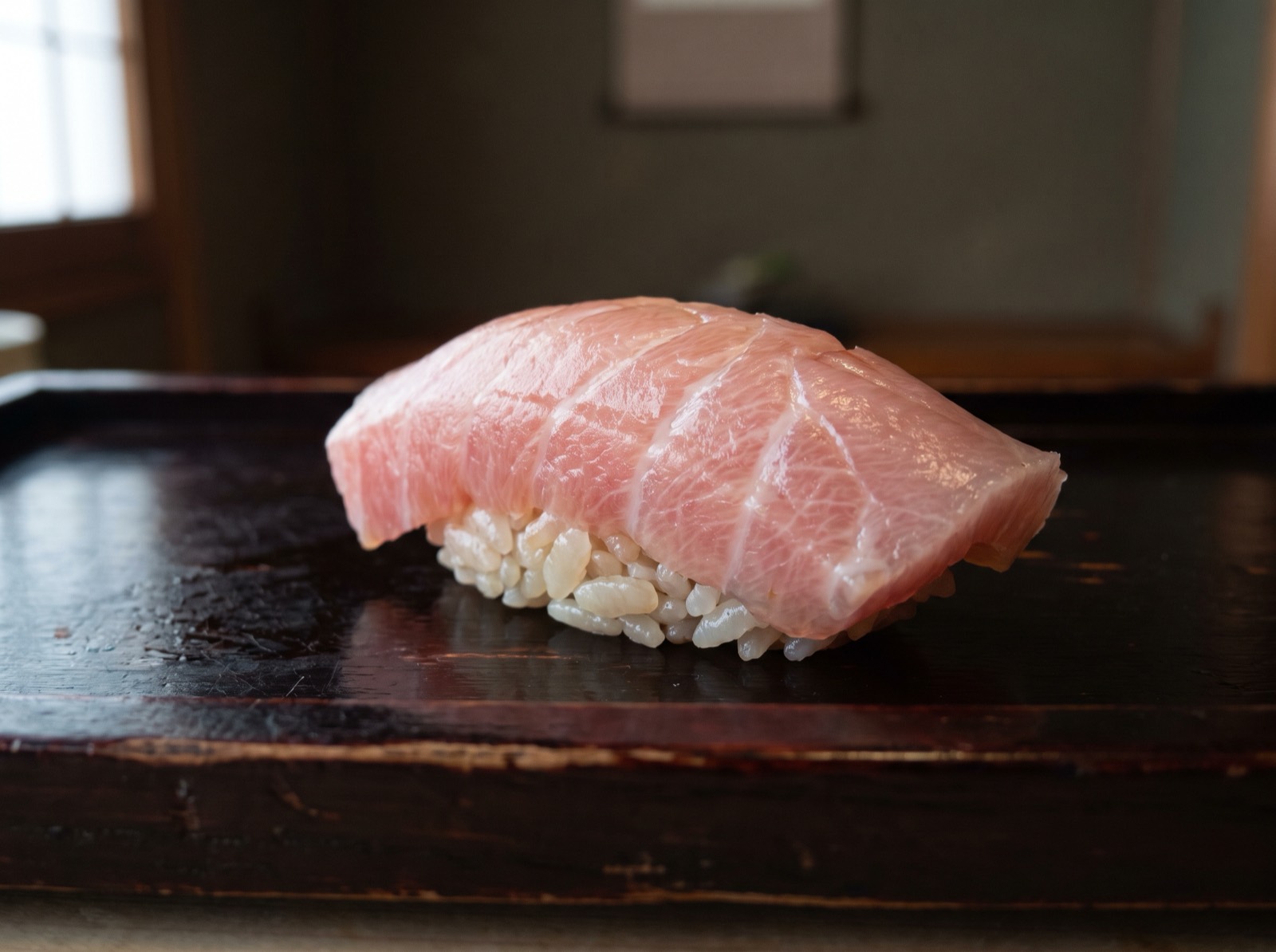
Bluefin tuna, hon-maguro, builds up rich fat from late autumn into winter, and the winter page calls that its peak. This is bluefin only: our maguro entry says the fish sold under that word share no single season.
Kohada, gizzard shad, is given as tasting at its fullest from mid-autumn to early winter, and the winter page adds that its fat is highest from late autumn to the start of winter. Our kohada entry says late summer into autumn, so the windows differ and both stand.
Wild hirame, left-eye flounder, is in season from late autumn to early spring, and when the frosts come it gains fat and fills out. Hirame sold in spring and summer has finished spawning and lost flavour, and the book says many sushi shops do not use it.
Four more are dated to late autumn. Sardine has two flavour peaks a year, first from early spring to summer and again around late autumn. Mantis shrimp, shako, carries roe from April to June and has another good period in late autumn, just before it moults, when the flesh fills out. Sea urchin from the east coast of Hokkaido is at its peak from late autumn to the end of spring, while sea urchin from the Sea of Japan is at its peak in summer. Spear squid, yari-ika, first appears in late autumn and has thickened and sweetened by about February.
Carried over from October
Three windows from the October page are still open. Mackerel, saba, keeps adding fat toward a late-autumn peak. Ark shell, akagai, has a season that one book dates from October to about March of the following year. Shin-ika, the young of the sumi-ika cuttlefish, has by early winter grown larger than a hand, with a firmer texture.
November at a glance
- Ikura. About October to November in one book, mid-October to mid-November in its entry. Month named.
- Kawahagi liver. October and November in two books. Month named.
- Octopus. The autumn season, about November to December in two books. Month named.
- Nori. Harvest begins around mid-November; the season is about November to February in a second book. Month named.
- Buri. The Hokuriku storm at the end of November; the named December schools. Month named for the storm only.
- Bluefin tuna, kohada, hirame, sardine, shako, yari-ika. Late autumn, or late autumn into winter or spring. No month given.
- Sea urchin. From the east coast of Hokkaido, late autumn to the end of spring. No month given.
What to ask at the counter in November
A counter will not necessarily have all of these, and a window in a book is not a promise about a particular night. Questions that fit the month: whether the ikura is soy-cured or salt-cured; whether the kawahagi comes with its liver; where the buri was landed; whether the sea urchin comes from the east coast of Hokkaido. Asking where a fish is in its season, rather than whether it is in season, is the habit the three stages teach.
November has few dates and many stages. The useful question is which stage each fish has reached.
Frequently asked questions
What sushi is in season in November?
Japanese sushi books date salmon roe (ikura), the liver of kawahagi filefish, autumn octopus and the start of the nori harvest to November. They place bluefin tuna, kohada, hirame, sardine, shako, sea urchin from eastern Hokkaido and spear squid in late autumn, with no month given. The windows differ between books.
What fish is in season in November in Japan?
There is no single national answer, because Japan runs a long way north to south and the same fish spawns at different times in different places. The books name October and November for kawahagi and about November to December for autumn octopus, and describe several others only as late autumn.
Is buri in season in November?
The books do not say. One records the Hokuriku storm called buri-okoshi at the end of November and prizes the cold-season fish landed there as kan-buri. Another calls late-autumn and winter buri kan-buri, and rates the December schools from Toyama Bay to Sado as in a class of their own.
When does the nori harvest begin?
One book says the harvest of nori grown in inshore waters begins around mid-November and continues into early spring. A second gives the season as winter, about November to February, and calls the nori picked then the first picking.
When is octopus in season?
Twice a year, set by spawning. Two books date summer octopus to about June and July and autumn octopus to about November and December, when it feeds heavily as the water cools and moves into deeper water to prepare to spawn.