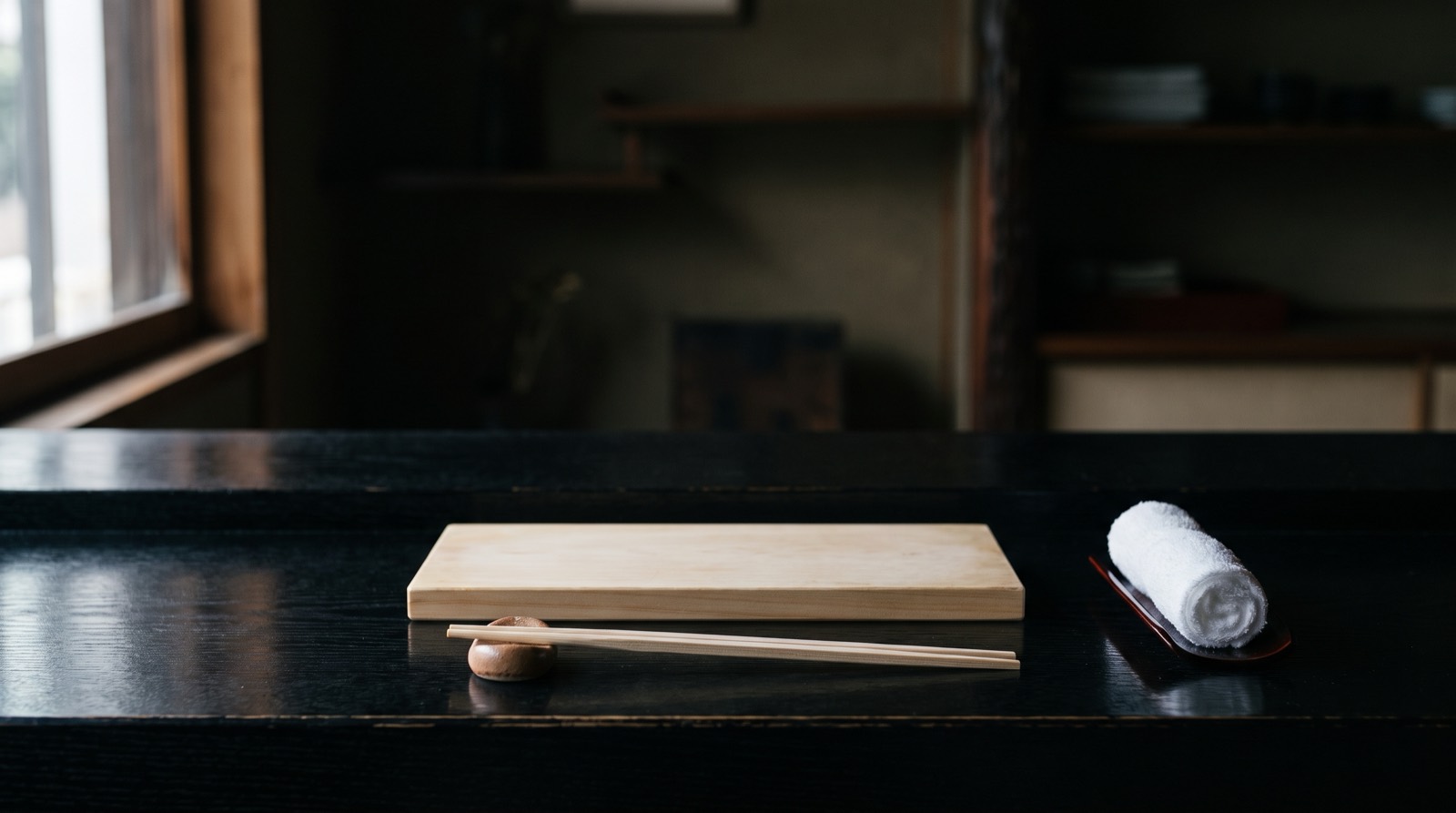
作法
Etiquette
At the counter, manners are not politeness — they are the act of receiving the chef's work as intended. How you eat, when you eat, and what you leave undisturbed all carry meaning.
At the counter, manners are not politeness — they are the act of receiving the chef's work as intended. How you eat, when you eat, and what you leave undisturbed all carry meaning.
The etiquette of a sushi counter is not a checklist of prohibitions. It is a set of inherited habits designed to keep one thing intact: the integrity of each piece as the chef made it. Every custom — hands over chopsticks, eating immediately, the small cup of あがり that closes the meal — exists to serve that single goal.
You will not be lectured if you reach for your chopsticks. You will not be reprimanded for dipping. But you will notice — once you understand the why — that your own enjoyment deepens when you follow the unwritten shape of the counter. This section is that shape, documented.
Read the full guideEat the piece the moment it is placed in front of you. Everything else is secondary. The chef has calibrated the temperature of the rice, the resting time of the fish, and the balance of neta to shari for precisely this moment. That window closes in seconds.
Declare your dietary restrictions at the time of booking — not when you arrive. Perfume and strong cologne are considered bad form in a small, scent-sensitive room. And silence your phone before you cross the threshold.
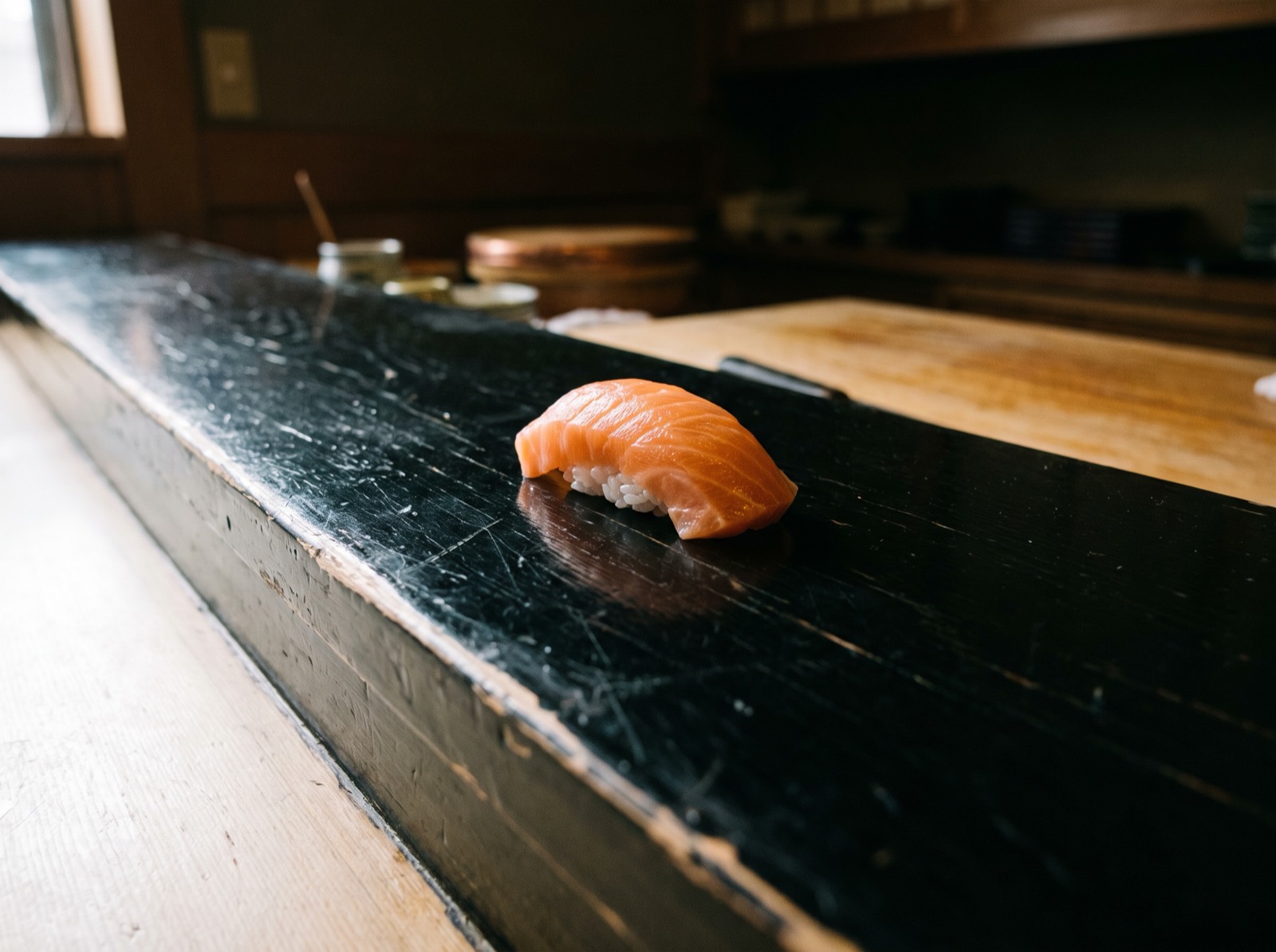
There is no test at the door. There is a short list of things that change how the food tastes, a slightly longer list of things that make you easy to serve, and a very long list of rules that exist mainly in English.
Read the guide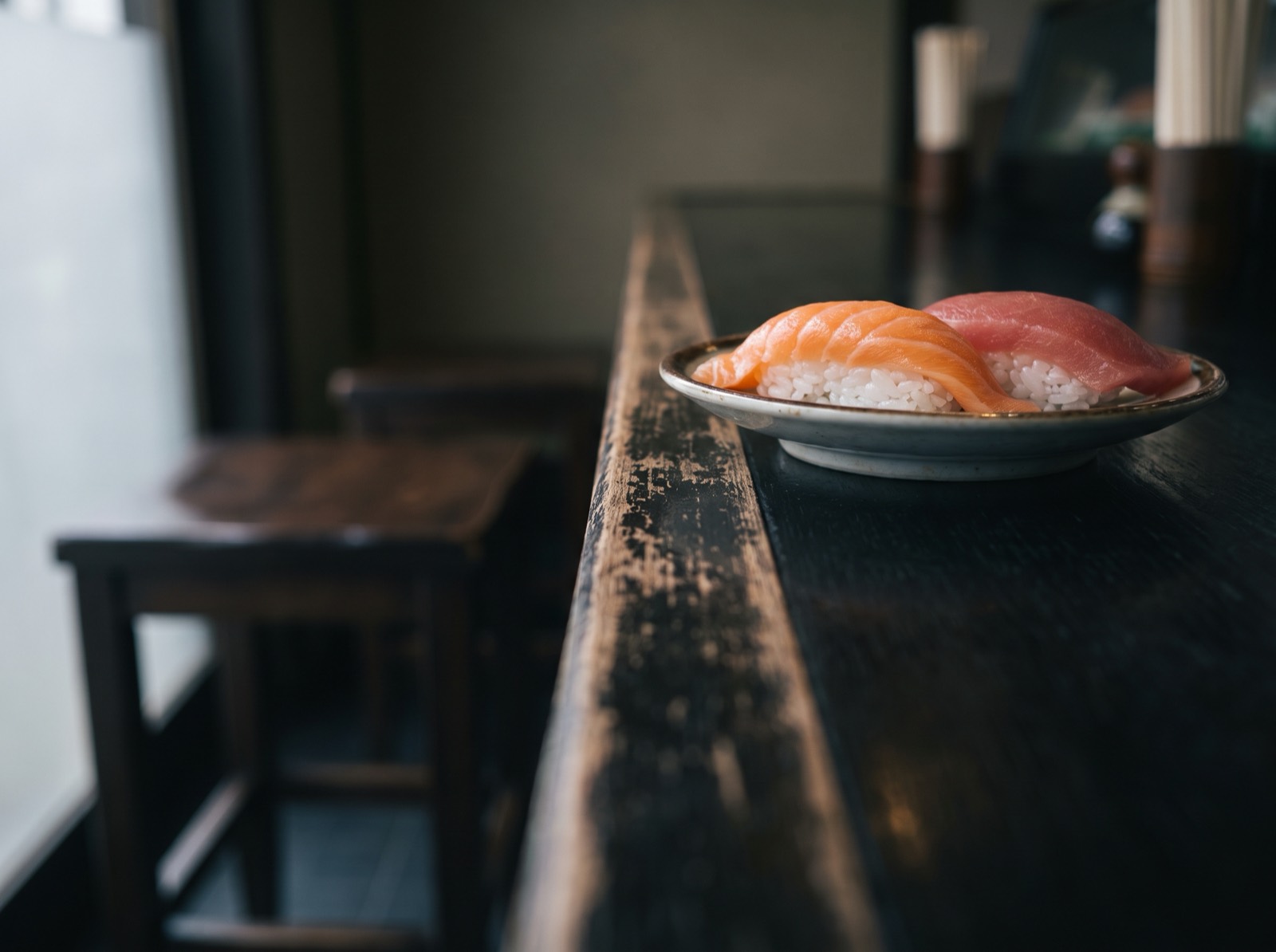
The internet has produced a long list of sushi prohibitions and a short supply of reasons. Here is the version with the reasons attached — which turns out to be a much shorter list.
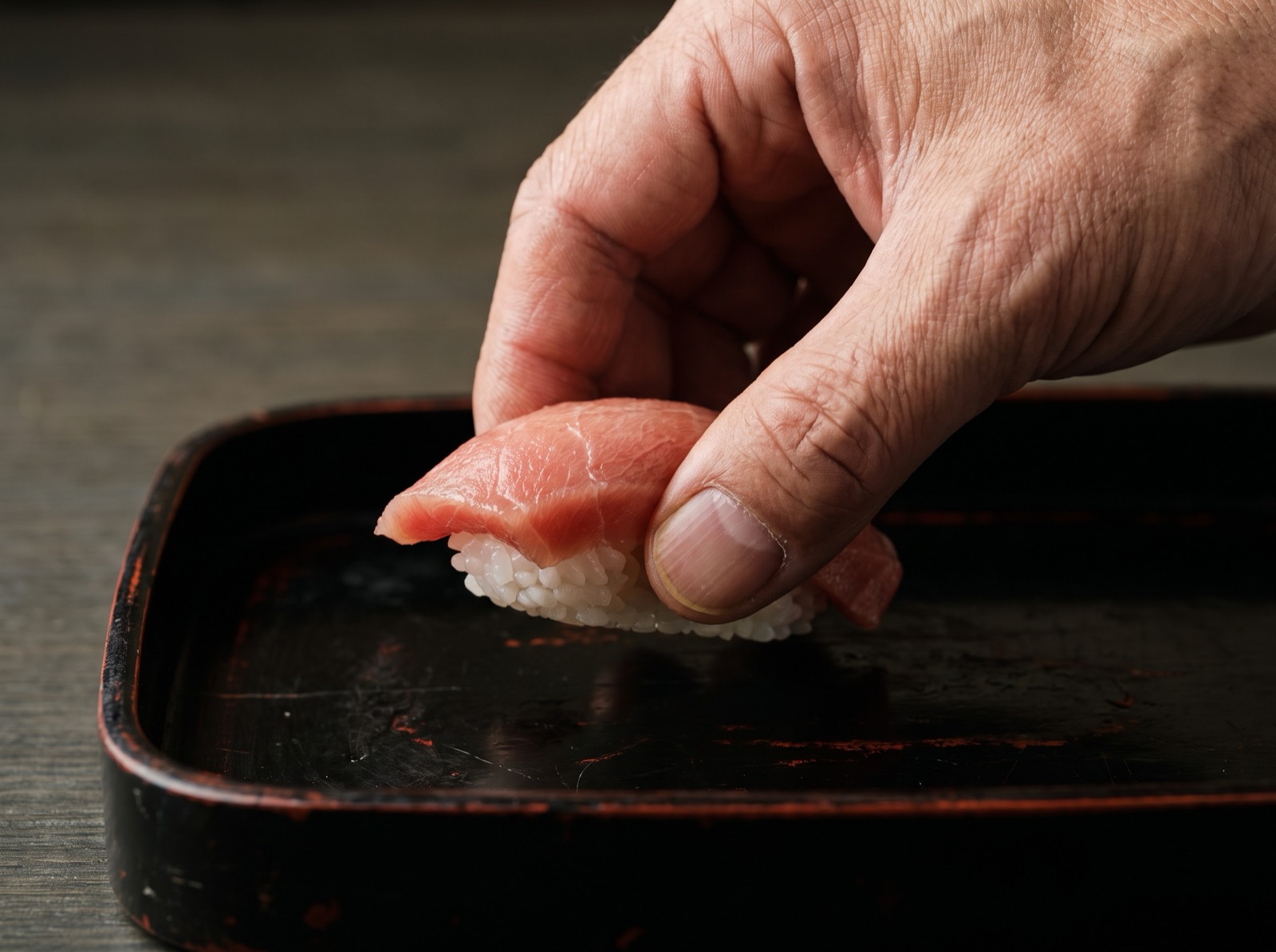
Etiquette is the social frame. This is the other half: the hand movements, the angle, the timing, and the reason each of them exists.
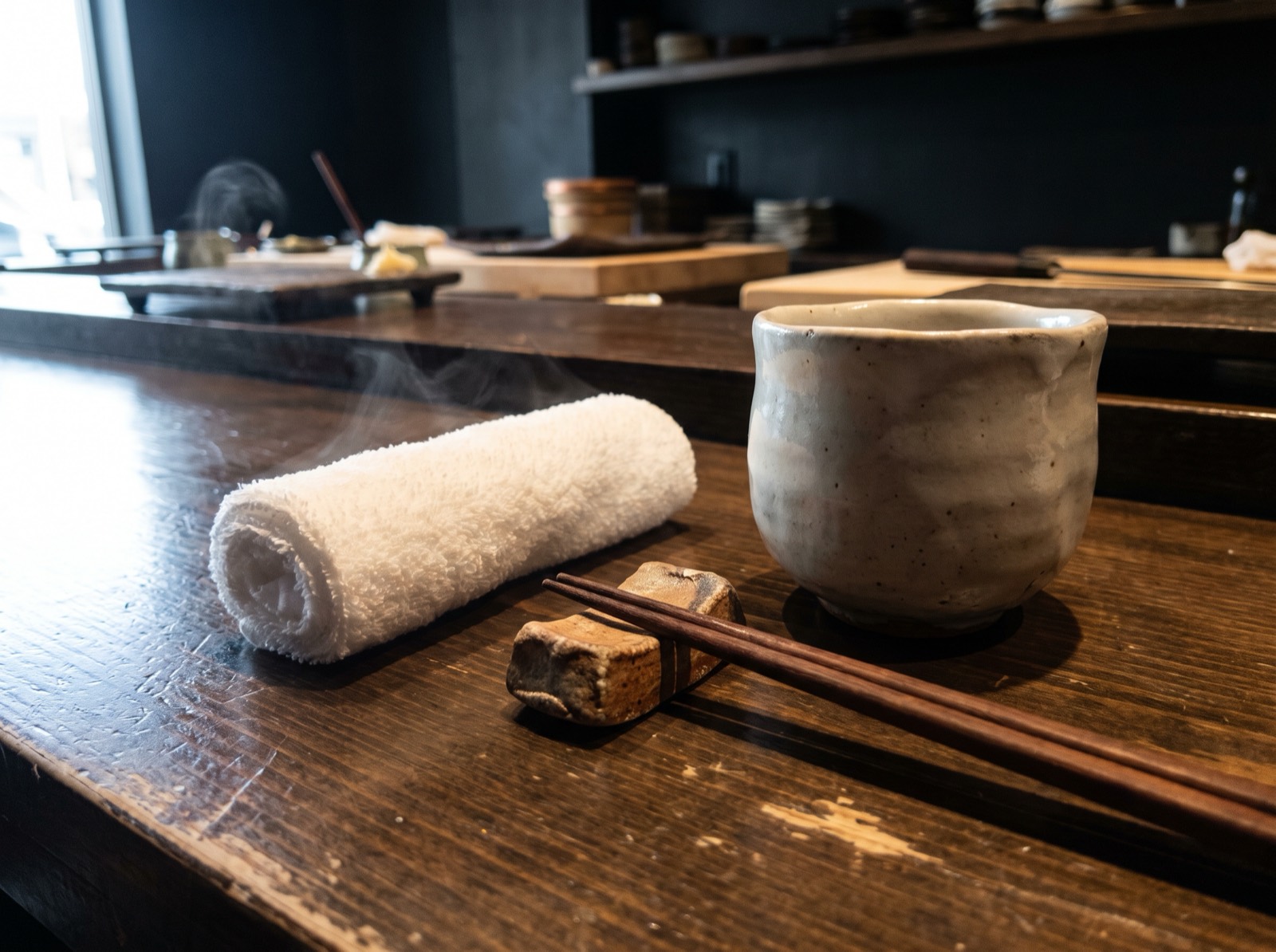
Handing the decisions to someone else changes what politeness consists of. Most of it happens on the phone, the day before.
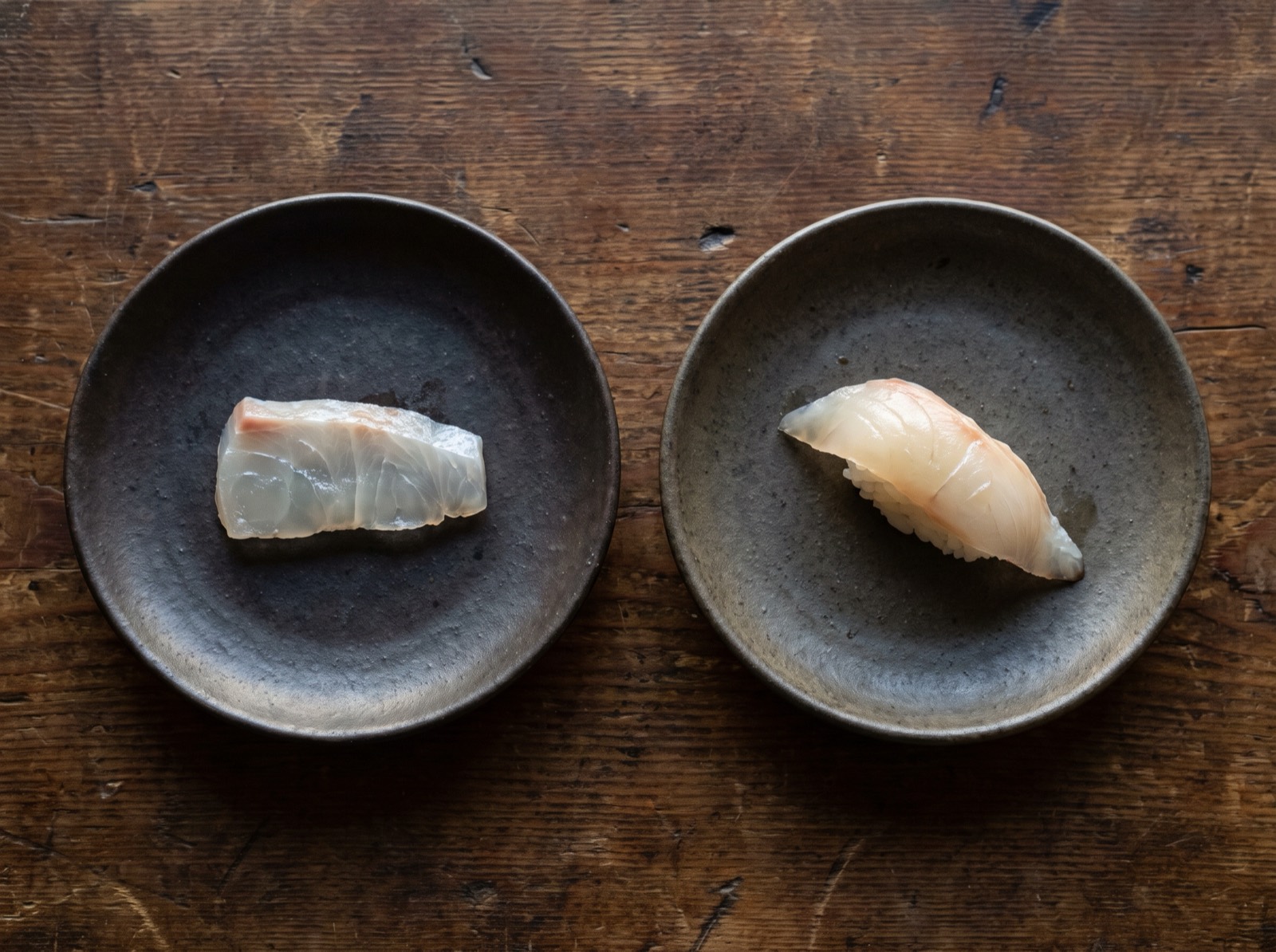
The comparison people usually mean when they type “sushi vs sashimi”. Here the difference really is a single ingredient, and it changes the fish.
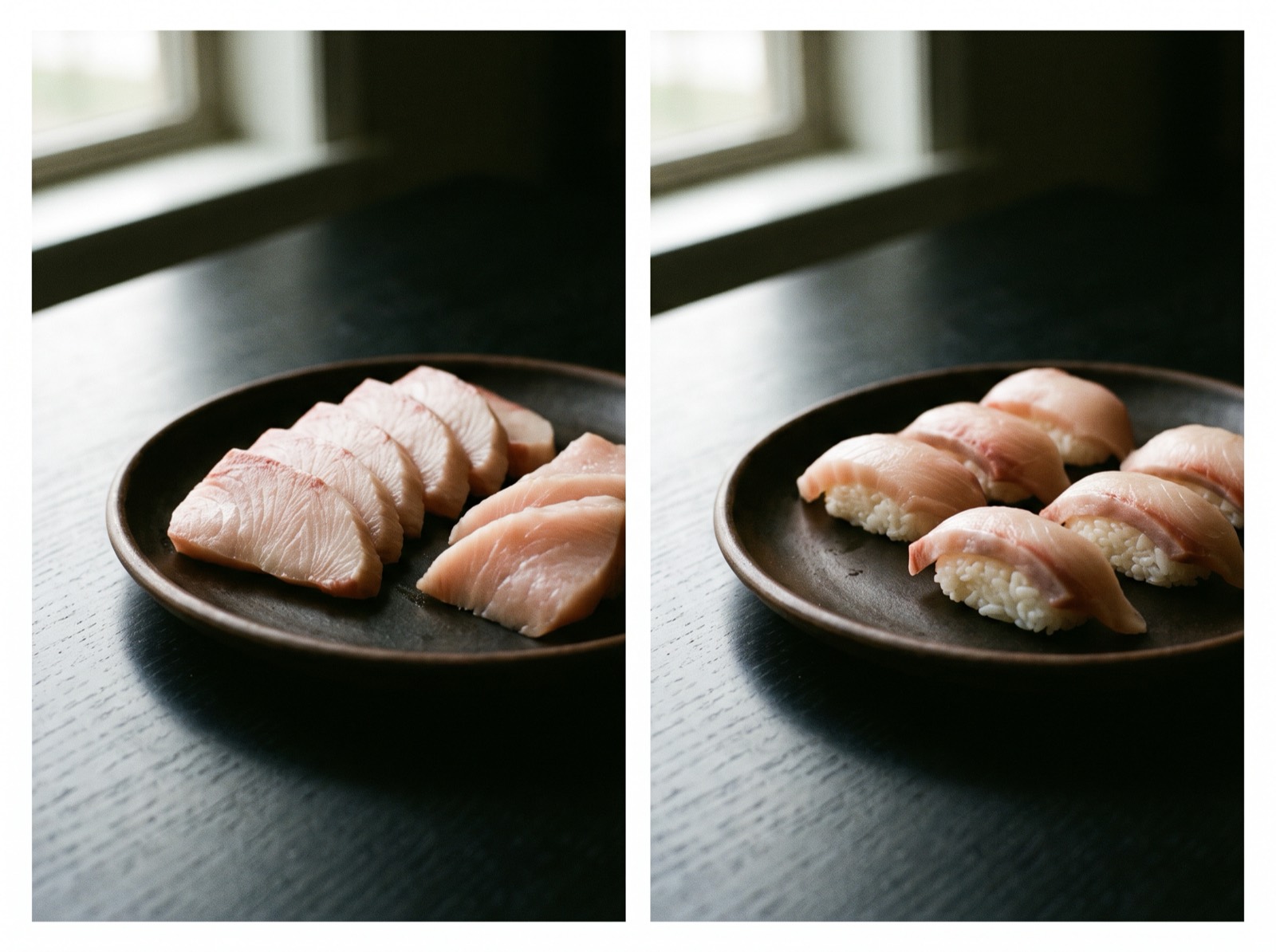
A short answer, and then the four consequences of it that actually matter when you are sitting down to eat.
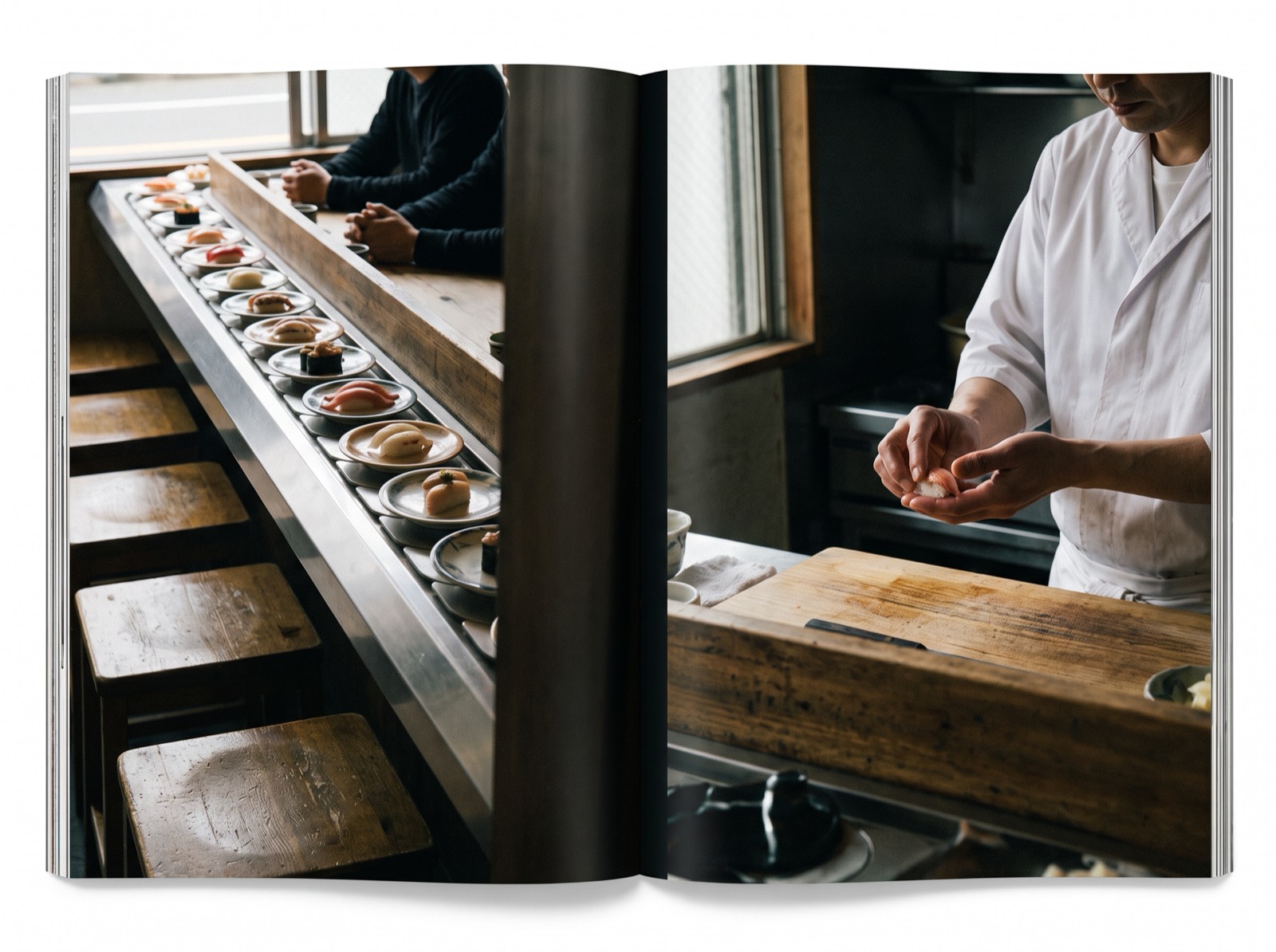
Not a hierarchy. Two formats built for different purposes, and a great many people eat both in the same week.
Six habits that define a considered guest — the kind the chef hopes to see return.
A piece placed before you is ready now. The shari is at body temperature. The texture is as the chef designed it. In ten seconds it is already less than it was. Eat immediately, without exception.
At Edomae counters, fingers are customary — clean, direct, and less likely to break a loosely formed piece. Chopsticks are perfectly acceptable. Hovering between the two is the only wrong answer.
The soy glaze is the chef's seasoning, applied by hand to each piece at the exact moment it is pressed. Do not add more soy. Do not dip. If a dish has no nikiri, you will be given a small receptacle — but watch how you use it.
Pickled ginger resets the palate. Take a small piece between courses. Never combine it with a nigiri in the same bite — that combination masks precisely what the chef wants you to taste.
A counter of eight seats is a shared space with shared acoustics. Speak at a register that stays at your place. Photographs are tolerated; the shutter sound at every piece is not. Be present, not performative.
Allergies, strong dislikes, shellfish restrictions — all of these belong in your reservation note, not whispered across the counter when the tray arrives. The menu was designed around this seat's requirements before you arrived.
Last updated: