A piece of sushi with no fish on it is easy to find. A piece with no fish anywhere in its making is harder to be sure of, and that is what a vegetarian is asking. The fish that does not show can be in the egg, in the stock and in the sauce brushed on the neighbouring piece. This guide sets out what Japanese sushi books describe in each place, and what the Japan Tourism Agency’s guide for restaurants says about vegetarian travellers. A book describes one kitchen or a general pattern, not the shop you are booking, so the last section is about what to ask.
Vegetarian is not one diet
The Tourism Agency’s guide for restaurants, in its April 2020 edition, sorts vegetarians by what they leave out (p. 5). A vegan eats no red meat, white meat, fish and shellfish, dairy or egg, and also avoids honey, gelatin and other animal-derived ingredients. A lacto-ovo vegetarian eats no meat or fish but does eat dairy and egg. A pescatarian eats no meat but does eat fish, dairy and egg.
At a sushi counter that difference decides what you can order. An egg slab suits some of these diets and not others, and a stock made from bonito, which is a fish, suits a pescatarian but not a lacto-ovo vegetarian or a vegan. So this piece sorts by ingredient and leaves the label to you.
Pieces the books describe without fish
Four kinds of piece come up in the sushi books we read with no fish in the description. Each is one kitchen’s method or a general pattern. None is a promise about a particular shop.
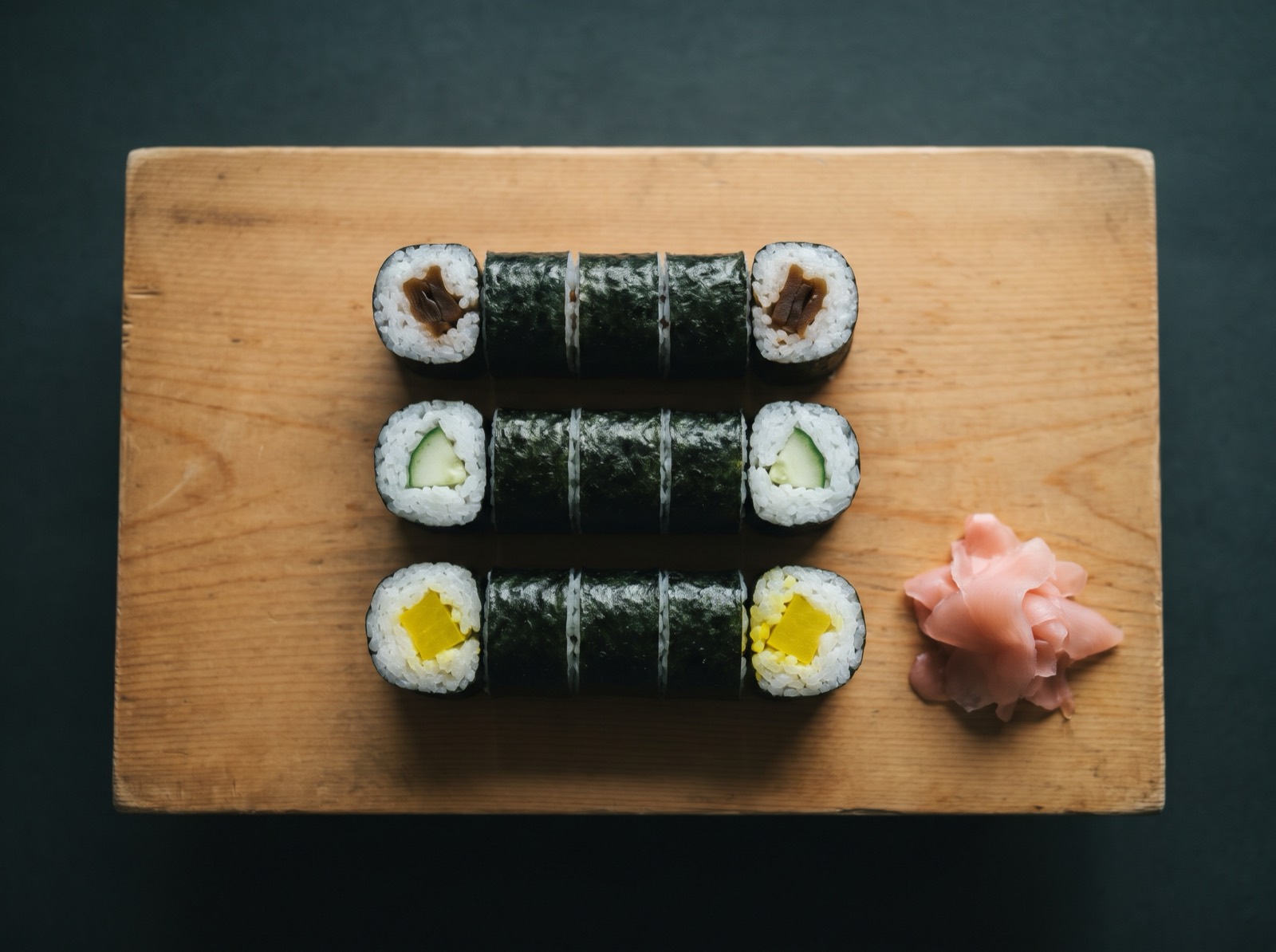
- Kanpyō-maki. Dried gourd, simmered and rolled thin. A bilingual sushi book says that in an Edomae shop the plain word for a roll, norimaki, means this one, and that the strips are boiled in water and then cooked in soy sauce and sugar. One professional book describes a Kamakura kitchen’s liquid as soy sauce, zarame sugar and mirin only, with no water or dashi added. A sushi science book gives sugar, zarame and soy sauce at 3:3:2. What the shop in front of you does is for the shop to say.
- Kappa-maki. A thin roll with cucumber in it, which a Japanese sushi handbook names, with kanpyō-maki, as a typical thin roll.
- Pickle and plum rolls. One counter’s pickle roll uses a daikon pickle soaked to mellow it and re-seasoned in soy sauce and mirin. Its plum roll is shiso leaf, a paste of salted plum and sesame.
- Inari-zushi. Aburaage, fried tofu, simmered sweet-savoury and filled with vinegared rice, of uncertain origin; one handbook says it is said to have existed by the end of the Edo period, and our types-of-sushi guide cites a book that says the mid-Edo period. The books do not say what is in the simmering liquid, so that is a question to put to the shop.
One practical point comes with the rolls. The handbook says a roll whose filling is already seasoned is best eaten without soy sauce, like a piece with nikiri already brushed on it, because the filling’s own flavour completes the seasoning. It adds that kappa-maki is best without soy so as not to spoil the cucumber, and that seasoned fillings such as kanpyō are to be enjoyed for their own taste.
Where fish turns up in a piece that looks plain
These are the places the books put fish, or a stock made from it, in something that does not look as though it has any.
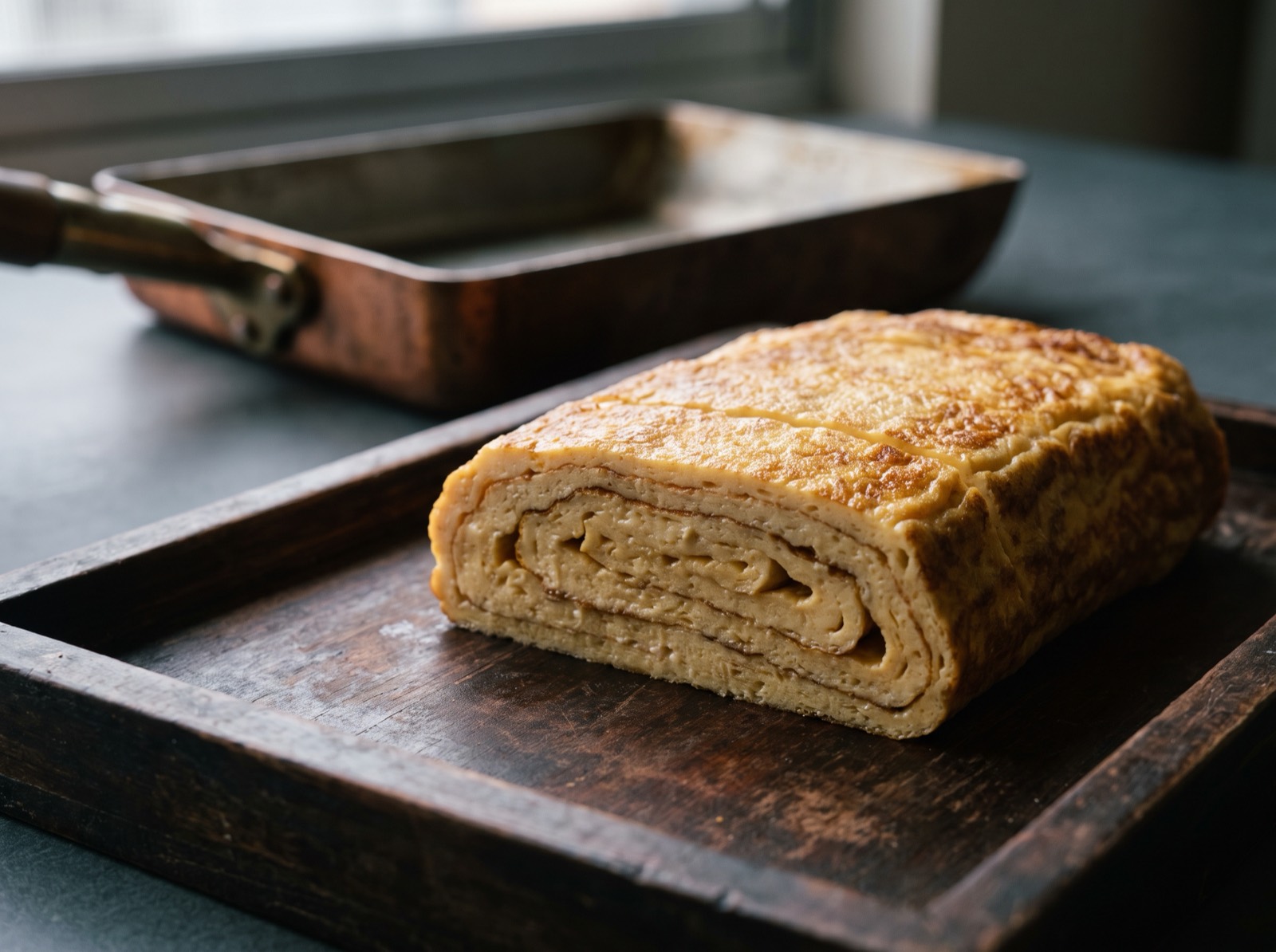
- The egg. One field guide lists three egg toppings: usuyaki, a thin egg with shrimp paste added; atsuyaki, a thick egg with shrimp or fish paste; and dashimaki, egg seasoned with dashi (stock) made from katsuobushi, dried bonito, with mirin, sugar and salt. It calls the first two the original Edomae styles and says dashimaki has recently become the most common. A Japanese sushi handbook describes a grilled egg made with fish paste, mirin and sugar, and a sushi science book says the sponge-cake-like atsuyaki is generally made with shrimp or white-fish paste, sugar, salt and a yam binder. Our tamago entry describes the same two traditions.
- The rice. A Japanese sushi handbook says that in recent years a sweeter, softer rice, with sugar, mirin or dashi added, has been preferred to the old rice of vinegar and salt alone. It does not say what the dashi is made from.
- The brushed sauce and the soy dish. The same handbook describes nikiri as dark soy sauce simmered briefly with mirin, dashi or other additions, to a recipe that differs from shop to shop, and says the soy dispenser at your seat often holds it.
- The thick roll. A sushi science book says thick rolls used to be built on what it calls shōjin fillings: kōya-dōfu, kanpyō, mitsuba and shiitake. Egg took the place of the kōya-dōfu, it says, and shrimp, oboro and conger eel have since come in. One counter’s version holds conger eel, kuruma shrimp, sweet-simmered shiitake, cucumber, egg and kanpyō. Oboro is white fish or shrimp made into a paste and dry-fried in a pan, used for colour in chirashi and rolled sushi.
- Soup and custard. A bilingual sushi book says sushi restaurants often make soup stock from leftover parts of fish and crab. One professional book gives a counter’s seaweed miso soup as bonito dashi plus an equal amount of the water the clams were boiled in. The same bilingual book calls chawanmushi, a savoury steamed egg custard, a standard item at sushi restaurants; the one it photographs holds shrimp and boiled fish paste.
None of this says a given shop uses fish paste or bonito. It says the books name them in the places that do not look like fish, which is where a question helps most.
In the books we read, fish paste turns up in the egg, bonito stock in the egg and the soup, and dashi in the rice and the brushed sauce.
What the Tourism Agency’s guide says a restaurant can offer
The guide is advice to restaurants. Its first step, after learning the basics, is to build a response on the existing menu and to say so, on the menu or aloud (p. 18). Its case studies include a shojin restaurant, not a sushi counter; the guide describes that restaurant’s vegan course as made without bonito dashi and notes that it states in English, for its other vegetable course, that bonito dashi, egg and dairy are used (pp. 27–28).
The guide’s own web survey of foreign vegetarians and others, 228 respondents, shows why that matters to them. Of those, 74 (32%) said they would not enter a restaurant unless the ingredients were written on the menu, and 47 (21%) said they would not enter without a separate kitchen or cookware (pp. 11 and 13). Of the 71 respondents who had visited Japan, 27 (38%) had wanted to eat sushi and 25 (35%) did (p. 15). The percentages are the guide’s; we checked them against the counts.
There is no ingredient label to read at the counter either. Japan’s Food Labelling Standard does not apply to food served for eating on the premises, apart from one provision on raw beef, and the Consumer Affairs Agency’s Q&A describes that as restaurants, canteens and cafes. Our halal guide sets out the same point. What a counter tells you is what it chooses to say.
What to ask, in this order
- Say it when you book, and say which diet you mean: whether egg, dairy or fish paste is acceptable, and whether stock made from bonito is. Our booking guide covers what to tell a shop and how.
- Ask about the egg by name: is it made with fish paste, or with dashi, and is the dashi bonito?
- Ask about the rice and the soy dish: is the rice seasoned with dashi, and does the dispenser hold plain soy sauce or nikiri?
- For a thick roll, ask for the filling list; for soup and custard, ask for the stock. One Tokyo English menu we read dropped the word dashi from a vegetarian plate, so do not rely on a translated menu alone.
- Decide by your own definition. The guide’s table shows there is no single one (p. 5).
Fish-free pieces exist and the books name them. What the books cannot name is what a particular kitchen put into the egg, the rice and the stock that morning. Facts about the guide were read on 3 November 2026.
Frequently asked questions
Is there vegetarian sushi in Japan?
Japanese sushi books describe some pieces without fish: kanpyō-maki (simmered dried gourd), kappa-maki (cucumber), pickle and plum rolls, and inari-zushi. Each description is one kitchen or a general pattern, and what a particular counter puts in them is for that counter to say.
Is kanpyō-maki vegetarian?
A bilingual sushi book says the strips are boiled and then cooked in soy sauce and sugar, a professional book describes one kitchen’s liquid as soy sauce, zarame sugar and mirin with no dashi, and a sushi science book gives sugar, zarame and soy sauce at 3:3:2. Whether a given shop adds dashi is a question for the shop.
Is tamago at a sushi restaurant vegetarian?
Not necessarily. One field guide lists egg toppings made with shrimp paste, with shrimp or fish paste, and with bonito dashi, and a second handbook describes a grilled egg made with fish paste. Egg suits a lacto-ovo vegetarian but not a vegan, and fish paste or bonito dashi in it would be fish ingredients.
Where does dashi hide in a sushi meal?
The books describe dashi in the seasoned rice and in nikiri, the sauce brushed on the fish. They describe bonito dashi in dashimaki egg and in one counter’s seaweed miso soup, and say sushi restaurants often make soup stock from leftover parts of fish and crab.
What does Japan’s Tourism Agency say about vegetarian travellers?
Its April 2020 guide sorts vegetarians into types by what they leave out, and advises restaurants, after learning the basics, to build a response on the existing menu and say so on the menu or aloud. In its survey of 228 respondents, 74 (32%) said they would not enter a restaurant unless the ingredients were written on the menu.